


From Cosmic Snapshots to Motion Pictures
For much of astronomical history, observing deep space was like taking a single photograph. Scientists could capture a moment in time—a distant galaxy, a dying star—but missed the story of how it evolved. Black hole science, in particular, was constrained
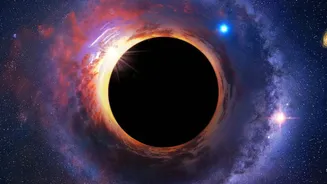
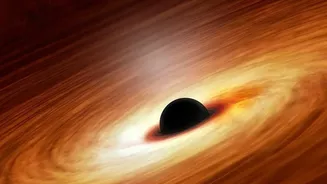
by the fact that its subjects are, by definition, invisible. We could only infer their existence from the behavior of nearby matter. The revolution has come from shifting this paradigm from taking snapshots to filming a movie. By dedicating telescopes and detectors to long-term monitoring, often over many years or even decades, scientists can now track the subtle and sometimes violent changes in the environments around black holes. This approach, known as time-domain astronomy, reveals the dynamic processes of accretion, mergers, and gravitational effects that were previously only theoretical.
A Global Telescope to Image the Unseen
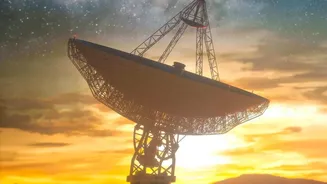
Perhaps the most famous example of this patient, long-term approach is the Event Horizon Telescope (EHT). The EHT isn't a single telescope but a global network of radio observatories synchronized to work together, effectively creating a virtual telescope the size of Earth. This massive scale is necessary to achieve the resolution required to see the 'shadow' of a supermassive black hole against the glowing hot gas swirling around it. After years of collaboration, observation, and painstaking data processing, the EHT collaboration unveiled the first-ever image of a black hole—M87—in 2019, followed by the image of Sagittarius A, the black hole at the center of our own Milky Way, in 2022. These images were not the result of a single night's observation but the culmination of a massive, long-running project that proved a black hole could be directly visualized.
Listening for Ripples in Spacetime
While the EHT gives us a visual, other projects allow us to 'hear' the cosmos. The Laser Interferometer Gravitational-Wave Observatory (LIGO), along with its partners Virgo and KAGRA, is designed to detect gravitational waves—ripples in the fabric of spacetime first predicted by Einstein. These waves are often generated by the most cataclysmic events in the universe, such as the merger of two black holes. Since its first landmark detection in 2015, the LIGO collaboration has been in a state of continuous observation, listening for these faint cosmic tremors. This constant vigil has paid off, allowing scientists to detect hundreds of black hole mergers. Each detection provides precise data on the masses, spins, and distances of the merging black holes, opening up a completely new way to study their populations and life cycles.
A Decades-Long Dance Around Sagittarius A*
Proving the existence of the supermassive black hole at the center of our galaxy was a marathon, not a sprint. For over two decades, teams of astronomers painstakingly tracked the orbits of stars whipping around an unseen central point. By precisely measuring the positions of stars like S2 over its full 16-year orbit, they were able to calculate the mass of the object it was orbiting with incredible precision: about four million times the mass of our sun, all packed into a tiny volume. There was no other explanation for this than a supermassive black hole. This long-term dedication, which required consistent observations year after year using powerful telescopes, provided the definitive empirical evidence for supermassive black holes and earned its leaders the 2020 Nobel Prize in Physics.
The Future is a Real-Time Cosmic Movie
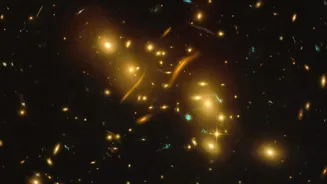
The success of these projects has ushered in a new era. The Vera C. Rubin Observatory, which has begun its ten-year Legacy Survey of Space and Time (LSST), represents the next great leap. The observatory will scan the entire southern sky every few nights, creating an unprecedented time-lapse movie of the cosmos. It is expected to detect millions of active galactic nuclei—supermassive black holes actively feeding on surrounding material—and track how their brightness changes over time. This will provide a massive dataset on black hole feeding habits and their growth. By generating millions of alerts for transient events every night, Rubin will guide other telescopes to follow up on interesting phenomena, from exploding stars to black holes tearing matter apart.