




The Power of a Peaceful Warrior
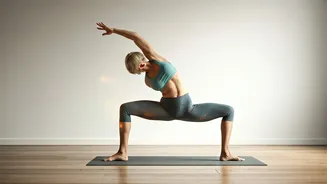
Named after Virabhadra, a fierce warrior incarnation of the Hindu god Shiva, Warrior II is a foundational standing pose that energizes the entire body. [1, 13] While its name evokes fierceness, the posture is a practice in stillness and presence. [19]
It challenges you to stand firm and strong in your foundation while extending your arms and gaze with calm intention. This duality is the essence of the pose: finding stability in the body to cultivate focus in the mind. [1] Holding the pose builds stamina and encourages you to observe your physical and mental state, strengthening your resolve. [1]
Building Strength from the Ground Up
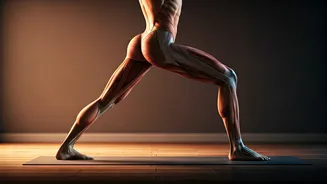
The primary physical benefit of Warrior II is its incredible power to build leg strength. [13, 19] The deep lunge in the front leg engages the quadriceps, while the back leg works hard to ground you, strengthening the hamstrings, glutes, and calves. [1, 18] Distributing your weight evenly between both legs is key. [1] This sustained muscle engagement builds functional strength and endurance. [19] Beyond the legs, the pose is a fantastic hip-opener, stretching the inner thighs and groins. [19, 23] It also strengthens the shoulders and core as you hold your torso upright and your arms parallel to the floor. [1, 18]
A Step-by-Step Guide to Warrior II
Finding the correct alignment is crucial for reaping the benefits and preventing injury. Follow these steps:
1. Start by standing on your mat with your feet wide apart, about three to four feet. [13] A good guide is to have your ankles roughly under your wrists when your arms are stretched out. [1]
2. Turn your right foot out 90 degrees to face the front of the mat. Angle your left (back) foot in slightly. Align your front heel with the arch of your back foot. [5, 8]
3. Inhale and lift your arms parallel to the floor, reaching them actively in opposite directions with palms facing down. [5]
4. Exhale and bend your right knee until it is directly over your right ankle. Aim for your thigh to be parallel to the floor, if accessible. [4, 6]
5. Keep your torso stacked directly over your hips, avoiding the urge to lean forward. [5] Press firmly through the outer edge of your back foot to keep that leg active and straight. [4]
6. Turn your head to gaze softly over your right fingertips. Hold for 5-10 breaths before straightening the leg and repeating on the other side. [1]
Common Mistakes to Avoid
Proper form ensures you get the most from the pose. Watch out for these common errors:
* **Front knee collapsing inward:** This puts stress on the knee joint. Actively press your front knee toward the pinky-toe side of your foot to keep it tracking over your second and third toes. [3, 4]
* **Leaning the torso forward:** Many people tend to reach forward, shifting their weight unevenly. Keep your shoulders stacked directly over your hips. [3, 5]
* **Losing the back leg:** The back leg is not passive. Keep it engaged by pressing the outer edge of the foot firmly into the mat. [3] This provides stability and power.
* **A stance that's too short:** A narrow stance prevents you from bending the front knee deeply enough and reduces the pose's intensity. Don't be afraid to widen your feet. [3, 11]
Modifications for Every Practitioner
Warrior II is a versatile pose that can be adapted for different body types and experience levels.
* **For beginners:** If holding the pose is challenging, shorten your stance. [20] You can also practice with your back against a wall for extra support and alignment feedback. [19]
* **For tight hips or knee sensitivity:** Don't feel you have to get your front thigh parallel to the floor. Bend the knee only as much as feels comfortable and stable. [19]
* **For shoulder fatigue:** If your arms get tired, you can rest your hands on your hips. This allows you to focus solely on the alignment of your legs and torso. [19, 20]
* **Using props:** For extra support, you can place a chair under your front thigh. [6, 12] This allows you to experience the correct alignment without straining.