



Getting There: Train, Road, or Bus
Reaching Bishnupur from Kolkata is quite convenient, with several options to suit your comfort and budget. The most popular choice is the train. Several daily trains run from Howrah (HWH) and Santragachi (SRC) to Bishnupur (VSU), with the journey taking
approximately 3 to 4 hours. The Rupashi Bangla Express is one of the fastest options, getting you there in about three hours. For those who prefer the road, a drive from Kolkata to Bishnupur covers about 140-150 km and takes around 4 to 5 hours, depending on traffic. The route is generally smooth, making for a pleasant road trip. Alternatively, several bus services also connect Kolkata to Bishnupur, offering an affordable travel option. E-rickshaws, or 'totos', are the primary mode of transport for exploring the temple sites within the town itself.
Where to Stay: From Resorts to Homestays
Bishnupur offers a range of accommodation options. For a comfortable stay, the West Bengal Tourism Development Corporation's Bishnupur Tourism Property (formerly the Tourist Lodge) is a reliable choice, known for its good location and amenities. Several private hotels and resorts like Hotel Annapurna and Banalata Resort offer comfortable stays with modern facilities. You can also find resorts nestled in the nearby Joypur Forest for a more tranquil experience. For travellers on a budget, numerous guesthouses and lodges are available near the main town and railway station, providing basic and clean accommodation. Booking in advance is recommended, especially during the peak season from October to March and during local festivals.
Day 1: Arrival and Architectural Marvels
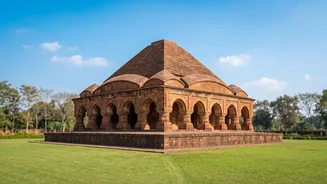
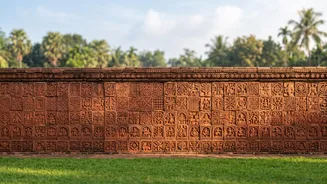
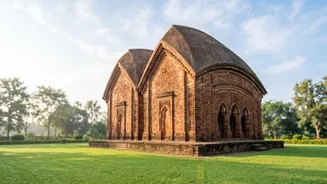
Aim to arrive in Bishnupur by noon. After checking into your hotel and having lunch, begin your exploration. Start with the most iconic structure, the Rasmancha. Built in 1600, this unique pyramidal temple made of laterite stone is unlike any other in Bengal. From there, head to the Jorebangla Temple (also known as Kestorai Temple), built in 1655 and famed for its classic 'chala' or hut-style architecture and detailed terracotta panels depicting scenes from epics. End your day with a visit to the Shyam Rai Temple (Pancha Ratna Temple). This 17th-century temple is distinguished by its five ornate towers and exquisite carvings illustrating the life of Krishna. As evening falls, you can explore the local market.
Day 2: Royal History and Local Crafts
On your second day, delve deeper into Bishnupur's heritage. Begin at the Madan Mohan Temple, built in 1694. This active temple is one of the finest examples of the 'Eka-Ratna' (single-pinnacled) style and is covered in magnificent terracotta reliefs. Afterwards, visit the Dalmadal Cannon, a massive iron cannon that stands as a testament to the Malla kings' power. In the afternoon, immerse yourself in the town's living traditions. Bishnupur is famous for its Baluchari sarees, which feature intricate mythological scenes woven into the silk. You can visit weaver workshops to see this craft firsthand. Also, look for artisans creating 'Dashabatar Taash' (hand-painted playing cards) and beautiful conch shell bangles in the Shankhari Bazaar.
Day 3: Final Sights and Departure
Use your final morning to visit any remaining sites. The Jor Mandir complex, a group of three laterite Eka-Ratna temples from 1726, is worth a visit for its stucco artwork. You can also explore the Radhashyam Temple, another beautiful laterite temple set within a peaceful courtyard. Don't miss a quick stop at the Acharya Yogesh Chandra Purakirti Bhawan, the local museum, to see a collection of artifacts from the region (check for opening days). After a final Bengali meal, where you might try local specialties like Posto'r Bora, you can begin your journey back to Kolkata, filled with memories of terracotta tales and artistic grandeur.