
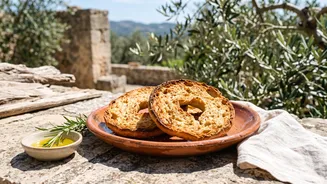
What Exactly Are Friselle?
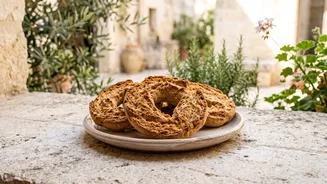
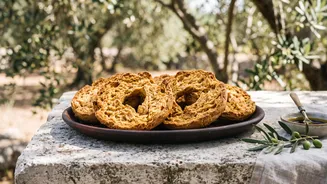
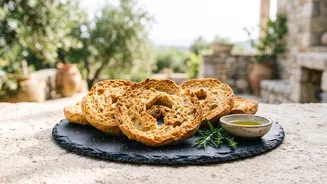
At first glance, a frisella (the singular form of friselle) looks like a rough, hard, bagel-shaped rusk. Hailing from the southern Italian regions of Puglia, Calabria, and Campania, this humble bread is a testament to culinary ingenuity. Historically,
it was the perfect food for fishermen and farmers who needed sustenance that could endure long periods away from home without spoiling. Its origins are ancient, with some evidence tracing twice-baked breads back to Greek settlers and 10th-century sailors who would soften it in seawater. Made from simple ingredients like durum wheat or barley flour, water, yeast, and salt, its true magic lies not in what’s in it, but in how it's made.
The Twice-Baked Secret
The key to friselle's longevity and unique texture is its double-baking process, which is why it's often called 'pane biscottato' (twice-cooked bread). First, the dough is shaped into rings and baked until cooked through but still pale. Then, while still warm, each ring is cut horizontally and baked a second time at a lower temperature. This second bake is crucial; it slowly draws out nearly all the moisture from the bread, transforming it into a rock-hard, ultra-dry disc that is incredibly resistant to mold and decay. Think of it like a savoury version of biscotti, another famous Italian twice-baked creation designed to last.
The Science of a Long Shelf Life
The claim that friselle can last for months isn't just a romantic notion; it's based on simple food science. Microorganisms like mold and bacteria, which are responsible for causing bread to spoil, need water to survive and multiply. By removing the moisture content through double baking, you create an inhospitable environment for them. When stored correctly in a sealed bag or airtight container away from humidity, friselle can remain perfectly preserved for six months or even longer. This makes them not only a delicious pantry staple but also an incredibly practical food, reducing waste and ensuring you always have a base for a quick meal on hand.
Bringing Friselle to Life: The 'Sponzare' Ritual
Because they are so hard, you never eat friselle dry—unless you're looking for a serious dental challenge. Before topping, they must be rehydrated in a ritual known as 'sponzare' (a dialect term for 'to wet' or 'to sponge'). The process is quick and critical to get right. You briefly dip the frisella in a bowl of cool water for just a few seconds—long enough to soften the porous interior but not so long that it becomes a soggy mess. The goal is a texture that is tender in the middle but still retains a satisfying crunch around the edges. Alternatively, some let the juices from the toppings do the work, a method that requires a few minutes of patience as the bread soaks in the flavour.
Classic Toppings and Modern Twists
Once softened, the frisella becomes a perfect canvas for a host of flavours. The most classic and beloved topping is a simple mix of chopped ripe tomatoes, garlic, dried oregano, and a generous drizzle of high-quality extra virgin olive oil. The rough, porous surface of the frisella is perfect for catching every drop of oil and tomato juice. But the possibilities are nearly endless. Modern variations include topping it with creamy burrata and pesto, smoked salmon and cream cheese, or a simple avocado mash reminiscent of Italian avocado toast. You can also find regional specialties, like the Calabrian version with spicy 'nduja sausage or the Campanian 'caponata' with anchovies and olives.