



Why August is a Great Month for Saturn Viewing
Throughout August 2026, Saturn will be a prominent object in the night sky. The planet is currently heading towards its opposition in early October, which is when Earth passes directly between Saturn and the Sun. This period leading up to opposition means
the planet is getting progressively brighter and closer to Earth, making it one of the best times of the year to observe it. Saturn will be visible for most of the night, rising in the evening and gracing the sky until the early morning hours. For observers, this means longer, more convenient viewing windows.
When and Where to Look
In August, Saturn will be situated in the constellation Pisces and will rise in the east a few hours after sunset. As the night progresses, it will travel across the sky, reaching its highest point in the south around midnight or in the early morning hours. It will appear as a bright, steady, yellowish point of light, distinguishing itself from twinkling stars. On the nights of August 30 and 31, the Moon will make a close approach to Saturn, making the planet even easier to locate in the sky. You can use a variety of stargazing apps on your smartphone to pinpoint its exact location from your city on any given night.
A Guide for India's Urban Stargazers
Viewing celestial objects from a bustling city can be challenging due to light pollution. Major metropolitan areas like Delhi, Mumbai, Bengaluru, and Kolkata are blanketed by significant skyglow, which washes out fainter stars. However, Saturn is one of the brightest objects in the night sky, making it visible even from urban centers. The key is to find a location with the least amount of direct light, like a park, a rooftop, or the outskirts of the city. Let your eyes adapt to the darkness for at least 20 minutes to improve your chances of spotting the planet clearly. While rural areas will always offer a better view, don't be discouraged if you live in a city; Saturn's brightness often cuts through the haze.
Telescope, Binoculars, or Naked Eye?
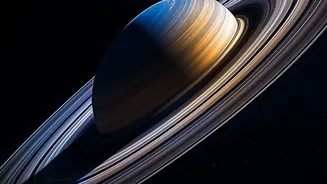
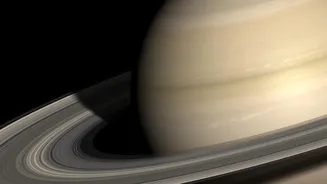
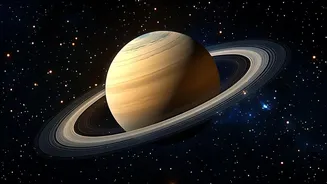
You can easily spot Saturn with just your unaided eyes—it will look like a non-twinkling, golden star. But to witness its most famous feature, the rings, you will need some optical aid. A good pair of binoculars will reveal Saturn as a distinct, slightly elongated orb, but may not be enough to clearly resolve the rings. For the real 'wow' moment, a small telescope is your best bet. Even a basic telescope with 25x to 50x magnification will be able to show the iconic rings as a separate structure from the planet itself. This August, the rings are tilted at a favorable angle towards Earth, offering a spectacular view.
Beyond the Rings: What Else to See
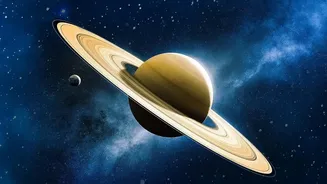
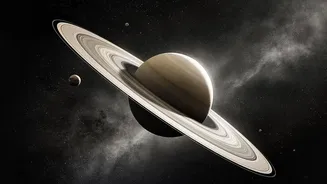
A telescope not only reveals the stunning ring system but can also show some of Saturn's largest moons. The brightest and easiest to spot is Titan, which appears as a tiny star-like point of light near the planet. With a larger amateur telescope and steady viewing conditions, you might even be able to spot other moons like Rhea, Dione, and Tethys. Observing Saturn offers a direct connection to our solar system's grand scale. It's a gas giant so large that 764 Earths could fit inside it, yet it's composed of such light gases that it would float in a pool of water, if one large enough existed.