




More Than Just Festive Specials
For years, a festival menu at an Indian restaurant often meant a standard rotation of rich gravies, popular kebabs, and a few extra sweets. While delicious, these offerings rarely scratched the surface of India's vast culinary landscape. Today, a growing
number of chefs and restaurateurs are using festivals as a canvas to paint a much richer picture. Instead of pan-Indian favourites, they are curating menus that celebrate the hyper-specific, regional traditions tied to that festival. These limited-time menus serve as delicious deep dives, offering diners an authentic taste of how a specific community celebrates, often with dishes that have rarely been seen outside of home kitchens.
A Taste of Home and Heritage
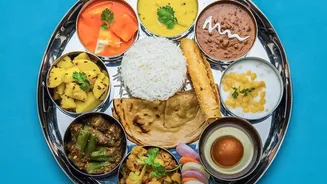
For many Indians living in bustling metros far from their hometowns, these menus offer a powerful sense of nostalgia and connection. An elaborate Onam Sadhya, with over 25 vegetarian dishes served on a banana leaf, is no longer just a memory of Kerala.. Restaurants in Delhi, Mumbai, and Bengaluru now meticulously recreate this feast, allowing people to celebrate the harvest festival with authentic flavours like tangy inji puli and creamy avial.. Similarly, during Durga Puja, Bengali-themed menus move beyond generic fish curry to highlight lesser-known delicacies, telling a story of tradition and community through food.. These culinary events become a bridge to one's roots, a way to share cultural heritage with friends, and a celebration of identity on a plate.
Chefs as Cultural Cartographers
The chefs behind this movement are more than just cooks; they are researchers, historians, and storytellers.. Many, like Chef Regi Mathew who champions Kerala's food traditions, travel extensively to learn from home cooks and document disappearing recipes before they are lost to time.. Others delve into their own heritage to showcase the nuances of a specific region, such as chefs curating menus that explore the forgotten dishes of Rajasthan or the traditional foods of Bihar and Jharkhand.. By bringing these carefully researched recipes to a wider audience, they are not just serving food; they are preserving cultural memory.. This approach turns a simple meal into an educational and immersive experience, where each dish has a story and a sense of place..
A Delicious Discovery for Diners
This trend is also a boon for adventurous food lovers eager to explore India's true culinary diversity. It’s an opportunity to move beyond the assumption that Indian food is a singular entity defined by a few famous dishes.. A festival pop-up or a special thali can introduce a diner to the unique spice blends of Chettinad, the subtle vegetarian cuisine of a Navratri feast, or the rustic flavours of Champaran mutton.. These menus act as a gateway, democratising regional cuisine and making it more accessible.. They spark curiosity, encouraging people to learn about the ingredients, techniques, and cultural context behind what they are eating. It’s a delicious education in the geography and history of India, one bite at a time.
From Temporary Trend to Permanent Shift
While these menus often appear as temporary pop-ups or time-limited offerings, their impact is becoming more permanent.. The success of these festival specials is encouraging restaurants to incorporate more regional diversity into their regular menus.. It has proven that there is a strong appetite for authentic, story-driven food that goes beyond the conventional. This shift is not just about nostalgia; it’s a forward-looking movement that celebrates authenticity and pushes the boundaries of what Indian food can be in a modern context.. It challenges chefs to innovate while respecting tradition and gives diners a reason to return, curious about what story will be told next.