
A New Generation of Lunar Maps
For decades, scientists have theorised about water on the Moon. Early hints came from Apollo-era samples and later, more definitive proof from probes like India's Chandrayaan-1, which carried a NASA instrument that detected water molecules in 2008. However,
knowing water exists is different from knowing exactly where to find it in accessible quantities. This is where a new generation of infrared mapping technology comes in. Instruments like those on NASA's Lunar Trailblazer mission and the now-retired SOFIA observatory use infrared light to distinguish the unique signature of water from the surrounding lunar soil, or regolith. These sensors create detailed, wide-area maps that highlight concentrations of water, especially in the permanently shadowed regions near the lunar poles where ice is thought to be most abundant.
Seeing the Invisible with Infrared
So how does it work? Infrared sensors don't 'see' water in the traditional sense. Instead, they measure temperature and the specific wavelengths of light that are absorbed or reflected by the lunar surface. Water molecules (H2O) absorb infrared light at a very specific wavelength (around 6.1 microns) that other molecules, like hydroxyl (OH), do not. By scanning the surface and looking for this unique absorption signature, scientists can create a 'water map'. This technology is sensitive enough to detect water even when it is mixed with soil or exists in tiny quantities, providing unprecedented detail. Missions like the Lunar Compact InfraRed Imaging System (L-CIRiS) and EMILIA-3D aim to further refine this by creating 3D thermal models, giving a clearer picture of both surface composition and temperature.
Why Lunar Water is 'Liquid Gold'
Finding accessible water ice on the Moon would be a game-changer for space exploration, making it the most valuable resource on the lunar surface. The primary reason is its role in supporting a sustained human presence. Instead of hauling massive and costly water supplies from Earth, astronauts could 'live off the land'. The water can be melted for drinking and used to cool equipment. More importantly, through a process called electrolysis, it can be split into its component parts: oxygen and hydrogen. This provides breathable air for habitats and creates the two key ingredients for rocket propellant. A lunar base with its own source of water, air, and fuel becomes dramatically more self-sufficient and economically viable, potentially serving as a refuelling station for future missions to Mars and beyond.
A Global Effort for Lunar Resources
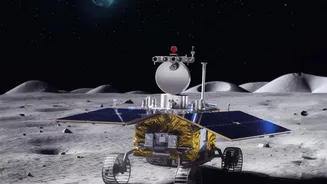
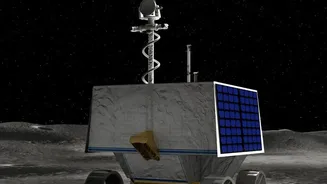
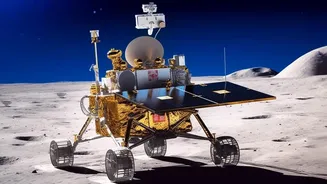
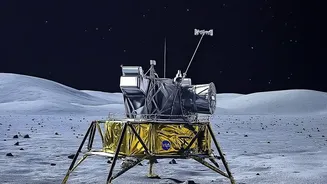
This quest for lunar water is a global endeavour, sparking a new era of collaboration and competition. NASA's Artemis program, which aims to return astronauts to the Moon, is heavily focused on the south pole precisely because of its potential water ice reserves. Future rovers, like NASA’s VIPER, are designed to follow up on these infrared maps, drilling into the surface to confirm the quantity and quality of the ice. This effort includes significant international partnership. For instance, the upcoming LUPEX mission is a joint effort between Japan's JAXA and India's ISRO, with NASA providing a key water-detecting instrument. Similarly, the European Space Agency (ESA) recently announced its first lunar rover, MAGPIE, which will also explore the south pole for water and other resources starting in 2029. These missions show a clear international consensus: securing lunar resources is the critical next step in space exploration.
From Maps to Mining
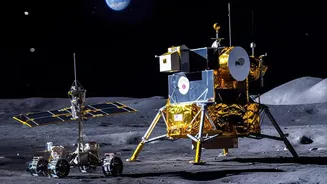
It's important to understand that these infrared maps are treasure maps, not the treasure itself. They show scientists the most promising places to look, but they don't confirm the depth, purity, or accessibility of the ice. The data from orbiters tells us 'where' to go, but ground missions are needed to determine 'how much' is really there. These maps will guide the next wave of robotic and, eventually, crewed missions. Landers and rovers will use instruments like drills and spectrometers to analyse the soil composition directly, turning the promising signals from orbit into verified reserves. The data gathered will not only benefit future astronauts but also provides a pristine record of the solar system's history, as the ice could contain materials delivered by comets and asteroids billions of years ago. These detailed infrared maps are the essential first step, accelerating the journey from simple exploration to the long-term goal of building a sustainable lunar economy.