




The Legacy of the Sea Forts
Maharashtra is home to over 350 forts, but its coastal forts hold a unique place in history. These structures were not just defensive outposts; they were the backbone of the Maratha Empire's naval ambitions, particularly under Chhatrapati Shivaji Maharaj.
He recognised the need to protect the coastline from foreign invaders and established a formidable naval presence. Forts like Sindhudurg and Vijaydurg became crucial naval bases, helping to establish Maratha supremacy along India's western coast. This itinerary explores some of the most significant of these coastal sentinels, blending stunning landscapes with tales of courage and strategic genius.
Day 1: Alibag and the Approachable Fort
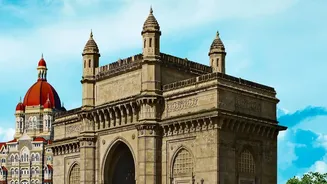
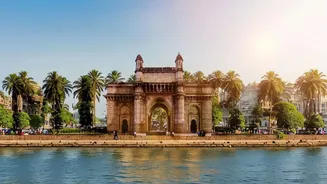
Begin your journey just south of Mumbai in Alibag, a popular coastal town accessible by ferry from the Gateway of India. Here, you'll find Kolaba Fort, a 17th-century sea fort that offers a unique access experience. During low tide, a pathway emerges from the sea, allowing visitors to walk or take a traditional horse cart across the exposed seabed to reach its gates. The fort was one of the last constructed under Chhatrapati Shivaji Maharaj and later became a key base for Maratha admiral Kanhoji Angre. Inside, you can explore ancient stone pathways, weathered bastions, several temples, and a freshwater well, all while enjoying panoramic views of the Arabian Sea.
Day 2: The Unconquered Murud-Janjira
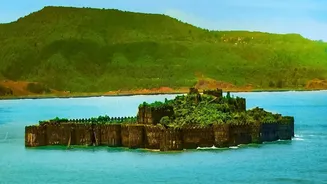
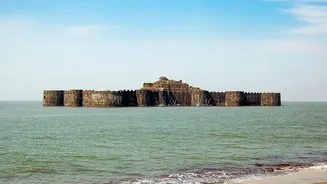
Travel further south along the coast to the town of Murud, the launching point for a visit to the formidable Murud-Janjira Fort. Situated on an oval-shaped island, this fort is famous for being unconquered, having repelled attacks from the Portuguese, British, and even the Marathas. Originally a wooden structure built by local fishermen in the 15th century, it was rebuilt in stone and became the stronghold of the Siddis, naval commanders of Abyssinian origin. Reached by sailboat from the Rajapuri jetty, the fort's 40-foot-high walls and 26 surviving artillery towers remain impressively intact. Inside, you can find the remnants of a mosque, a palace, and two freshwater ponds—a remarkable feature for a fort surrounded by saltwater.
Day 3: Journey to Ratnagiri's Coast
Continue your coastal drive south into the Ratnagiri district, the heart of the Konkan region. This area is dotted with smaller but historically significant forts. A notable stop is Suvarnadurg, or the 'Golden Fort', near Harnai. Seized by Shivaji Maharaj in 1660, it served as another key naval base. The fort is mostly in ruins, but its main gates and walls offer a glimpse into its past strategic importance. Further down the coast lies Ratnadurg Fort, also known as Bhagwati Fort, perched on a hill beside the sea near Ratnagiri town. Originally built by the Bahmani Sultanate, it was captured by Shivaji in 1670 and offers stunning views of the coastline.
Day 4: Shivaji's Masterpiece, Sindhudurg
Your journey's historical highlight awaits in the Sindhudurg district. Off the coast of Malvan lies Sindhudurg Fort, a spectacular sea fortress built by Chhatrapati Shivaji Maharaj himself. Construction began in 1664 on Kurte Island with the aim of countering foreign naval powers and the Siddis of Janjira. Spanning 48 acres, the fort's massive walls are 30 feet high and were designed to withstand both enemy cannon fire and the tides of the Arabian Sea. A short ferry ride takes you to this architectural marvel, where you can find a temple dedicated to Shivaji, a rarity in Maharashtra. The fort's main entrance is cleverly hidden, showcasing the brilliant military strategy of the time.
Day 5: The Victorious Vijaydurg
Conclude your tour at Vijaydurg, the 'Fort of Victory', one of the oldest forts on the Sindhudurg coast. Located at the mouth of the Vaghotan River, this fort was a prized naval base for the Marathas. Its formidable laterite stone walls and strategic location made it nearly impregnable. Exploring Vijaydurg offers insights into Maratha naval strategies and its role in protecting the Konkan coast. The massive ramparts provide breathtaking panoramic views of the sea, and a tranquil temple within the premises offers a peaceful retreat. From here, you can reflect on the journey through a land where history was written on the waves.