


First, What is Agrivoltaics?
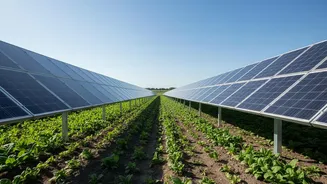
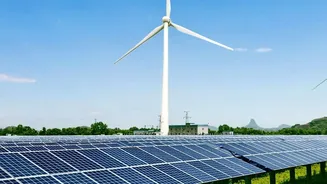
Agrivoltaics, also known as agri-PV, is the simple but powerful idea of using land for both agriculture and solar energy generation at the same time. Instead of choosing between a field of crops or a field of solar panels, this approach combines them.
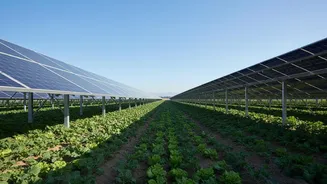
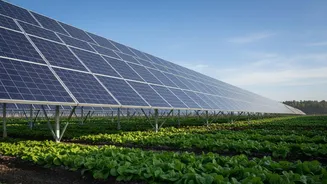
Typically, this involves installing solar panels on structures raised high enough to allow farming activities—like growing crops, grazing livestock, or cultivating pollinator habitats—to continue underneath or between the panel rows. The goal is to create a symbiotic relationship where land productivity is maximized, addressing two of India's most pressing needs: food security and clean energy.
Why India is Betting Big on This Idea
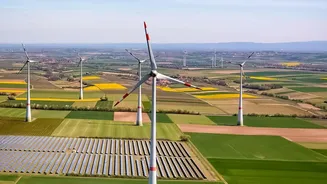
India faces a classic development dilemma: with a growing population and economy, the demand for both land and energy is immense. Large-scale solar farms require vast tracts of land, which often creates a conflict with agricultural needs. Agrivoltaics offers an elegant solution to this land-use competition. It aligns perfectly with the nation’s ambitious renewable energy targets, including the goal of installing 500 GW of renewable capacity by 2030. For farmers, it presents an opportunity to diversify their income by selling electricity, providing a stable revenue stream that can buffer them against crop failures or market volatility. Pilot projects have already shown dramatic increases in farmer income, turning farmland into a dual-source asset.
The Old Problem: Too Much Shade
For years, the biggest question mark hanging over agrivoltaics was the shade cast by the solar panels. The conventional wisdom was that less sunlight would automatically mean lower crop yields, making the entire concept inefficient for many types of crops. Developers and farmers viewed shade as a negative side effect that had to be minimized. The focus was on engineering solutions to get as much light to the ground as possible, or only planting crops in the unshaded gaps between panels. This perception often limited the perceived viability of agrivoltaics, confining it to niche applications or treating the agricultural component as secondary to energy production.
The New Assessment: Shade as a Strategic Advantage
This is where the paradigm shift is happening. In a warming world with more frequent extreme heat events, that same shade is being reassessed not as a liability, but as a crucial benefit. Research in India and globally shows that the partial shade from solar panels creates a cooler, more humid microclimate on the ground. This ‘shield’ protects crops from the harshest midday sun, reducing heat stress and significantly lowering water evaporation from the soil. As a result, many crops don't just survive; they thrive. This insight is changing how projects are evaluated. Instead of just measuring lost sunlight, the assessment now includes the positive impacts of shade, such as water conservation and crop protection, as key performance indicators.
Which Crops Benefit and What's Next?
Not all crops are suited for a life in the shade, but many are. Research has identified several categories that do particularly well, including leafy greens like spinach, root vegetables such as potatoes and radishes, and certain fruits and herbs. Studies have shown that some vegetables produce higher yields and require far less irrigation when grown under panels. The next step, which is already underway, involves detailed, region-specific assessments. Experts are calling for a national framework to certify 'solar crops' and to map which crop-panel combinations work best in India's diverse agro-climatic zones. Government schemes like PM-KUSUM are being adapted to support this more nuanced approach, helping farmers choose the right crops to create a truly dual-harvest system.