


A Planet Hunter's New Mission
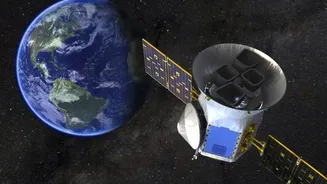
NASA's Transiting Exoplanet Survey Satellite, or TESS, was launched in 2018 with a clear purpose: to find planets outside our solar system. It does this by staring intently at hundreds of thousands of stars, looking for tiny, periodic dips in their brightness.
These dips, known as transits, often signal a planet passing in front of its star. TESS has been incredibly successful, identifying thousands of potential exoplanets. But scientists have realized that this same sensitivity to changes in starlight makes TESS an ideal tool for an entirely different kind of hunt—the search for isolated black holes wandering through our galaxy. An initiative called Black Hole Hunters is now using TESS data, asking citizen scientists to help spot the unique signatures these invisible objects leave behind.
Seeing the Invisible Through Gravity
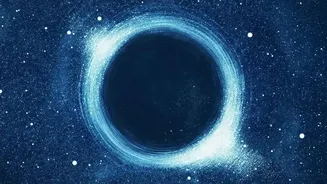
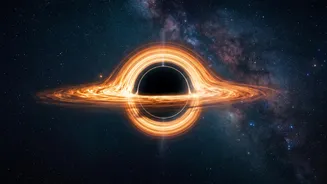
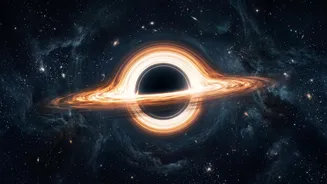
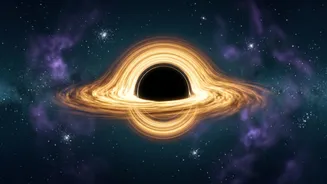
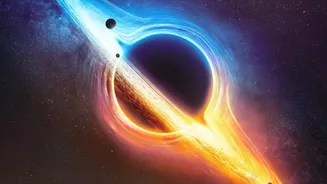
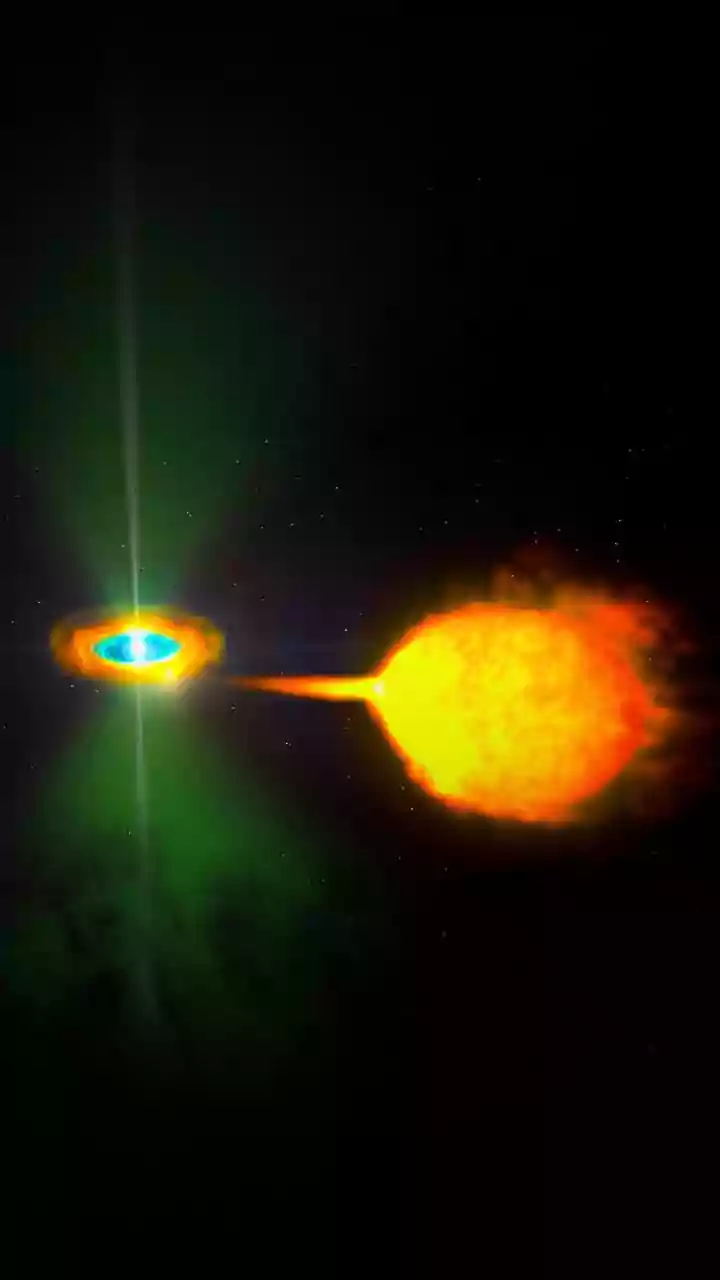
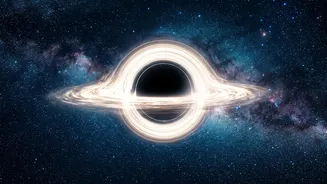
Black holes don't emit or reflect light, making them impossible to see directly. For decades, astronomers have found them by observing their dramatic effects on their surroundings, such as by detecting X-rays blasted from material being torn apart as it falls into the black hole. But these methods only work for black holes that are actively feeding on a nearby star. The Milky Way is thought to contain over 10 million stellar-mass black holes, yet only a tiny fraction have been found because most are 'quiet' and not interacting with anything. The Black Hole Hunters project uses a different method based on a prediction from Albert Einstein's theory of general relativity: gravitational microlensing. An object with immense gravity, like a black hole, warps the space around it. If it passes almost perfectly in front of a distant star, its gravity acts like a lens, bending and magnifying the background star's light. Instead of a dip in brightness, astronomers see a temporary, sharp increase.
The Telltale Flicker of Light
This gravitational microlensing effect is the specific 'light pattern' the project is looking for. While a planet's transit causes a star to dim, a passing black hole makes a background star appear to brighten suddenly and then fade back to normal in a very characteristic way. This provides a way to detect a black hole that would otherwise be completely invisible. TESS is perfectly suited for this because it monitors the brightness of stars with high frequency, capturing the precise shape of these brightening events. In fact, TESS's ability to use microlensing was recently proven when it helped confirm the existence of a Jupiter-like planet, showcasing the power of the technique. The Black Hole Hunters project, run through the citizen science platform Zooniverse, presents volunteers with 'light curves'—graphs showing a star's brightness over time—from TESS data. Volunteers are trained to recognize the symmetrical, sharp peaks that could indicate a microlensing event caused by a black hole.
Why the Public Is Key to Discovery
With TESS generating millions of light curves, the sheer volume of data is too much for professional astronomers to analyze alone. While automated algorithms can help, they are often confused by other cosmic phenomena, like stellar flares or the natural pulsations of some stars, which can mimic interesting signals. The human brain, however, is exceptionally good at pattern recognition. The Black Hole Hunters project leverages this by showing each potential signal to multiple volunteers. By crowdsourcing the initial analysis, the project can create a reliable shortlist of the most promising candidates for professional astronomers to investigate further with more powerful telescopes. Since its launch, nearly 23,000 volunteers have contributed, making millions of classifications and significantly speeding up the search for these hidden cosmic objects.