


The Old Way of Driving on Mars
Exploring Mars has always been a slow, painstaking process. Because of the significant time delay for signals to travel between Earth and Mars, rovers couldn't be driven in real-time with a joystick. Instead, human engineers would spend hours, sometimes
entire days, analyzing images to meticulously plan a short drive, sending the commands, and then waiting to see if the rover executed them safely. A good driving day for the groundbreaking Curiosity rover might cover a couple of hundred metres. This careful approach maximized safety but limited the scope and speed of scientific discovery. To get to the most interesting geological sites, scientists and engineers needed a rover that could think for itself.
A Brain Upgrade Called AutoNav
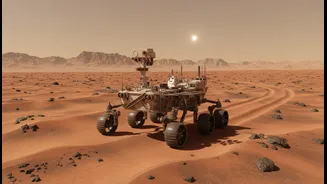
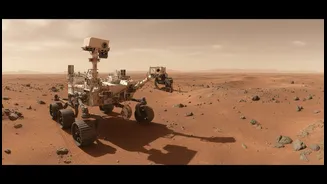
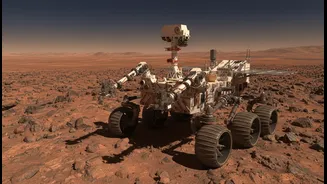
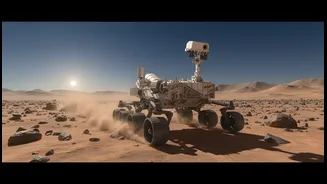
Perseverance represents a major leap forward, largely thanks to its advanced autonomous navigation system, called AutoNav. Unlike its predecessors, Perseverance uses a dedicated computer processor and advanced cameras to create 3D maps of its surroundings, identify potential hazards like sharp rocks or steep slopes, and plot its own path in real-time. This allows it to drive much farther and faster than previous rovers without waiting for instructions from Earth. In fact, Perseverance has covered the marathon distance of 26.2 miles (42.195 kilometers) in just over five years, less than half the time it took the Opportunity rover. This self-driving capability is the secret weapon that transforms the rover from a remote-controlled vehicle into a semi-autonomous explorer.
More Than Just a Mileage Record
This marathon isn't just about bragging rights; it's about accelerating science. Perseverance’s primary mission is to search for signs of ancient life in Mars's Jezero Crater and collect rock and soil samples for a potential future return to Earth. The crater is a rich scientific environment, but the most promising locations are spread out. AutoNav's efficiency allowed the rover to quickly traverse the crater floor and reach a key target—an ancient river delta believed to hold preserved signs of past life—far faster than would have been possible otherwise. The rover has already set multiple single-day driving records, covering distances that would have taken its predecessors days or even weeks to achieve. This speed and autonomy directly translate to more science being done, as the rover spends less time waiting for commands and more time exploring, analyzing, and collecting samples.
The Blueprint for Future Exploration
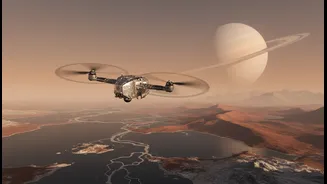
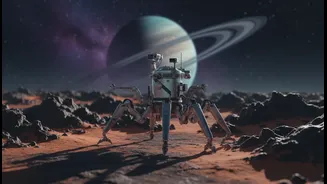
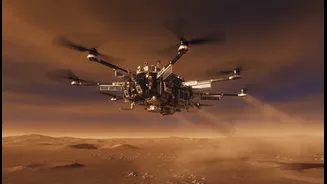
The success of Perseverance's autonomous driving technology is a game-changer for NASA's future plans. The upcoming Mars Sample Return mission, a joint effort with the European Space Agency, will require robotic systems to perform complex tasks, including a Sample Fetch Rover retrieving the samples Perseverance has cached. The speed and intelligence pioneered by Perseverance will be crucial for these time-sensitive operations. Looking further ahead, missions to more distant and challenging destinations, like the icy moons of Jupiter or Saturn, will rely even more heavily on autonomy. Communication delays to the outer solar system are hours long, making direct human control impossible. Rovers will need to be fully autonomous scientists, capable of making their own decisions for weeks or months at a time. Perseverance's marathon is the first major step in proving that this model of exploration isn't just a theory, but a practical and powerful reality.