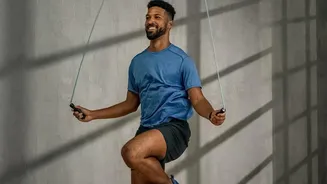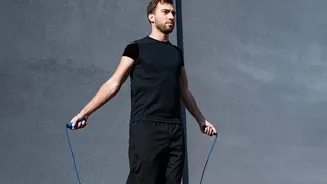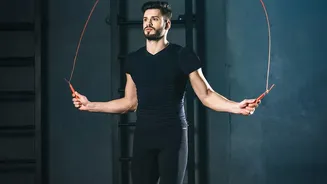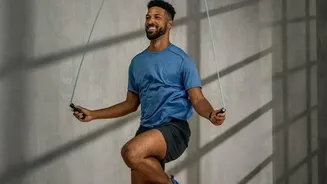






Often dismissed as a playground game, the humble jump rope is one of the most efficient fitness tools available. It's not just for cardio; it's a potent workout for your brain, designed to sharpen the link between your mind and muscles.
More Than Just a Cardio Burn
While jumping rope
is fantastic for elevating your heart rate and burning calories, its benefits go much deeper. The real magic lies in its ability to enhance coordination. Every swing and jump requires a precise sense of timing, rhythm, and spatial awareness. This isn't just about moving your feet; it's about creating a seamless connection between your eyes, hands, and feet, forcing them to work in perfect synchrony. This process of learning and repeating motor patterns strengthens the neural pathways between your brain and your limbs, essentially making your body smarter and more responsive.
The Brain-Body Connection
Skipping is a cognitive exercise disguised as a physical one. Unlike more passive forms of cardio, it demands constant focus. Your brain must calculate the rope's speed, anticipate its arrival at your feet, and signal your body to jump at the exact right moment. This rapid feedback loop improves what exercise scientists call neuromuscular adaptation. It trains your fast-twitch muscle fibres, which are crucial for quick, explosive movements, and enhances your agility—the ability to change direction and speed with control. Boxers have used it for a century for this very reason: it builds quicker feet and faster reflexes.
Getting Started: The Fundamentals
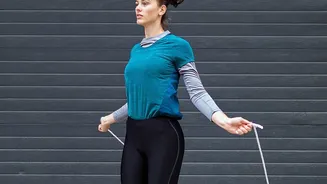
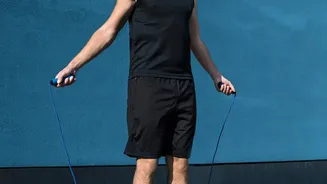
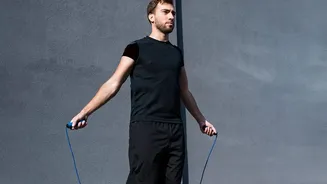
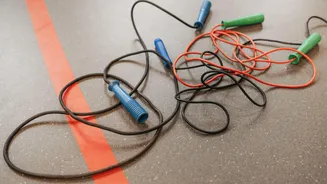
Before you can reap the rewards, you need the right setup and form. First, find the right rope length. Stand on the middle of the rope with one foot; the ends of the cable (not including the handles) should come up to your armpits or sternum. A rope that's too long will be slow and clumsy, while one that's too short will trip you up. Maintain a tall posture with your shoulders back and core engaged. Keep your elbows close to your body and turn the rope by rotating your wrists, not by swinging your entire arms. Finally, jump just high enough to clear the rope—only an inch or two off the ground—and land softly on the balls of your feet.
Drills to Build Your Coordination
Once you master the basic two-foot bounce, you can introduce drills that specifically challenge your coordination. Start with the 'Alternate Foot Jump', also known as the boxer skip. As the rope comes around, you'll shift your weight and hop from one foot to the other, as if you're running in place. This drill improves your balance and rhythm. From there, you can try single-leg jumps. Attempt five consecutive jumps on your right foot, then switch to your left for five jumps. As you get more comfortable, you can reduce the count to two jumps per foot. These variations force your body to make constant small adjustments, sharpening your stability and control.
Common Mistakes and How to Fix Them
Many beginners get frustrated because of a few common errors. The most frequent is using a rope that is too long, which encourages wide arm swings and poor form. If you find your arms are flailing out to the sides, it's a sign your rope is likely too long and you're compensating. Another issue is jumping too high, which wastes energy and puts unnecessary impact on your joints. Focus on small, efficient hops. Also, avoid looking down at your feet. Keep your eyes looking forward, which helps maintain balance and posture. Remember that rhythm is key; if you're struggling, try jumping without the rope first to find a steady cadence.