






A Tale of Two Samples
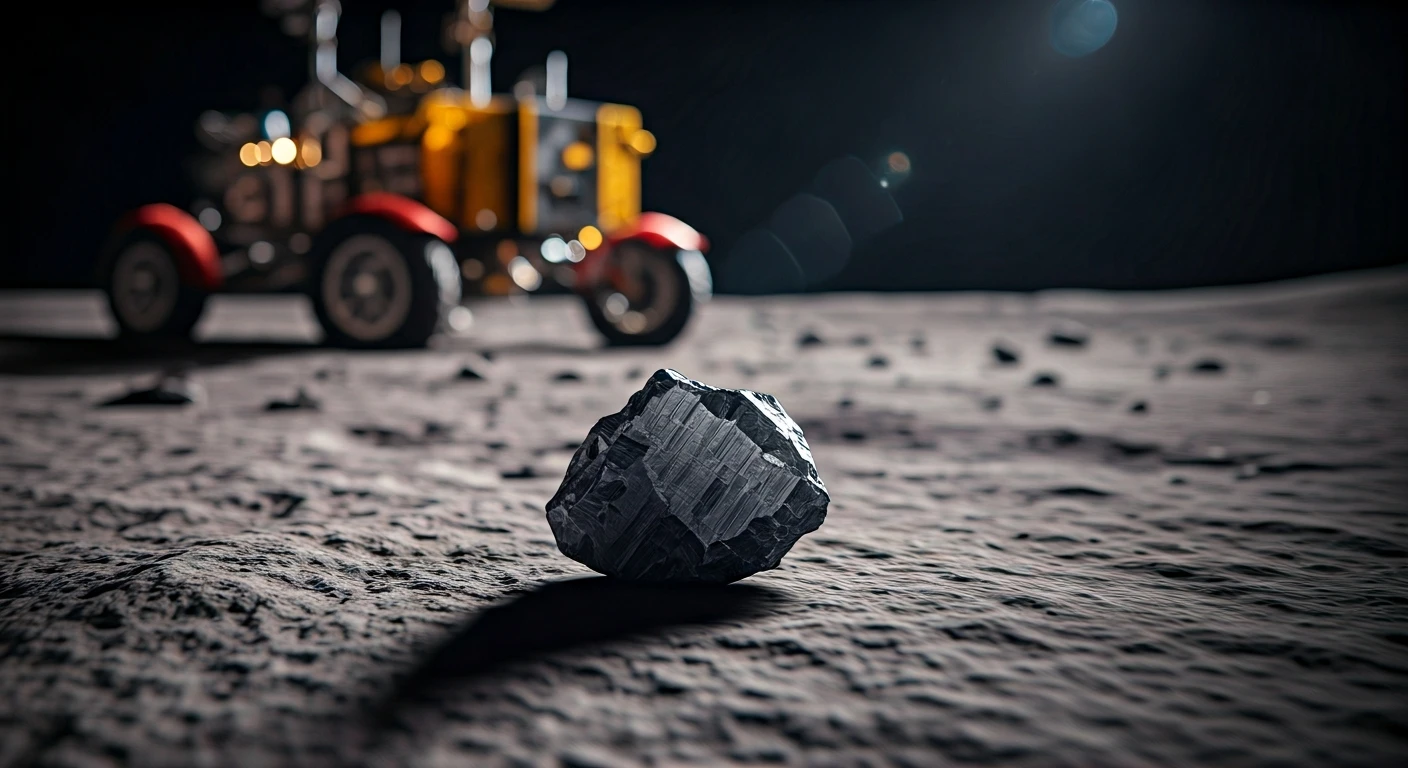
In one corner, we have the soil at Shiv Shakti Station, the place where India’s Pragyan rover made history in August 2023 by exploring the Moon's south polar region. In the other, we have ALHA 81005, a small rock found in the Allan Hills of Antarctica
back in 1981. This particular rock holds a special place in science, as it was the very first meteorite that scientists could definitively say came from the Moon. For decades, these two locations—one on the Moon, one on Earth—were completely unrelated. That has now changed, thanks to data from Chandrayaan-3's Alpha Particle X-ray Spectrometer (APXS). A new study by scientists at the Physical Research Laboratory in Ahmedabad has found a striking geochemical match between the two.
The Chemical Fingerprint
The connection is not just a vague similarity; it's a remarkably close chemical fingerprint. Researchers compared the APXS data from the Pragyan rover with the compositions of 66 known lunar meteorites on Earth. Of all of them, ALHA 81005 was the closest match. Specifically, both samples have an unusual composition that sets them apart from typical lunar terrain. They show lower levels of aluminium oxide and significantly higher levels of iron and magnesium oxide. For example, the soil at Shiv Shakti Station contains about 26.1% aluminium oxide, while the meteorite has 25.8%—both much lower than the lunar highland average of nearly 30%. This suggests both samples come from a similar, and somewhat rare, type of lunar crust.
A Common Origin, Not A Common Address
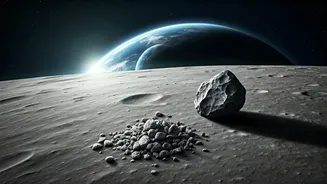
It is crucial to understand what this link means. ISRO and the study's authors are clear that this does not mean the ALHA 81005 meteorite was physically launched from the exact spot where Chandrayaan-3 landed. The Moon has been bombarded by asteroids for billions of years, a process that ejects lunar rock into space, some of which eventually falls to Earth. Pinpointing the exact crater of origin for any given meteorite is incredibly difficult. Instead, the finding indicates that both the Shiv Shakti site and the meteorite represent the same category of magnesium-rich crustal material. This material is believed to have been excavated from deeper within the Moon's crust by massive impacts billions of years ago, possibly from the formation of the giant South Pole-Aitken basin, and scattered across the surface.
Why This Discovery Matters
This discovery is significant for several reasons. Firstly, it provides a crucial 'ground truth' connection. Scientists have samples of lunar meteorites in labs on Earth, but they rarely know where on the Moon they came from. By linking ALHA 81005 to the Chandrayaan-3 landing area, we now have a geographical and geological context for at least one type of lunar meteorite. This enhances the scientific value of both the rover's data and the meteorite itself. Secondly, it reinforces a key theory about the Moon's formation, known as the Lunar Magma Ocean hypothesis. This theory posits that the Moon was once covered in molten rock, and as it cooled, different minerals formed its crust and interior layers. The mixed, magnesium-rich soil at Shiv Shakti supports the idea of a complex, layered crust formed through this process, with ancient, deeper materials being churned up to the surface over eons.