







Why Your Train Has Different Bosses
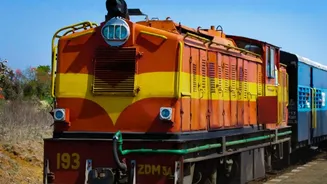
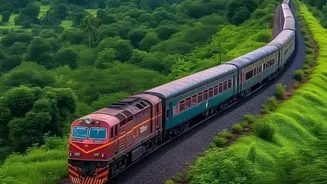
Indian Railways, one of the world's largest rail networks, isn't a single, monolithic entity. It's divided into 19 different zones, each headed by a General Manager. These zones, like Central Railway in Mumbai or Northern Railway in Delhi, act as semi-autonomous
units responsible for operations within their geographical area. Each zone is further broken down into several divisions, which manage the day-to-day running of trains, station maintenance, and passenger amenities. This decentralised structure allows for more efficient local management but is also the primary reason why information can sometimes feel inconsistent. A train travelling from Kolkata (Eastern Railway) to Delhi (Northern Railway) passes through the jurisdiction of multiple zones and divisions, each responsible for managing the train's passage through its territory. This can lead to variations in how information is relayed to passengers.
The Last-Minute Platform and Schedule Shuffle
The most common source of passenger anxiety is the last-minute change in platform numbers or train schedules. While a train has a designated originating zone, the real-time operational control passes from one division to another as it moves. The platform allocation at a specific station is typically managed by the local divisional control office. Factors like track congestion, arrival of other high-priority trains, or unforeseen maintenance can force a last-minute change. This decision is made locally and updated on the station's display boards and public announcement systems. Similarly, information about a train's delay might be more accurate when sourced from the zone it is currently passing through, as they have the most immediate operational data. The originating zone might have the initial schedule, but the en-route zones manage the live reality.
Your Official Real-Time Information Toolkit
To cut through the confusion, it is crucial to rely on official sources that provide the most accurate, real-time data. Foremost among these is the National Train Enquiry System (NTES). Developed by CRIS, the IT wing of Indian Railways, the NTES app and website are your best friends for train travel. Use the 'Spot Your Train' feature for live running status, which is often more reliable than third-party apps. The 'Live Station' feature shows all trains scheduled to arrive or depart from a particular station in the next few hours, including their expected platform numbers. Beyond NTES, the integrated helpline number 139 is an invaluable resource. You can call or send an SMS to 139 for a wide range of enquiries, including PNR status, arrival/departure times, and fare details, in 12 different languages. This single number has replaced multiple older helplines, making it a one-stop solution for queries and assistance.
Boarding Point Rules and Why They Matter
Your boarding point also plays a significant role. As of recent updates in 2026, Indian Railways has made it more flexible for passengers, allowing changes to the boarding station up to 30 minutes before the train's departure. This can be done online through the IRCTC website or app. This is particularly useful in large cities with multiple stations. However, it's critical to follow the official procedure. If you simply decide to board from a later station without formally changing your boarding point, the Travelling Ticket Examiner (TTE) can mark you as a 'Not Turned Up' (NTU) passenger. This could lead to your seat being allocated to a passenger with a Reservation Against Cancellation (RAC) or waitlisted ticket from the next station. Always update your boarding point officially to avoid losing your seat.
Navigating Rules That Vary by Zone
Beyond live updates, even some administrative rules can have zonal nuances. A key example is the process for filing a Ticket Deposit Receipt (TDR), which is a claim for a refund in situations where you couldn't travel for reasons like the train being over three hours late or AC failure. While the core rules are set nationally, the processing of a TDR is handled by the zonal railway. The interpretation of rules or the speed of processing can sometimes vary. For instance, claiming a refund for being forced to travel in a lower class requires a certificate from the TTE, and the claim is then processed by the relevant zonal authority. Understanding that the final decision rests with the zone can help manage expectations when seeking refunds for service disruptions.