



The Primary Mission: Keeping Astronauts Safe
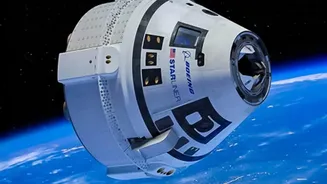
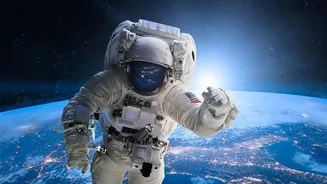
The most immediate reason for this partnership is to support India's Gaganyaan mission, which aims to send Indian astronauts into orbit. Human spaceflight is incredibly demanding on the body. Astronauts face a hostile environment defined by microgravity,
radiation, and confinement. To ensure the crew's safety and mission success, ISRO needs deep medical expertise to understand, prevent, and treat the health issues that arise in space. This collaboration with AIIMS provides that critical knowledge base, focusing on astronaut health, performance, and safety during missions. The goal is to develop procedures, medical devices, and protocols to maintain human health in extreme space environments.
What Happens to the Body in Space?
Space travel triggers a cascade of physiological changes. Without the constant pull of gravity, astronauts can lose bone density at a rate of 1-2% per month, a condition similar to accelerated osteoporosis. Muscles atrophy from lack of use, and fluids shift upwards in the body, putting strain on the cardiovascular system and even affecting vision. The immune system can become impaired, making astronauts more susceptible to infections. Beyond the physical, there are significant behavioural and psychological challenges, including stress from isolation and sleep disturbances. The joint research between ISRO and AIIMS will focus on these key areas: human physiology, cardiovascular health, musculoskeletal changes, immunology, and behavioural health.
From Space to Your Local Clinic
Perhaps the most exciting aspect of this collaboration is its potential to benefit healthcare on Earth. The challenges of monitoring astronaut health in a tiny, remote spacecraft are similar to the challenges of providing healthcare in remote villages in India. Technologies developed for space, such as portable diagnostic tools and telemedicine systems that allow doctors to monitor patients from afar, have direct applications on the ground. For instance, research into preventing bone loss in astronauts could lead to new treatments for osteoporosis here on Earth. Studying muscle atrophy in space may provide insights into age-related muscle decay, and understanding how the immune system changes in microgravity could shed light on the aging process itself.
A Boost for 'Make in India' Medical Tech
This partnership isn't just about research; it's about building capability. By tasking India's premier medical and space agencies to solve these complex problems, the government is fostering indigenous innovation. The development of new medical devices, life support systems, and health monitoring equipment for Gaganyaan will bolster the 'Make in India' initiative. Historically, some critical technologies like Environmental Control and Life Support Systems (ECLSS) have been closely guarded by other space-faring nations. This collaboration empowers India to develop its own solutions, creating a self-reliant ecosystem for human spaceflight and advanced medical technology that can be commercialized for broader use.