








The Great Disconnect
For years, the promise of “work from anywhere” in India came with an unspoken asterisk: *anywhere with good fibre or 4G. This tethered a generation of digital nomads and remote professionals to urban centres and a handful of well-connected tourist towns.
The ambition to set up a workstation in a serene Himalayan village in Himachal or a quiet Uttarakhand hamlet often met a harsh reality. Unreliable mobile networks, frequent weather-related outages, and the sheer absence of terrestrial broadband created a frustrating digital divide. In many of these stunning landscapes, finding a stable signal can involve a trek to a specific spot, locally known as 'Jannat' or heaven, just to send an email. This connectivity crisis has long been the primary barrier preventing the true decentralisation of the modern Indian workforce.
A New Constellation of Hope
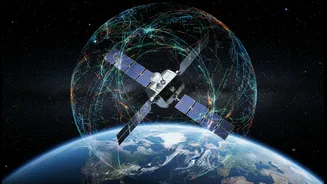
The solution is now arriving from above. A new generation of satellite internet, powered by constellations of Low Earth Orbit (LEO) satellites, is poised to solve this problem. Unlike older geostationary satellites that hovered far from Earth and were plagued by high latency (lag), LEO satellites orbit much closer, between 400 to 2,000 kilometres high. This proximity drastically reduces latency and enables high-speed data transmission, making them suitable for video calls, online gaming, and other demanding applications. Companies like SpaceX's Starlink and Bharti-backed Eutelsat OneWeb, along with the upcoming JioSpaceFiber, are at the forefront of this revolution. These services aim to deliver broadband-like speeds directly from space, bypassing the need for physical cables and mobile towers on the ground.
The Players Entering India's Sky
The race to connect India from orbit is heating up, although commercial launches have faced regulatory hurdles. Starlink, which has received key approvals, aims to provide speeds ranging from 25 to 220 Mbps, promising to transform connectivity in remote regions. Meanwhile, Reliance's JioSpaceFiber, which will leverage Medium Earth Orbit (MEO) satellites through a partnership with SES, has already connected remote sites in Gujarat and Odisha, demonstrating its capability to deliver high-speed access where it's needed most. While all major operators have secured licences, they are still navigating the final stages of regulatory and security clearances before a full commercial rollout. These services are not just for individuals; they also hold the potential to strengthen the mobile backhaul for services like Jio True5G, further improving connectivity in rural India.
The Ground Reality: Cost and Practicality
This new technology comes at a premium compared to urban fibre plans. Users will need to purchase a hardware kit, which includes a small satellite dish (or user terminal) and a router. This one-time cost can range from ₹30,000 to ₹35,000. Monthly subscription costs are also expected to be higher than what city dwellers are used to, with estimates varying widely from promotional offers to standard rates that could be several thousand rupees. However, for a remote worker earning a city salary, this cost can be a justifiable expense for the freedom to live in a dream location without sacrificing their career. The setup is designed for self-installation; point the dish to the sky, and you're online. The only major requirement is a clear, unobstructed view of the sky, which can be a consideration in densely forested or steep valley locations.
Redefining the 'Workation'
The arrival of high-speed satellite internet is more than just a technological upgrade; it represents a fundamental lifestyle shift. It empowers professionals to escape the confines of digitally saturated cities without compromising their productivity. The 'workation' hotspots of Manali, Kasol, and Nainital, which already attract digital nomads, are set to become even more viable for long-term stays. More importantly, it opens up countless other remote villages that were previously off-limits for anyone needing a reliable connection. This technology democratises opportunity, allowing individuals to build their lives and careers around their preferred environment, not the other way around. The connectivity crisis that once defined remote work in the mountains is finally being solved, one satellite at a time.