



On the eve of Diwali, as much of India lights diyas, Goa prepares for a different kind of spectacle. The night sky is set to glow with the flames of massive bonfires, consuming towering figures of a mythical demon in a unique local tradition.
An Eve of Monsters and Merriment
While Diwali
is a pan-India festival, Goa’s celebrations begin with a distinct flavour on Narakasura Chaturdashi, the preceding day. Instead of quiet preparations, the streets of towns like Panaji, Margao, and Mapusa come alive with a vibrant, almost rebellious energy. Towering, grotesque effigies of the demon Narakasura line the roads, some as tall as three-storey buildings. This night is not about serene reverence but about a loud, communal spectacle. Youth groups, local clubs, and families parade their monstrous creations, often accompanied by drums and music, transforming the state into a roving gallery of folk art before the main event. The atmosphere is charged with anticipation for the symbolic victory of good over evil.
The Legend of a Fallen King
The tradition is rooted in the legend of Narakasura, a powerful demon king who, according to some Puranic texts, once ruled the land of Gomantak, an ancient name for Goa. Granted a boon that made him nearly invincible, Narakasura became a tyrant, tormenting his subjects and abducting thousands of women. The people prayed to Lord Krishna for help. Krishna, accompanied by his consort Satyabhama, challenged the demon. The ensuing battle was fierce, but ultimately, Krishna defeated Narakasura at dawn, freeing the captive women and restoring light to the land. The burning of the effigy re-enacts this 'Narakasura Vadh' (the slaying of Narakasura), a powerful symbol of evil being vanquished just before the festival of lights begins.
The Art of Creating a Demon
The creation of the Narakasura effigies is a testament to Goan creativity and community spirit. Weeks, sometimes even a month, before the festival, local youths begin their work. The process starts with a sturdy skeleton made of bamboo strips, which is then padded with dry grass, hay, and old newspapers to give it shape and volume. The exterior is a canvas for imagination, decorated with brightly coloured paper and paint to create a fearsome and elaborate figure. These are not simple scarecrows; they are intricate, often towering sculptures with detailed masks and multiple heads, sometimes even incorporating modern elements like hydraulics to make parts move. It’s a collective effort, with older members providing guidance and younger ones handling the construction, all fuelled by festive snacks and a sense of shared purpose.
A Spirited Competition of Good vs. Evil
What began as a simple folk tradition has evolved into a massive, spirited competition. Across Goa, local clubs and village groups vie for prestigious awards and cash prizes for the most impressive Narakasura effigy. The competitions have elevated the craftsmanship, with some groups spending significant funds on their creations. This friendly rivalry adds a layer of excitement to the night. Effigies are often mounted on trucks and paraded between different competition venues, from Panaji to Margao, creating a state_wide festival procession. The judging criteria often focus on creativity, size, and how terrifying the demon looks, turning the mythical battle into a contemporary artistic contest that showcases incredible local talent.
The Cleansing Fire of Dawn
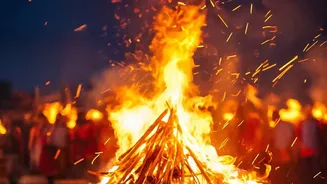
The celebration lasts through the night and culminates at dawn on Diwali morning. After a night of parading and exhibition, the Narakasura effigies meet their fiery end. They are stuffed with firecrackers and set ablaze in massive bonfires, symbolizing the destruction of evil and the cleansing of all negativity before the new day. Following the burning, Goans perform several rituals. Many take a traditional oil bath, or 'Abhyangsnan', to purify the body. A bitter berry called 'karit' is crushed underfoot, representing the final stamping out of the demon and all bitterness from life. Only after this dramatic, fiery purge does the more conventional celebration of Diwali, with families exchanging sweets and lighting lamps, truly begin.