

Starlight, Interrupted
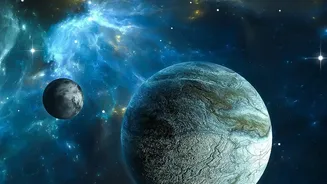
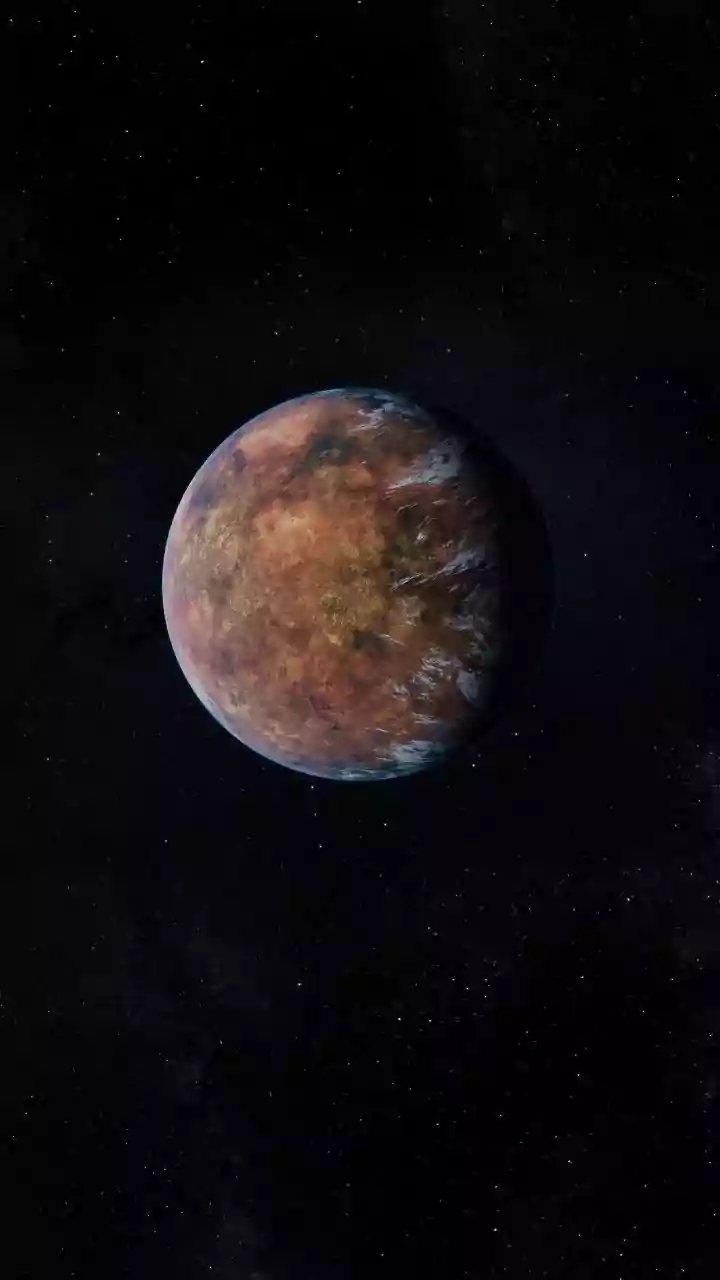
The entire process starts with a planet making a journey that astronomers call a transit. This is when an exoplanet, a planet outside our solar system, passes directly in front of its host star from our point of view. As it does, it causes a tiny, almost
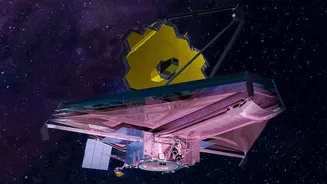
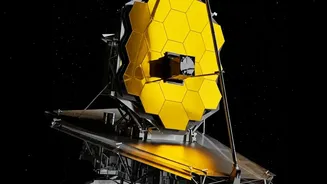
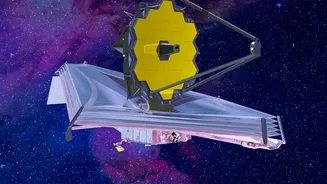
imperceptible dip in the star's brightness. This transit method is not only a great way to find planets but is also the crucial first step for analyzing their atmospheres. For the JWST to work its magic, it needs this perfect cosmic alignment. The telescope stares at the star, patiently waiting for the planet to pass, which allows a sliver of starlight to filter through the very edge of the planet's atmosphere. That filtered light carries the secrets of the alien world.
Decoding the Light
Once JWST captures this filtered starlight, the real analysis begins using a technique called transmission spectroscopy. Think of starlight as a complete rainbow of colors, or wavelengths, all blended together. A spectrograph, like the Near-Infrared Spectrograph (NIRSpec) aboard the JWST, is an instrument that works like a high-tech prism. It takes the incoming starlight and splits it apart into its constituent wavelengths, creating a detailed spectrum. This spectrum reveals how much light is present at each specific color. By comparing the spectrum of the star when the planet is in front of it to the spectrum when it is not, scientists can see what’s missing.
The Atmosphere's Barcode
The parts of the spectrum that are missing create a unique pattern of dark lines, like a chemical barcode. Each atom and molecule absorbs light at very specific, well-known wavelengths. Water vapor (H2O), for instance, has a very distinct absorption signature in the infrared part of the spectrum, which is exactly where the JWST excels. When starlight passes through an atmosphere containing water, the water vapor molecules absorb their specific colors, preventing them from reaching the telescope. If astronomers see that particular barcode of missing light in the data, they can confidently say they have detected water vapor. This same method can be used to find other molecules like methane and carbon dioxide.
The Rocky Planet Challenge
While this method has worked well for giant gas planets, detecting atmospheres on smaller, rocky worlds is far more challenging. A rocky planet's atmosphere is incredibly thin compared to that of a gas giant, meaning the absorption signal is minuscule and much harder to tease out of the data. Furthermore, other factors can complicate the readings. Clouds, for example, can block the starlight and mute the spectral features, making a definitive detection of water much more difficult. Scientists also have to be extremely careful to rule out contamination from the host star itself. Some cooler stars, known as red dwarfs, can have water vapor in their own outer layers, particularly in cooler regions called starspots. This can create a signal that mimics a planetary atmosphere, forcing researchers to perform careful analysis to distinguish between the two possibilities.
From Data to Discovery
Despite the challenges, JWST has already provided tantalizing hints of water vapor around rocky exoplanets like GJ 486 b. However, confirming these signals is a painstaking process. Researchers use multiple analysis methods and computer models to be sure the signal is real and is coming from the planet. Often, follow-up observations with other instruments are needed to rule out stellar contamination and confirm the presence of a stable atmosphere. For example, by observing the planet's 'day side', scientists can measure its temperature. If heat is being circulated from the hot day side to the cooler night side, it's a strong indicator that an atmosphere is present and doing the work. Each new observation pushes the boundaries of what's possible, bringing us closer to understanding these distant worlds.