

The Sun’s Hidden Temper
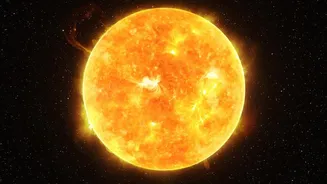
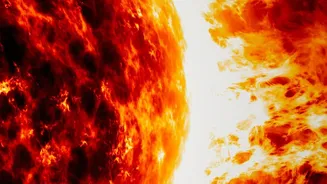
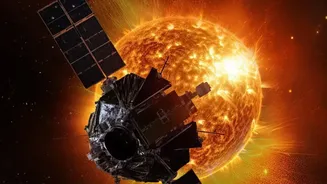
While it makes life on Earth possible, the sun has a volatile side. It periodically releases massive bursts of energy and matter known as solar storms. These events come in several forms, but two are of particular concern for our technology. The first
is a solar flare, a powerful eruption of radiation that travels at the speed of light, reaching Earth in about eight minutes. The second, a Coronal Mass Ejection (CME), is a slower but often more powerful eruption, launching billions of tons of magnetized plasma into space that can take one to three days to arrive. When Earth is in the path of these events, they can trigger geomagnetic storms in our upper atmosphere, creating beautiful auroras but also wreaking havoc on technological systems.
Satellites in the Firing Line
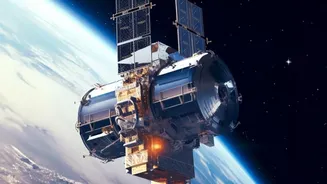
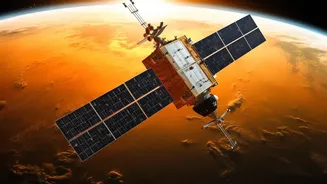
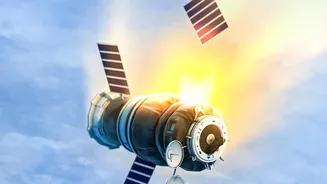
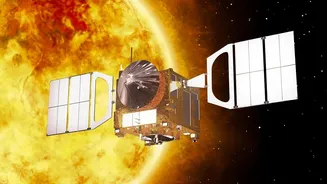
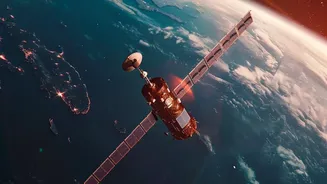
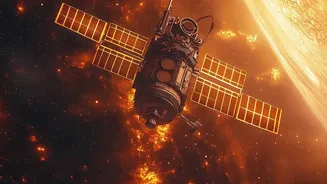
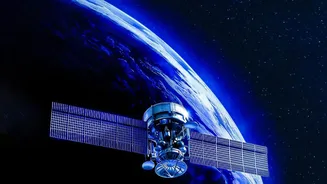
Satellites orbiting outside Earth’s protective atmosphere are especially vulnerable to the impacts of space weather. The high-energy particles from a solar storm can cause significant damage in several ways. Firstly, they can degrade satellite hardware, especially sensitive electronics and solar panels, reducing their operational lifespan. This is known as the total ionizing dose effect. Secondly, these particles can cause 'bit flips' in a satellite’s memory, changing a 0 to a 1 or vice versa, leading to phantom commands or system errors. In a worst-case scenario, an erroneous command could cause a satellite to fire a thruster, changing its orientation. Another major threat is atmospheric drag. A geomagnetic storm heats and expands Earth’s upper atmosphere, increasing the density. For satellites in Low Earth Orbit (LEO), this increased friction can cause them to lose altitude, requiring them to use precious fuel to correct their orbit or risk premature re-entry. A dramatic example of this occurred in 2022, when a minor geomagnetic storm caused the loss of up to 40 newly launched Starlink satellites.
A Celestial Weather Forecast
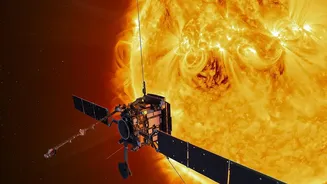
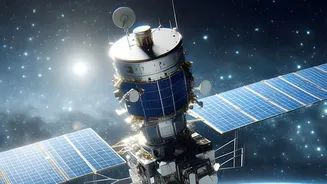
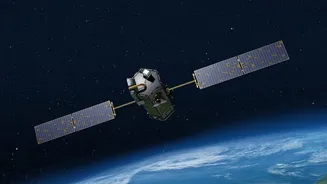
Just as we have meteorologists to predict terrestrial weather, we have space weather forecasters to warn us of solar storms. In the United States, the primary source for these alerts is NOAA's Space Weather Prediction Center (SWPC). The SWPC is a nerve center for monitoring the sun, operating 24/7 with a team of forecasters from both NOAA and the U.S. Air Force. They use a network of ground-based observatories and a fleet of specialized satellites to keep a constant eye on solar activity. Key assets include the GOES satellite series, which provides real-time imagery of solar flares, and the Deep Space Climate Observatory (DSCOVR) satellite. Positioned about 1.5 million kilometers from Earth, DSCOVR monitors the solar wind, giving forecasters a crucial 15 to 60-minute lead time on geomagnetic storms heading our way.
From Alert to Action
These early warnings are not just interesting data points; they are actionable intelligence that allows satellite operators to protect their multi-million dollar assets. When the SWPC issues an alert for an impending solar radiation storm or geomagnetic disturbance, operators can take defensive measures. A common strategy is to place the satellite into 'safe mode'. This involves temporarily shutting down non-essential systems and reorienting the spacecraft to shield its most sensitive components from the incoming radiation. While this means a temporary halt in data collection or service, it prevents potentially permanent damage. For LEO satellite constellations, operators might use the warning to proactively raise the orbits of their satellites, giving them more buffer against the increased atmospheric drag to come. These actions are critical for preserving not just individual satellites but entire communication networks.
The Economic Imperative
Protecting satellites is a matter of huge economic importance. The global space economy is a multi-billion dollar industry, and our reliance on it is only growing. Sectors from aviation and shipping to precision agriculture and banking depend on the flawless operation of GPS and communication satellites. A severe space weather event could disrupt these services, with estimated economic impacts reaching hundreds of billions, or even trillions, of dollars in an extreme scenario. By providing timely alerts, space weather forecasting services allow industries to mitigate these risks, preventing costly service interruptions and asset damage. As society's dependence on space-based technology continues to expand, the role of these solar sentinels becomes ever more critical to our daily lives and economic stability.