



The Great Indian Menu Dilemma
For decades, dining out in India often meant choosing a specialty: a restaurant dedicated to Mughlai, South Indian, or perhaps Bengali cuisine. Menus were deep but narrow, offering a thorough exploration of a single culinary tradition. Today, a new kind
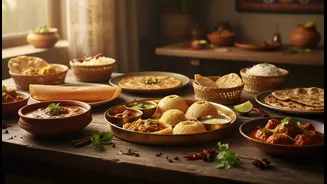
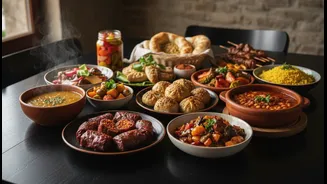
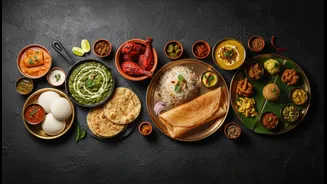
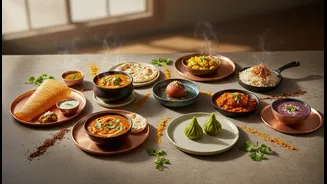
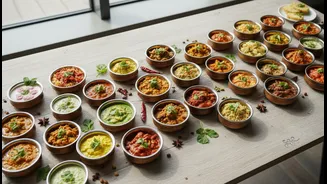
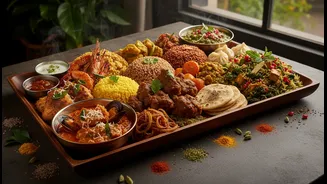
of menu has emerged, one that is unapologetically pan-Indian. It’s not uncommon to see a Naga smoked pork curry listed next to a Rajasthani laal maas, or a Goan fish curry offered alongside a delicate Kashmiri stew. This breadth can be exhilarating for the adventurous diner, but it also raises a crucial question: in an attempt to be everything to everyone, do these menus risk becoming a diluted, generic representation of India’s vast culinary landscape?
Curation, Not Confusion
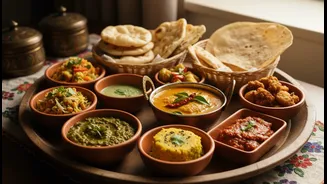
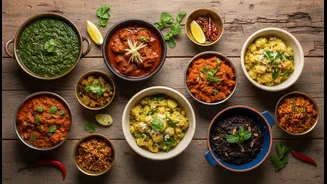
The success of this new wave of dining lies in a philosophy of curation, not fusion. This isn't about creating confusing hybrids like a 'tandoori risotto'. Instead, it’s about thoughtful selection and respectful execution. Top chefs and restaurateurs are acting as culinary curators, showcasing distinct regional gems side-by-side. The goal is to present each dish with its own identity, technique, and flavour profile intact. This approach allows diners to travel across India's diverse food map in a single meal, appreciating both the contrasts and the connections. The unifying thread is not a shared gravy but a shared commitment to authenticity and quality.
From The Mountains To The Sea
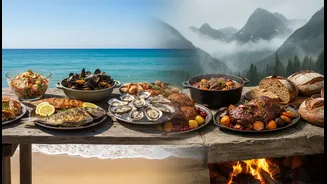
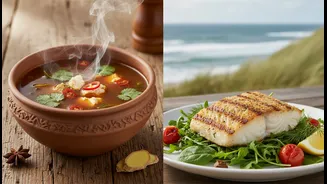
Consider the central proposition: a Himalayan broth and a coastal grill. One, likely a thukpa or a light, herb-infused stew, is defined by its subtlety and warmth, a product of a cold, mountainous region. It is nourishing and built on simplicity. The other, perhaps a fish grilled with a fiery mix of red chillies, tamarind, and coconut from the Konkan or Malabar coast, is bold, spicy, and evocative of the sun and sea. These dishes come from entirely different culinary philosophies. For them to coexist on a menu requires a kitchen with dual expertise—one that understands the delicate balance of Himalayan herbs and the precise, powerful punch of coastal spices. They must be cooked in their own way, with their own ingredients, respecting their unique heritage.
Guardians of Flavour
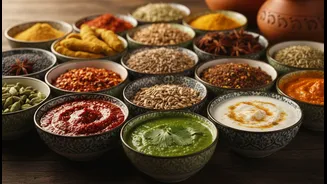
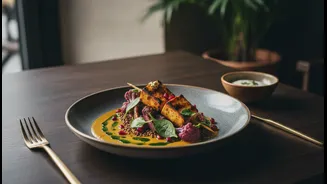
This trend is being driven by a generation of chefs who see themselves as cultural cartographers, dedicated to preserving and celebrating India's culinary heritage. Chefs at acclaimed restaurants are moving beyond generic North Indian fare to spotlight hyper-regional specialties. They travel to remote villages, document vanishing recipes, and source indigenous ingredients to ensure every dish tells an authentic story. This might mean sourcing specific heirloom rice from Bengal, a particular chilli from Nagaland, or ensuring the souring agent in a curry is the one traditionally used in its home state. This meticulous attention to detail is what allows a restaurant to serve a perfect Himalayan momo and an authentic Mangalorean ghee roast from the same kitchen without compromising either.
A Menu For Modern India
Ultimately, the pan-regional menu is a reflection of a more confident and curious modern India. Diners are more travelled and experimental, eager to explore the country's diversity. For a group of friends or a family, a menu that offers something for the spice-lover, the comfort-seeker, and the culinary explorer is a powerful draw. It allows for a shared experience without demanding a uniform palate. Far from diluting regional identities, these menus celebrate them by placing them on a national stage. They declare that a simple, soulful broth from the mountains is just as worthy of a fine-dining spotlight as a complex, robust grill from the coast. Each dish stands on its own, a proud ambassador for its region, proving that true unity lies in the celebration of diversity.