


Rice: The Heart of the Meal
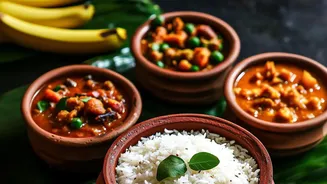
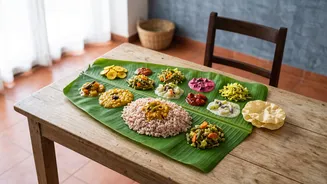
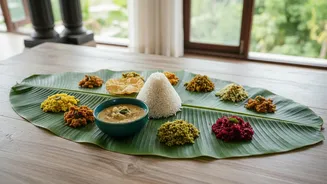
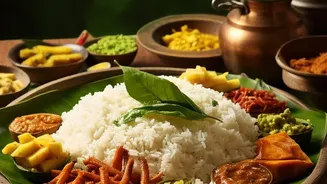
No Sadya is complete without a generous serving of rice, which forms the centrepiece of the meal. Traditionally, this is Kerala's native red rice, also known as Matta rice. Its robust, earthy flavour and firm texture make it the perfect canvas for the myriad
curries and side dishes that will adorn the banana leaf. It is served first, creating the foundation upon which the entire feast is built.
Parippu Curry: The Humble Beginning
The Sadya traditionally begins with this simple, soulful curry made from moong dal (split yellow lentils) and coconut. A spoonful of Parippu is served over the hot rice, topped with a drizzle of fragrant ghee. Its mild, comforting flavour gently prepares the palate for the explosion of tastes that are to follow, making it an indispensable and beloved part of the sequence.
Sambar: The Quintessential Stew
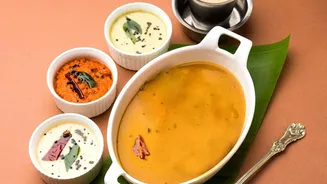
A staple across South India, the Sambar served in a Sadya is a hearty and tangy stew. It's made with toor dal, tamarind broth, and a special blend of roasted spices. It typically features a variety of vegetables like drumsticks, carrots, pumpkin, and shallots. Its complex flavour profile makes it a crucial second course to be mixed with rice after the Parippu.
Avial: The Mixed Vegetable Medley
Avial is arguably the star of the Sadya, a beautiful symbol of unity and abundance. This thick mixture combines a wide range of seasonal vegetables like yam, plantain, drumsticks, and carrots, all cooked in a luscious sauce of ground coconut and yoghurt. Seasoned with coconut oil and curry leaves, its unique flavour is a testament to Kerala's culinary genius.
Thoran and Mezhukkupuratti: The Vegetable Stir-Fries
To add texture and distinct vegetable flavours, at least one Thoran is essential. This is a dry stir-fry, usually made with finely chopped vegetables like cabbage or beans, mixed with grated coconut, mustard seeds, and curry leaves. Mezhukkupuratti is another stir-fry style, where vegetables like raw banana or yam are cooked until tender and coated in spices, offering a different texture.
Pachadi and Kichadi: The Cooling Yoghurt Relishes
These yoghurt-based dishes provide a cool, refreshing contrast to the spicier elements of the meal. Pachadi is typically sweet and tangy, often made with fruits like pineapple or vegetables like beetroot in a coconut-yoghurt base. Kichadi is similar but usually features vegetables like cucumber or okra in a yoghurt sauce seasoned with ground mustard seeds, offering a slightly sharper taste.
Olan: The Subtle Coconut Stew
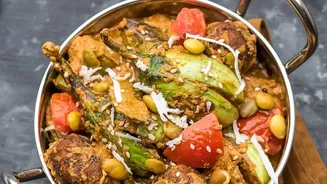
Olan is a delicate and subtle curry that showcases the pure flavour of coconut milk. It is typically made with ash gourd and black-eyed peas, simmered gently in thin coconut milk and finished with a dash of fresh coconut oil. Its mildness is key to balancing the more robust and spicy dishes on the leaf.
Pickles and Condiments: The Flavor Bombs
Small but mighty, the pickles and condiments served on the side are crucial for the overall flavour balance. Inji Puli (also called Puli Inji) is a sweet, sour, and spicy chutney made from ginger, tamarind, and jaggery. No Sadya is complete without it. Alongside it, a sharp mango or lime pickle (Naranga Achaar) adds another dimension of tang and spice.
Pappadam and Chips: The Essential Crunch
What is a feast without some crunch? Large, crispy Pappadams (made from lentil flour) are a must-have, perfect for crushing over rice and curry. Equally important are banana chips, both the salted yellow variety and the sweet, jaggery-coated version known as Sharkkara Upperi. These provide a delightful textural contrast throughout the meal.
Payasam: The Sweet Finale
The Sadya concludes with one or more varieties of Payasam, a rich and creamy pudding that serves as dessert. Two popular and essential types are Ada Pradhaman, made with rice flakes, jaggery, and coconut milk, and Palada Payasam, a delicate dessert made with milk, sugar, and tiny rice flakes. It’s the perfect sweet ending to a spectacular meal.