





What Are Micro-Fulfillment Centres?
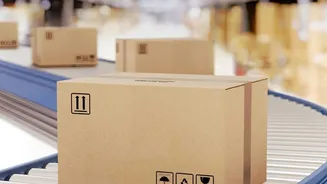
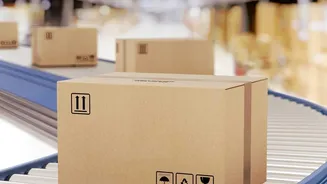
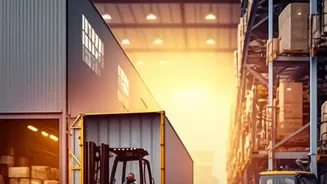
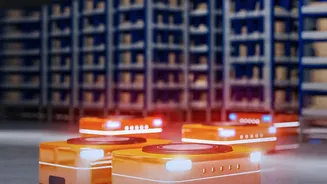
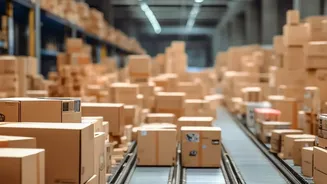
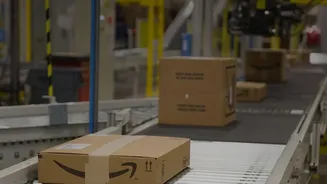
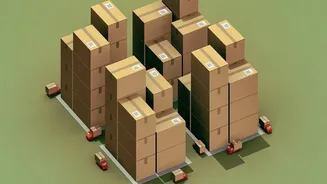
Think of a micro-fulfillment centre (MFC), or 'dark store', as a mini-warehouse strategically placed inside a city, close to where customers live. Unlike massive warehouses located on the outskirts, these compact hubs stock a curated selection of the most
popular products for a specific locality. The goal is simple: to drastically reduce the distance a package has to travel for the 'last mile' of its journey. By storing goods closer to buyers, companies can pick, pack, and dispatch orders for local delivery within minutes or hours, rather than days. This model is the engine behind the rise of 'quick commerce', promising delivery times that were once unimaginable.
The Tier 2 Gold Rush
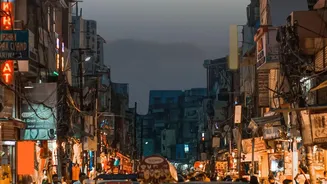
For years, e-commerce growth was a metro-centric story. Now, the main action has shifted to India's Tier 2 and Tier 3 cities. These urban centres, like Jaipur, Lucknow, Nagpur, and Coimbatore, are now the primary drivers of e-commerce growth, with some reports showing they account for nearly two-thirds of new online orders. This boom is fueled by rising disposable incomes, deep smartphone and internet penetration, and a new class of aspirational consumers. Shoppers in these cities are no longer just buying essentials; they're ordering everything from laptops to air fryers. For e-commerce platforms, this isn't just an opportunity—it's the new frontline for market growth.
Who Are the Key Players?
The race to capture the non-metro market is intense. E-commerce behemoths like Flipkart and Amazon are leading the charge by aggressively expanding their logistics networks. Flipkart, for instance, has already established over 1,000 micro-fulfillment centres for its 'Flipkart Minutes' service, with a significant push into more than 90 new Tier 2 and Tier 3 cities. Amazon is similarly scaling its infrastructure, adding numerous fulfillment and sorting centres to serve these regions, with plans to cover 100 cities with its 'Amazon Now' rapid delivery service. They are joined by dedicated third-party logistics (3PL) companies like Delhivery and Blue Dart, which are strengthening their deep-pincode coverage to support the broader D2C (Direct-to-Consumer) ecosystem.
Building the Hyperlocal Workforce
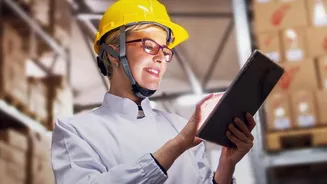
This expansion is not just about real estate and technology; it's about people. The headline's mention of 'teams' points to a significant job creation engine in these cities. To make micro-fulfillment work, companies need a robust local workforce. This includes hiring thousands of staff for picking and packing inside the MFCs, a large fleet of delivery partners to handle the last-mile transit, and local managers to oversee operations. The logistics and e-commerce sectors are projected to be among the top job creators, with a significant portion of this hiring happening in Tier 2 cities. This provides a major boost to local economies, creating employment opportunities that were previously concentrated in metropolitan hubs.
The Need for Speed and Savings
For customers, the most obvious benefit is speed. The establishment of local fulfillment hubs makes same-day or next-day delivery a reality, shifting the consumer expectation from 'fast' to 'dependable'. But for companies, the benefits are twofold. While setting up MFCs requires investment, they significantly lower the cost of last-mile delivery, which is often the most expensive part of the logistics chain. Shorter delivery routes mean lower fuel consumption and improved efficiency for delivery partners. Furthermore, the cost of real estate and labour in Tier 2 cities is considerably lower than in metros, making the operational economics more favourable.
Challenges on the Ground
Despite the momentum, expanding into smaller cities is not without its hurdles. Logistics companies often face inconsistent infrastructure, such as poor road connectivity and unreliable network coverage. A major challenge is the lack of standardized addresses, which can make finding a customer's doorstep a time-consuming task. The high prevalence of Cash on Delivery (COD) transactions also adds a layer of operational complexity and risk. Overcoming these issues requires deep local knowledge and adaptable technology, such as AI-powered route optimization that can navigate local nuances and vernacular communication tools to assist delivery partners.