





Pinpointing the Pollution's Origin
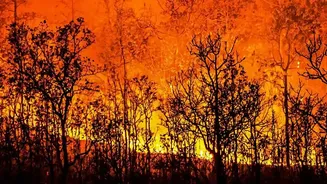
Every year, as the post-monsoon harvest season concludes, skies across the Indo-Gangetic Plain fill with smoke. While it's long been understood that the burning of crop residue, or stubble, is a major factor, recent scientific studies have quantified
its impact with unprecedented precision. Research from institutions like the Paul Scherrer Institute and IIT New Delhi has used advanced molecular measurement techniques to trace the specific chemical signature of smoke from agricultural fires. These studies confirm that a substantial portion of the harmful particulate matter blanketing cities like Delhi and Kanpur originates from the large-scale burning of paddy residue in states like Punjab. During the peak burning season in autumn, these emissions can account for a staggering percentage of the organic fine particulate matter in the air—as much as 43% in Kanpur and 22% in Delhi, according to one major study.
More Than Just a Delhi Problem
While Delhi's air quality crisis often grabs the headlines, the research underscores that this is a widespread regional issue. The smoke travels hundreds of kilometres, creating a vast river of pollution that affects the health of over 900 million people across the Indo-Gangetic Plain. One study highlighted that during the harvest season, smoke from rural agricultural fires could be responsible for up to half of all acute deaths related to PM2.5 pollution in a city like Kanpur. This confirms that urban pollution isn't just from urban sources; it is heavily influenced by activities happening far away. Interestingly, there's often a perception gap: residents in rural Punjab, where much of the burning occurs, are less likely to perceive their local air as severely polluted compared to how they view Delhi's air, even though they are at the source. This highlights the challenge in building consensus for action across the entire region.
The Chemical Cocktail We Breathe
The smoke from crop residue is not just a visual obstruction; it's a complex and toxic mix of chemicals. The incomplete combustion of biomass like rice straw releases vast quantities of fine particulate matter (PM2.5), which are tiny particles that can penetrate deep into the lungs and enter the bloodstream, causing severe respiratory and cardiovascular diseases. Beyond PM2.5, the smoke is laden with black carbon (soot), carbon monoxide, nitrogen oxides, and a range of carcinogenic organic compounds like benzenoids. One study found that during peak burning periods, the concentration of these harmful benzenoids in the air can increase by more than 300%. This chemical cocktail not only directly harms human health but also contributes to the thick, persistent smog that defines the winter season by interacting with fog under specific meteorological conditions.
From Data to Meaningful Policy
For years, the debate has continued about the exact contribution of stubble burning versus other sources like vehicle emissions, industry, and construction dust. This new wave of research provides quantitative evidence that can help policymakers move beyond debate and towards targeted interventions. By identifying the specific contribution of agricultural fires, governments can better design and implement solutions. The studies make it clear that simply controlling urban emissions is not enough. Effective strategies must be regional and focus on reducing the practice of crop burning itself. This includes promoting alternatives for farmers, who often burn residue due to the tight time window between harvesting one crop and sowing the next, and the high cost of mechanical removal. Understanding the precise source and scale of the problem is the critical first step toward crafting policies that work.