



Welcome to the Ultra-Hot Jupiters
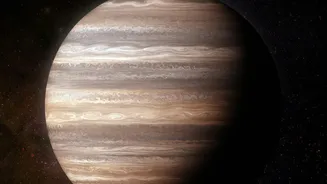
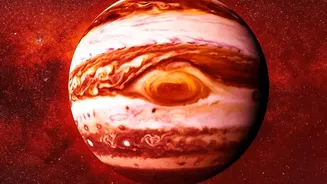
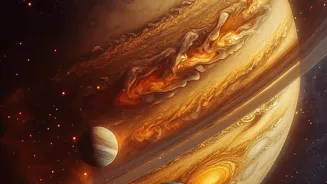
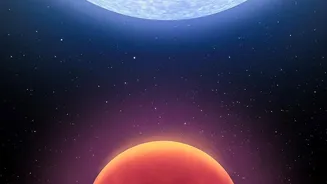
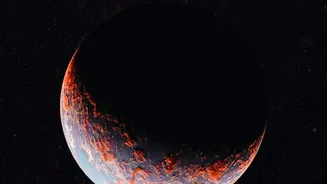
The planets exhibiting these extreme phenomena belong to a class known as 'ultra-hot Jupiters'. A prime example is WASP-76b, a gas giant located about 640 light-years away in the constellation Pisces. These worlds are similar in size to Jupiter but orbit
incredibly close to their host stars—so close that a year on WASP-76b lasts less than two Earth days. This proximity means they are tidally locked, with one side perpetually facing the star's intense heat and the other shrouded in permanent darkness. This creates a world of two extremes: a blistering dayside and a comparatively cooler, but still scorching, nightside.
How Can It Rain Iron?
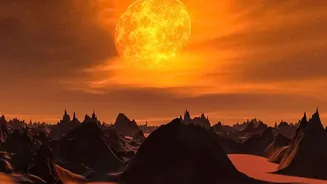
The concept of iron rain sounds fantastical, but it’s a result of basic physics under extreme conditions. On the dayside of WASP-76b, temperatures soar to over 2,400 degrees Celsius, hot enough to vaporize metals like iron into a gas. Powerful winds, estimated to rage at speeds up to 18,000 km/h, then whip this iron vapor across the planet to the permanent nightside. As the vapor reaches the cooler dark side—where temperatures are still a blistering 1,500 degrees Celsius—the iron gas condenses back into liquid droplets. These droplets of molten iron then fall through the atmosphere, creating a downpour of metal. Since WASP-76b is a gas giant, there's no solid surface for the iron to pool on; it likely sinks into the deeper, hotter layers of the atmosphere to vaporize all over again.
Telescopes That See the Unseeable
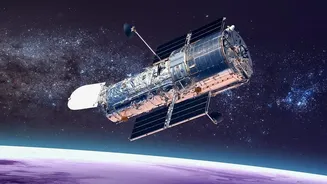
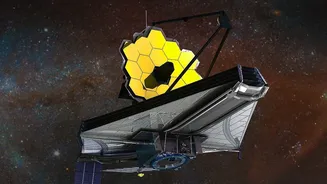
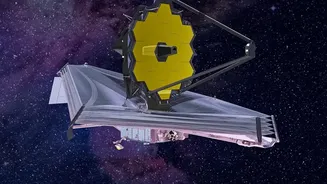
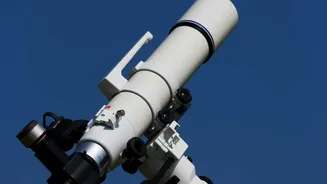
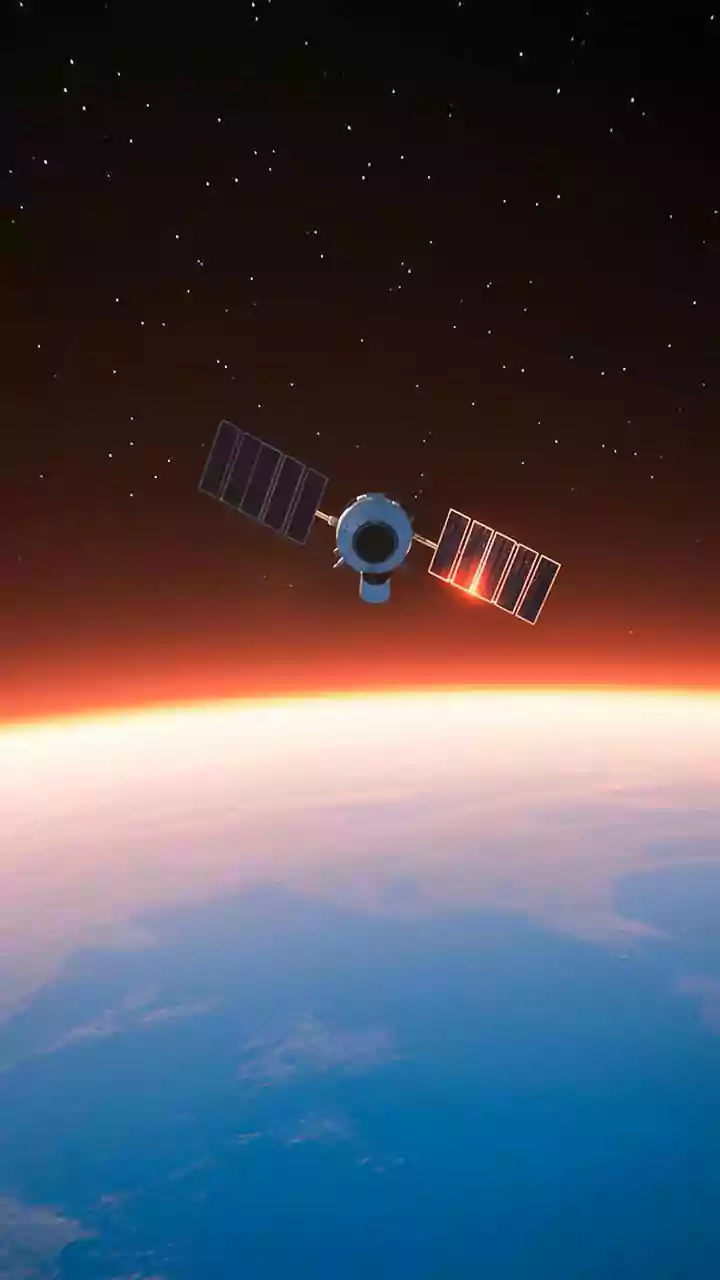
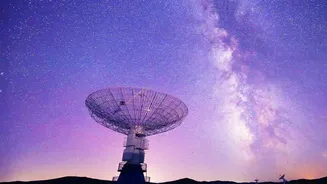
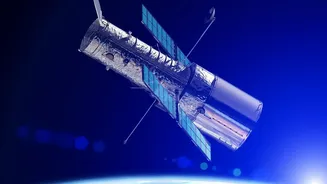
Astronomers can't see this iron rain directly, but they can detect its chemical signature using a technique called transit spectroscopy. When an exoplanet passes in front of its star from our perspective, a tiny fraction of the starlight filters through the planet's atmosphere. Powerful instruments, like the ESPRESSO spectrograph on the Very Large Telescope and space-based observatories like the Hubble and James Webb Space Telescopes, split this light into a rainbow-like spectrum. Different elements absorb light at specific, unique wavelengths. By looking for the 'missing' slivers of light in the spectrum, scientists can identify the elements present, such as iron vapor. The key discovery on WASP-76b was detecting iron vapor on the evening edge of the planet but not on the morning edge, strongly suggesting the iron was condensing and raining out on the nightside.
More Than Just a Cosmic Oddity
While the idea of a metal-raining world is captivating, studying these extreme planets serves a greater purpose. Ultra-hot Jupiters are cosmic laboratories that push our understanding of planetary science to its limits. They allow scientists to test and refine their models of atmospheric physics, cloud formation, and chemical processes under conditions that don't exist anywhere in our solar system. Recently, the study of intense winds on these planets has even led to the first estimates of magnetic field strengths on worlds outside our solar system, a crucial factor in determining a planet's long-term habitability. Understanding the wild diversity of these gas giants helps astronomers build a more complete picture of how planets form and evolve across the galaxy, informing the search for smaller, more temperate worlds that might one day harbor life.