
What is Space Weather?
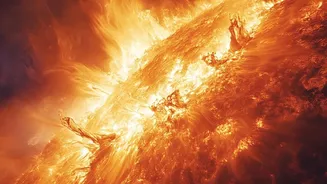
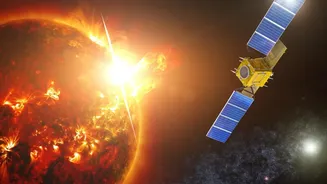
When we talk about space weather, we are mostly referring to activity on the Sun that can affect Earth and the space around it. The Sun is not a static ball of light; it's a dynamic star that constantly sends out a stream of charged particles called the solar
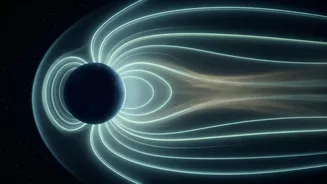
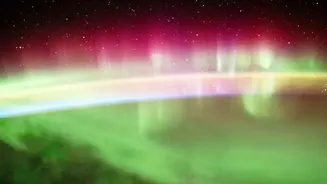
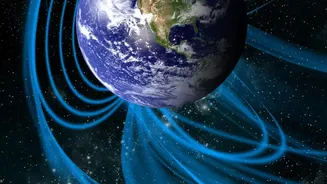
wind. Sometimes, this activity intensifies dramatically. The Sun can produce massive explosions called solar flares, which are intense bursts of energy and radiation travelling at the speed of light. It can also unleash coronal mass ejections (CMEs), which are giant clouds of solar plasma and magnetic fields hurled into space. If Earth is in the path of these events, our planet's magnetic field and atmosphere are hit, creating what we call a geomagnetic storm.
Can It Scramble Your GPS?
Yes, solar storms can absolutely affect GPS. Your phone or car's navigation system works by receiving signals from a constellation of satellites. These signals must travel through Earth's ionosphere, a layer of the upper atmosphere. During a solar storm, radiation from the Sun energises the ionosphere, changing its density and composition. This disturbance can slow down, bend, or degrade GPS signals as they pass through. The result can range from minor positioning errors of a few metres to, in severe cases, a complete loss of signal lock. This isn't just an inconvenience for drivers; industries like aviation, shipping, and precision agriculture rely on accurate GPS for safe and efficient operations.
How Are Flights Affected?
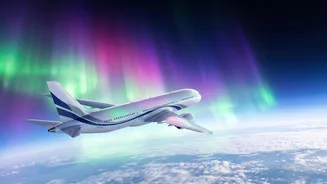
Aviation is vulnerable to space weather in several ways. The most significant impact is on communication. High-frequency (HF) radio, used by pilots for long-distance communication, is particularly susceptible. Solar flares can cause radio blackouts on the sunlit side of the Earth, disrupting the ability of pilots to talk to air traffic control. This is a major concern for flights on polar routes, where Earth's magnetic field funnels these solar particles, amplifying their effect. During strong events, airlines often reroute these flights to lower latitudes to ensure constant communication, which can increase flight times and fuel consumption. Navigation systems can also be affected, as pilots must be aware of potential GPS inaccuracies.
What About Other Communications and Satellites?
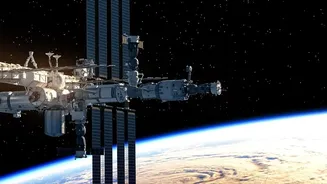
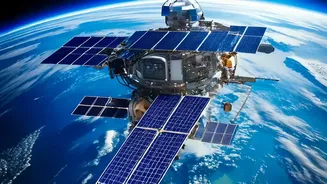
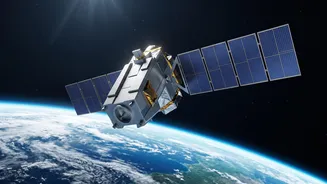
Satellites are on the front line of space weather. Orbiting outside the full protection of Earth's atmosphere, their electronics can be damaged by high-energy particles from a solar storm. This can cause anything from phantom commands to a complete system failure. Strong storms also heat and expand Earth's upper atmosphere, increasing drag on satellites in low-Earth orbit. This can cause them to lose altitude and, in a worst-case scenario, even burn up. On the ground, the impact is felt on communication systems that rely on the ionosphere to bounce radio signals over long distances. Geomagnetic storms can make this layer unstable, causing signals to fluctuate or fade entirely. In very extreme events, induced electrical currents could even threaten power grids by overloading transformers, potentially leading to widespread blackouts.
How Do We Prepare for Solar Storms?
While we can't stop space weather, we can prepare for it. Agencies like NOAA's Space Weather Prediction Center (SWPC) in the US monitor the Sun constantly. Using a fleet of satellites, they act like a weather service for space, issuing forecasts, watches, and warnings for incoming solar storms. This gives satellite operators, airlines, and power grid managers crucial time to take protective measures. For example, sensitive components on a satellite can be temporarily shut down, or flight paths can be adjusted. For individuals, the direct impact is usually minimal, but the secondary effects of a major storm, like power outages, are what emergency services plan for.