







A Small Hop for a Rocket, a Giant Leap for Japan
On July 11, at the Noshiro Rocket Testing Center in northeastern Japan, the Japan Aerospace Exploration Agency (JAXA) successfully conducted its first flight test of a reusable rocket prototype. The vehicle, known as the Reusable Vehicle eXperiment (RV-X),
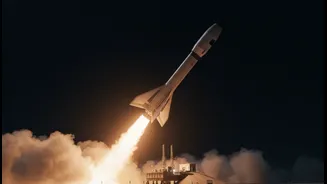
performed a modest but critical maneuver: it lifted off to a height of about 11 meters, slid sideways for 16 meters, and then landed perfectly upright on its four shock-absorbing legs. The entire flight lasted less than a minute, but its significance extends far beyond the brief flight time. This test, after an earlier attempt in March was postponed, represents a foundational success for Japan's ambitions to develop its own cost-cutting launch technology.
The Technology Driving the Ambition
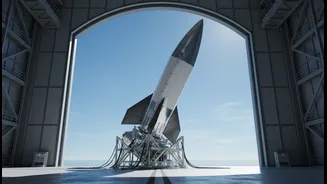
The RV-X is a demonstrator, a testbed co-developed by JAXA and industrial giant Mitsubishi Heavy Industries to master the complex art of vertical takeoff and vertical landing (VTVL). While small at 7.3 meters tall, it’s packed with the necessary technologies, including a durable, throttle-able engine and autonomous guidance systems. Project manager Takashi Ito called the engine “hardworking,” noting it had already endured 165 ground-based combustion tests before its first flight, proving its resilience. This successful hop validates the core control logic needed to precisely guide a rocket back to Earth. The data gathered is not just for a future Japanese rocket; it will also feed into the Callisto project, a reusable launch vehicle being jointly developed by Japan, France, and Germany.
The High-Stakes Economics of Reusability
For decades, rockets have been single-use machines. The most expensive parts, the first-stage boosters with their complex engines, would be discarded after every launch, making spaceflight incredibly costly. SpaceX revolutionized the industry by proving that landing and reusing these boosters could dramatically slash costs. Japan is now chasing that same economic advantage. The country’s current flagship rocket, the H3, is a powerful but expendable vehicle. To compete for international satellite launch contracts against players like SpaceX, developing a reusable successor is not just an option; it's a necessity. The Japanese government's official Space Basic Plan has set an ambitious goal: to cut the launch cost per kilogram to one-tenth of the H3's current price by the early 2040s, a target that hinges on mastering reusability.
A Crowded and Competitive Sky
JAXA’s test is a major national milestone, but it also highlights how far Japan has to go. SpaceX first landed a Falcon 9 booster in 2015 and has since turned it into a routine, almost mundane, part of its operations, reusing some boosters dozens of times. The field is also becoming more crowded. Just one day before JAXA’s test, China announced it had successfully recovered a first-stage booster for the first time after an orbital launch. Companies like Blue Origin and Rocket Lab in the U.S., as well as European efforts, are also deep into their own reusability programs. Japan’s entry is significant, but it joins a race already well underway.
What's Next for Japan's Rocket Program?
This successful test is just the beginning. JAXA plans to push the RV-X to higher altitudes in subsequent flights, with the next target set for around 100 meters. Each test will provide more crucial data on guidance, engine performance, and the stresses of repeated flights. The ultimate goal is to apply these lessons to a full-scale, operational reusable rocket that will succeed the H3, with a target for practical use in the early 2030s. It’s a long road from a 40-second hop to an orbital-class booster that can return from the edge of space, but with this test, Japan has officially left the launchpad.