






A Foundation Built on Shared Principles
The cornerstone of this modern partnership is India's decision to join the Artemis Accords. These are not a binding treaty, but a set of principles for safe, transparent, and sustainable civil space exploration. By signing on, India aligned itself with
a major US-led international coalition committed to a common vision for exploring the Moon and beyond. This move signifies India's commitment to being a key player in shaping the rules for the next era of space activity, which includes the peaceful use of space, transparency in operations, and the public release of scientific data. The Accords essentially create a framework for nations to work together on ambitious projects, ensuring that as humanity returns to the Moon, it does so collaboratively and responsibly. Recent meetings have further solidified this, advancing cooperation under the U.S.-India Transforming the Relationship Utilizing Strategic Technology (TRUST) Initiative.
NISAR: An Eye in the Sky for Earth
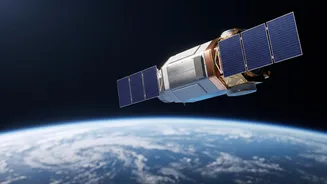
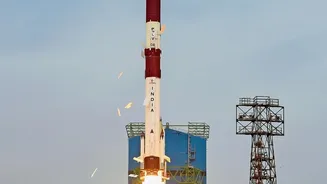
Perhaps the most tangible result of this collaboration is the NASA-ISRO Synthetic Aperture Radar (NISAR) mission, which launched successfully last year. This sophisticated Earth-observing satellite is the first-ever joint hardware development between the two agencies for such a mission. NISAR is equipped with two different radar systems, one from NASA and one from ISRO, that work together to provide an unprecedented, detailed view of our planet's land and ice surfaces. By scanning the globe every 12 days, NISAR provides critical data on everything from agricultural management and glacier melt to natural hazards like earthquakes and landslides. This information is vital for managing resources, responding to disasters, and understanding the effects of climate change, making it a powerful tool for scientists and policymakers worldwide.
Beyond Satellites: To the Moon and a Manned Mission
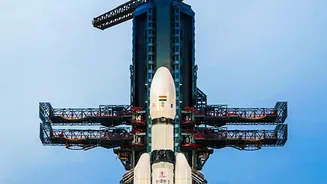
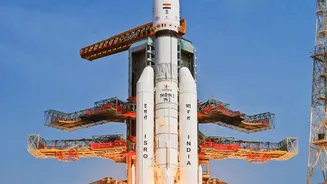
The partnership extends far beyond Earth's orbit. A major development is a joint mission to the International Space Station (ISS), which will see Indian astronauts train at NASA's Johnson Space Center. This mission marks a significant step in human spaceflight cooperation between the two nations. Looking further, NASA has formally invited ISRO to participate in its ambitious Moon Base program, an effort to build a permanent outpost near the lunar south pole. This invitation builds on India's historic Chandrayaan-3 landing in the same region and solidifies its role in humanity's return to the Moon—this time to stay. This lunar collaboration represents the next frontier, moving from robotic missions to establishing a sustained human presence in deep space.
Fueling India's Private Space Ecosystem
The alliance is not just about government agencies. It serves as a powerful catalyst for India’s burgeoning private space sector. The collaboration encourages commercial partnerships between US and Indian companies, covering the entire value chain of the space economy. Initiatives like the U.S.-India initiative on Critical and Emerging Technology (iCET) and planned innovation bridges aim to streamline technology transfer and remove barriers to trade. For Indian startups and established aerospace firms, this means greater access to advanced technologies, capital, and a global market. This collaboration promises to accelerate India’s goal of becoming a major hub for commercial space activities, from satellite manufacturing to launch services, with leaders targeting a five-fold increase in geospatial trade.
The Geopolitical Dimension
This partnership doesn't exist in a vacuum. It is also a significant geopolitical development, particularly in the context of a new era of space competition with nations like China and Russia. As China advances its own space capabilities, including a planned lunar research station in partnership with Russia, the India-US alliance represents a strategic counterweight. By aligning with the US-led Artemis framework, India has firmly positioned itself within a bloc of democratic nations committed to a specific set of exploratory norms. This collaboration enhances India's strategic standing, providing access to cutting-edge technology and reinforcing its position as a leading, responsible spacefaring nation in the Indo-Pacific and on the world stage.