
An Art Born from the Desert
Lippan Kam, also known as mud-and-mirror work or Chittar Kaam, is a traditional mural art form from the Kutch region of Gujarat. The name itself comes from the local Gujarati word 'lipnu', which means to plaster or smear. For centuries, it was primarily
practiced by women of pastoral communities like the Rabari, Mutwa, and Meghwal. They would decorate the inner and outer walls of their circular mud huts, called 'bhungas', with this craft. The art was more than just decoration; it was a part of life. The thick mud-relief mixture, traditionally a combination of clay and camel or wild ass dung, provided insulation, keeping homes cool in the blistering desert heat and warm during cold nights. The embedded mirrors, or 'aabhla', were believed to ward off the evil eye while also catching and reflecting scarce natural light, brightening the dark interiors of the bhungas.
The Craftsmanship of Mud and Mirrors
The process of creating Lippan art is a testament to the artisan's skill, often passed down through generations from mother to daughter. Traditionally, artisans would prepare a dough-like mixture from finely sieved local clay and animal dung. This mixture would be hand-moulded into lines and shapes directly onto a moistened wall, without any prior tracing or drawing. The designs are sculpted freehand, featuring geometric patterns and motifs inspired by their embroidery, nature, and daily life—peacocks, camels, trees, and flowers are common themes. Before the clay could fully dry, small pieces of mirror, often created by shattering larger ones, were carefully pressed into the relief work. The final piece was typically left in its natural earthy tones or coated in white clay, creating a stunning contrast between the matte texture of the mud and the glittering reflections of the mirrors.
From Village Walls to City Apartments
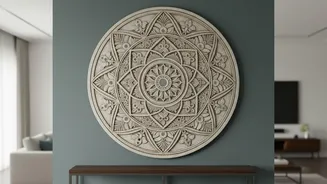
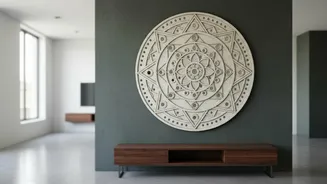
So how did an art form intrinsically tied to the architecture of mud huts make its way into high-rise apartments? The evolution of Lippan Kam for the urban market is a story of clever adaptation. Recognizing that you cannot simply plaster mud and dung onto a painted apartment wall, contemporary artisans began creating Lippan work on portable bases. Medium-Density Fibreboard (MDF) has become the canvas of choice, allowing the art to be framed and hung like a painting. The materials have also evolved. To make the art form more durable, accessible, and odour-free for indoor use, traditional clay and dung have been replaced with alternatives like ceramic powder, chalk powder, or air-drying clays mixed with adhesives like Fevicol. These modern materials are easier to work with and allow for finer, more precise detailing.
A Modern Aesthetic with Ancient Roots
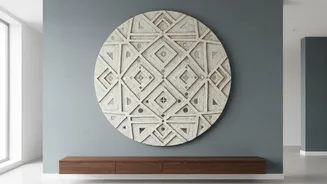
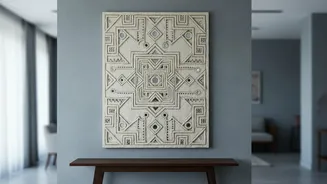
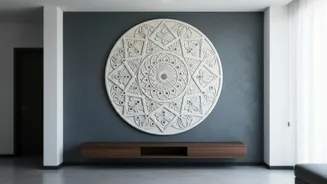
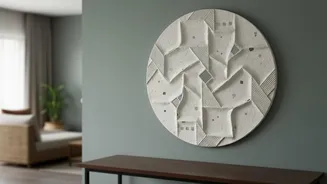
The adaptation of Lippan art for modern homes extends beyond its materials. While traditional work was often white or neutral, contemporary pieces burst with colour, using vibrant acrylic paints to match urban interior design palettes. Artists are also experimenting with new forms and motifs. You can now find minimalist Lippan designs with clean lines and geometric patterns that fit perfectly into contemporary decor. The art is no longer confined to wall panels; it now adorns furniture, coasters, nameplates, and decorative boxes. This fusion of old and new allows city dwellers to incorporate a piece of heritage into their homes in a way that feels fresh and personal. It’s a way to own a story, not just a decorative object.
The Allure of the Authentic
The rising popularity of Lippan Kam in urban centres speaks to a larger trend: a desire for authenticity and connection in a world of mass-produced goods. Each piece of Lippan art is handcrafted, carrying the imprint of the artisan's hands and a story of cultural heritage. In an age of digital smoothness, the raised, tactile texture of the clay and the organic sparkle of the mirrors offer a unique sensory experience. It also taps into a growing appreciation for sustainable and eco-friendly decor. By bringing Lippan art into their homes, people are not just buying a beautiful object; they are helping to preserve a centuries-old craft and support the artisan communities that are its custodians.