




For years, bringing pristine samples from Mars to Earth has been a top priority for scientists. Now, NASA is launching a fresh effort, the Perseverance Sample Retrieval Architecture (PSRA), to rethink how we accomplish this monumental task.
The Search for Martian Secrets
Since its arrival
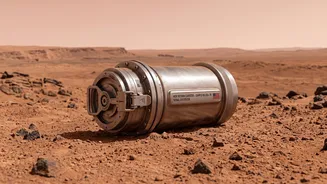
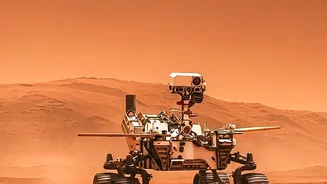
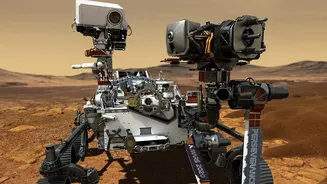
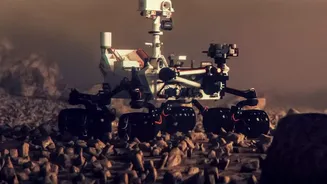
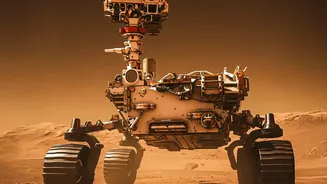
on Mars in February 2021, the Perseverance rover has been diligently working in the Jezero Crater, a location believed to have once hosted a lake and river delta. Its primary mission is not just to explore, but to collect. The car-sized rover is drilling into ancient rocks and scooping up soil, sealing these precious materials in dozens of titanium tubes. Scientists believe these samples could hold the key to one of humanity's most profound questions: was there ever life on Mars? Analyzing these rocks and regolith in advanced labs on Earth would provide a revolutionary leap in our understanding of the Red Planet's history, climate, and potential for past microbial life. Perseverance has already gathered a diverse collection of igneous and sedimentary rocks, and has even created a depot by carefully placing a set of tubes on the Martian surface as a backup.
When Ambition Meets Reality
The original Mars Sample Return (MSR) program, a joint effort with the European Space Agency (ESA), was an incredibly ambitious, multi-part plan. It involved launching a separate lander to Mars, which would deploy either a fetch rover or small helicopters to retrieve the sample tubes. These would then be transferred to a small rocket, the Mars Ascent Vehicle (MAV), which would launch them into Martian orbit. An orbiting spacecraft would then capture the sample container and fly it back to Earth. However, as the complexity of this plan grew, so did its cost and timeline. Independent reviews estimated the price tag could soar as high as $11 billion, with the samples not arriving on Earth until 2040. NASA leadership deemed this timeline and cost to be unacceptable, prompting the need for a major reassessment.
Introducing the PSRA Initiative
The headline-making 'PSRA' is not a finalized blueprint, but rather the start of a crucial new planning phase. PSRA stands for Perseverance Sample Retrieval Architecture, and it represents NASA hitting the reset button. On November 9, 2026, NASA announced it was forming a special team to develop 'impartial recommendations' for a more streamlined and achievable mission. This team has been tasked with reviewing all previous plans, assessing current technology, and exploring new acquisition options to find a faster and more affordable path forward. The PSRA strategy team is scheduled to officially kick off its work in January 2027 and is expected to deliver its final report with a recommended new plan in the winter of 2027-2028.
A New Space Race?
The push for a more efficient mission isn't just about internal budgets. There is also an element of international competition. China is moving forward with its own ambitious Mars sample return mission, named Tianwen-3. Current plans show China aiming to launch its mission around 2028 and return samples to Earth as early as 2031. This accelerated timeline from another spacefaring nation has been described by some as a 'forcing factor', adding a sense of urgency to NASA's efforts to get its own Martian rocks back home. While NASA's mission has different scientific goals and a more complex architecture, the prospect of being second to bring back samples from Mars is undoubtedly influencing the agency's push for a quicker, more viable plan.