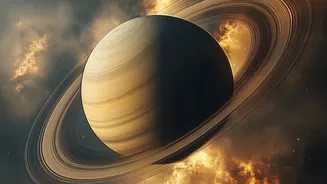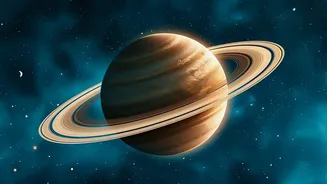



Saturn's Grand Return to the Evening Sky
Throughout August 2026, Saturn transitions into a brilliant fixture of our night sky. While it has been visible in the early morning, this month marks its ascent into a prime-time viewing slot, rising a couple of hours after sunset and remaining visible for
the rest of the night. For stargazers, this is the official start of 'Saturn season'. The planet will be shining brightly in the constellation Pisces, making it relatively easy to find even in light-polluted skies. Its brightness this month hovers around a magnitude of 0.5, which is brighter than most stars, and it will continue to grow slightly more luminous as the weeks progress. This increased presence in our sky is the build-up to an even bigger celestial event later in the year.
Building Towards the Main Event: Opposition
The primary reason the late summer and early autumn are fantastic for Saturn viewing is an event called opposition. On October 4, 2026, Saturn will be at opposition, meaning Earth will be positioned directly between the sun and Saturn. Think of it as a celestial alignment where we get a front-row seat. During opposition, Saturn is at its closest point to Earth for the year, making it appear larger and brighter in our sky. It will also be visible for the entire night, rising in the east as the sun sets in the west and setting in the west as the sun rises in the east. While the peak is in October, the weeks leading up to it, including all of August and September, are part of this prime viewing window. So, August is your signal to start looking.
How to Spot Saturn This August
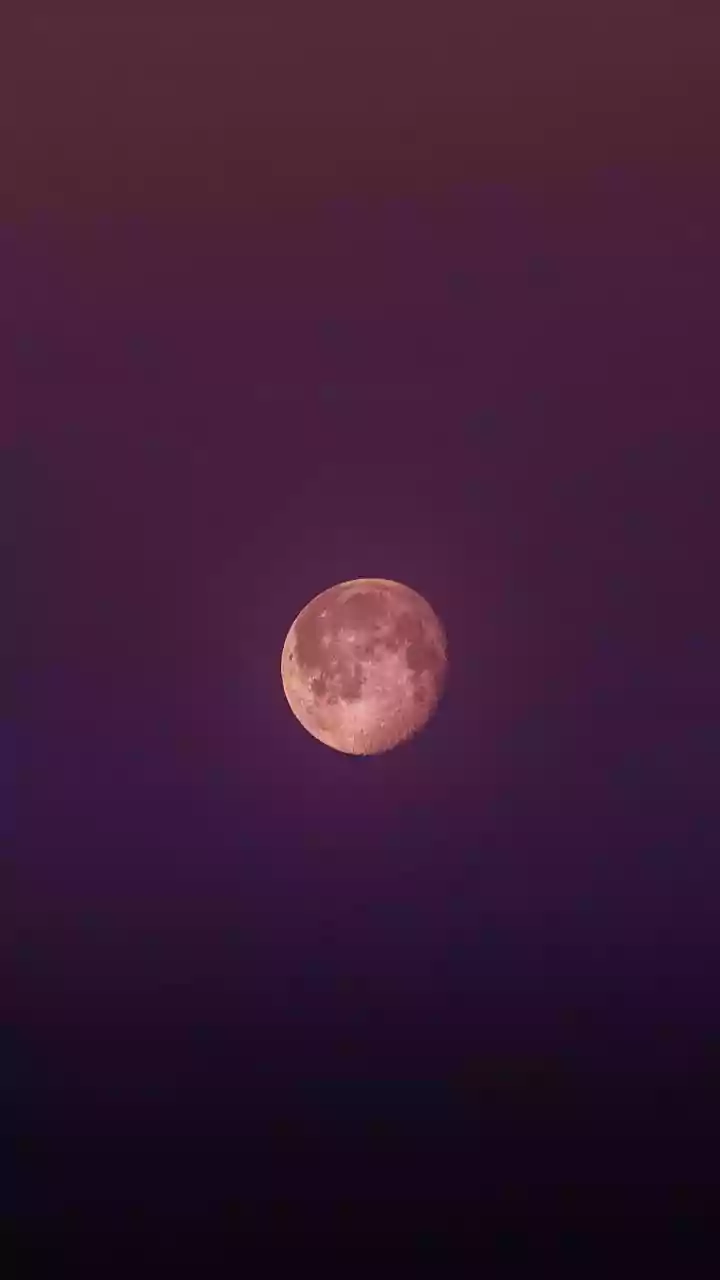
You don't need to be a professional astronomer to find Saturn. This month offers a few helpful signposts. On the nights of August 30 and 31, the Moon will make a close approach to Saturn, acting as a convenient guide. The planet is also a key player in a stunning six-planet alignment visible around August 12, where it joins Mercury, Mars, Jupiter, Uranus, and Neptune in an arc across the pre-dawn sky. To find it on any other night, look to the eastern sky a few hours after sunset. Saturn will appear as a steady, bright, slightly yellowish point of light. Unlike stars, which twinkle, planets typically shine with a more constant glow. As it climbs higher throughout the night, your viewing conditions will improve as you are looking through less of Earth's turbulent atmosphere.
Your Guide to a Ringside Seat
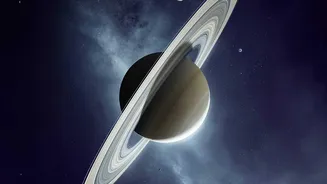
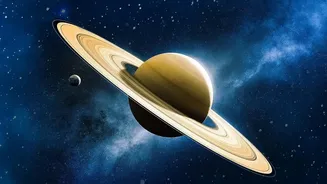
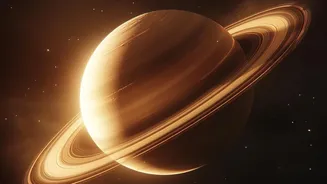
The real magic of Saturn is its rings, and you don't need a giant observatory to see them. In fact, any small telescope with at least 25x magnification should be able to reveal the rings as a distinct structure. A modest telescope with a 50mm aperture is enough to get the job done. You won't see the hyper-detailed images from the Hubble telescope, but you will clearly see the planet's disk separate from its famous rings, a sight that has captivated observers for centuries. For an even better view, a telescope with a larger aperture, from 4 to 8 inches, can start to reveal more detail, such as the Cassini Division, which is a prominent gap between Saturn's A and B rings. Patience is key; let your eyes adjust and watch for moments of steady air for the clearest view.
What Makes Those Rings So Special?
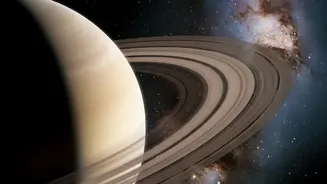
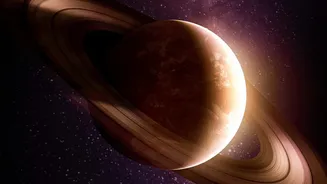
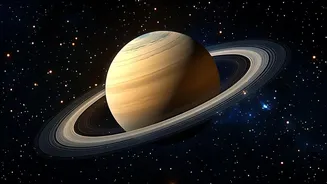
While other gas giants in our solar system like Jupiter and Neptune also have rings, Saturn's are in a class of their own. The reason they are so brilliantly visible from Earth is because they are made of countless particles of highly reflective water ice, ranging in size from tiny dust grains to chunks as large as a house. The rings of other planets are typically composed of darker, rocky material, making them faint and nearly impossible to see with a standard backyard telescope. Saturn's bright, icy rings reflect sunlight beautifully, which is why they have been a source of wonder ever since Galileo first observed them in 1610. In 2026, the rings are tilted at a favourable angle toward Earth, making them appear wide and magnificent for observation.