

The Problem of Cosmic Dust
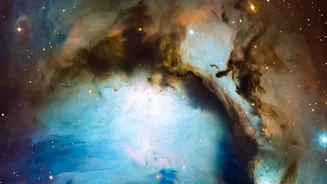
Imagine trying to watch a stage play through a thick curtain of smoke. Much of the universe is like that. Huge, cold clouds of gas and microscopic dust particles drift between stars and galaxies. This cosmic dust is extremely effective at blocking and scattering
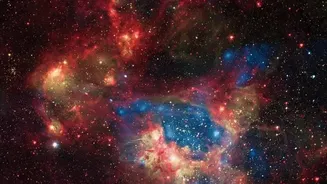
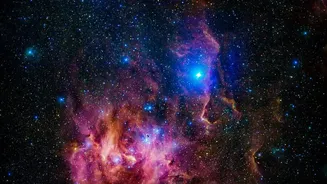
visible light—the kind our eyes can see. Star-forming regions, often called stellar nurseries, are exceptionally dusty places. These dense clouds provide the raw material for new stars, but they also act as a shroud, completely obscuring the protostars forming deep within. For decades, this dust made it impossible for optical telescopes to get a clear picture of the earliest stages of a star's life cycle. Astronomers knew these stellar nurseries were there, but the main event was happening behind a cosmic veil.
The Infrared Advantage: Seeing Through the Veil
Every object that has a temperature emits infrared radiation, which we can think of as heat energy. While hot, mature stars shine brightly in visible light, cooler objects like baby stars (protostars) and the dust clouds themselves glow in the infrared. Crucially, infrared light has a longer wavelength than visible light. This allows it to pass through clouds of cosmic dust much more easily, without being scattered or absorbed. The effect is similar to how firefighters use thermal imaging cameras to see people and hot spots through thick smoke. Infrared telescopes essentially give astronomers thermal vision for the universe, allowing them to bypass the dust and see the heat signatures of objects hidden within.
The Technology Behind the Breakthrough
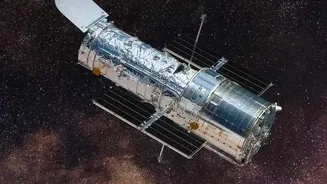
Peering into the infrared universe requires highly specialized technology. Earth's atmosphere absorbs a lot of infrared radiation, so the most powerful infrared telescopes are placed in space. The premier instrument for this work is the James Webb Space Telescope (JWST), a collaboration between NASA, the European Space Agency (ESA), and the Canadian Space Agency (CSA). JWST is equipped with a suite of advanced infrared sensors, most notably the Near-Infrared Camera (NIRCam) and the Mid-Infrared Instrument (MIRI). NIRCam is designed to detect the shorter wavelengths of infrared light, ideal for spotting the light from the very first stars and galaxies. MIRI is sensitive to longer, mid-infrared wavelengths, which allows it to see the glow of cosmic dust and deeply embedded protostars. Together, these instruments provide a comprehensive view, capturing both the stars themselves and the dusty environment they are shaping.
What These Sensors Actually Detect
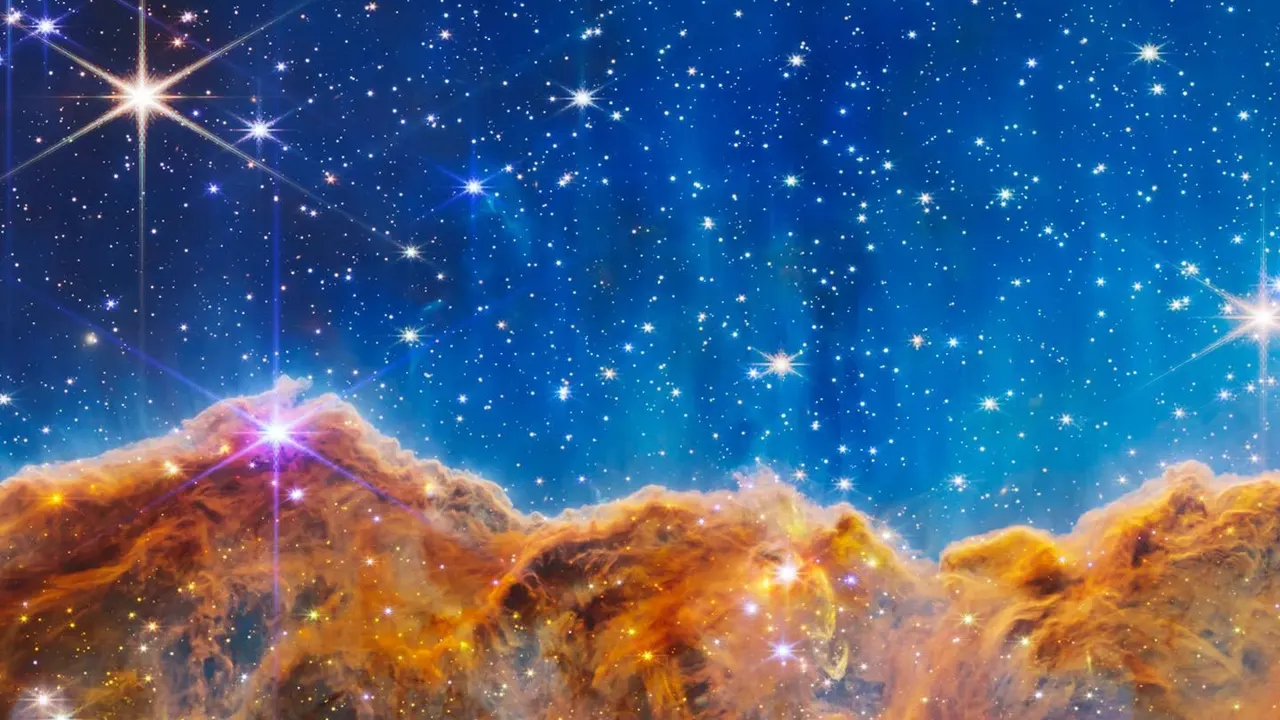
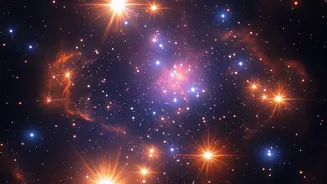
When JWST's sensors are pointed at a stellar nursery, they don't just see a single point of light. They capture a wealth of information. The infrared glow reveals the exact locations where dense pockets of gas are collapsing to form protostars. These infant stars are still gathering mass and heat up the surrounding dust, creating bright blobs in MIRI's mid-infrared view. NIRCam, on the other hand, can cut through the thinner parts of the dust to see the young stars themselves, sometimes revealing entire clusters that were previously invisible. The instruments can also use a technique called spectroscopy, which breaks light down into its constituent colors. This tells astronomers about the temperature, density, and chemical composition of the star-forming clouds, revealing the presence of water, carbon dioxide, and other molecules essential for building stars and planets.
Why Finding Hidden Stars Matters
Spotting these hidden star formation zones isn't just about taking pretty pictures. It's fundamental to understanding how galaxies like our own Milky Way were built. By studying these nurseries, astronomers can test and refine their theories about how stars form, how quickly they grow, and what determines their final mass. Recent observations from JWST have already delivered surprises, revealing that some of the earliest galaxies in the universe may have contained far more stars, and were thus much more massive, than previously thought. By uncovering these hidden populations of stars, infrared sensors are helping to write a more complete history of the cosmos, from the first stars to the formation of planets and, ultimately, the conditions that allow for life.