



A Thread Through History
Weaving ribbons into hair is hardly a new trend. The practice dates back to ancient civilizations like the Sumerians, who wore gold ribbons as status symbols. Throughout history, ribbons have signified everything from romantic devotion in 16th-century
France—where men wore 'love locks' tied with a ribbon—to social status in the court of Louis XIV. In some cultures, ribbon placement held specific meanings; in 1940s America, teenage girls used bows to signal their relationship status. From Mexican culture, where ribbons in braids celebrate indigenous heritage, to Victorian England, where they symbolized feminine innocence, this simple accessory carries a rich and varied history.
The Modern Ribbon Revival
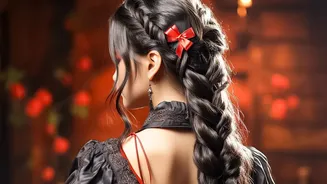
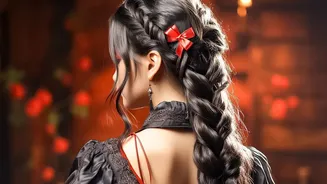
Today, the ribbon has been reclaimed from school uniforms and formal occasions, re-emerging on fashion runways and social media feeds as a versatile, everyday accessory. Driven by aesthetics like 'balletcore' and 'coquette', celebrities and influencers have embraced the trend for its soft, romantic, and customisable appeal. Hairstylists for major fashion shows have used everything from hand-dyed chiffon to simple strips of jersey, proving that any fabric can become a hair accessory. The beauty of the modern trend is its lack of rules; it’s about personal expression, whether that’s a sleek, minimalist ribbon in a low ponytail or a colourful, chaotic weave in a festival braid.
Choosing the Perfect Ribbon
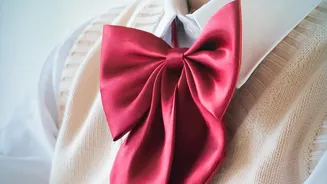
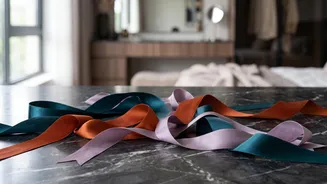
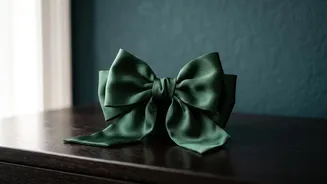
The right ribbon can make or break your hairstyle. Your choice depends on the look you want and your hair type. Satin ribbons offer a smooth, shiny finish perfect for elegant styles, but they can be slippery. Grosgrain ribbon has a ribbed texture that provides more grip, making it a great choice for beginners or for braids that need to last all day. For a touch of luxury and softness, velvet is an excellent option, especially for romantic or vintage-inspired looks. As for width, a narrow ribbon (about 1/4 inch) is ideal for delicate, intricate braids, while a wider ribbon makes a bolder statement in a simple ponytail or a larger braid.
The Basic Three-Strand Weave
Incorporating a ribbon into a classic three-strand braid is the perfect place to start. First, decide how you'll anchor the ribbon. You can tie it to a hair tie at the base of your ponytail or secure it with a bobby pin at the start of your braid. Once anchored, split your hair into three equal sections. You can either treat the ribbon as a fourth strand or, for a more integrated look, combine it with one of the three hair sections. As you braid, crossing the outer sections over the middle one, keep the ribbon flat and visible. Maintain even tension to ensure the ribbon doesn't get lost in the braid. Secure the end with an elastic, and you can tie the leftover ribbon ends into a bow.
Elevate Your Everyday Look
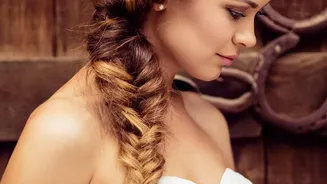
Once you've mastered the basic weave, the possibilities are endless. For a more visible, sporty look, try a Dutch braid, where the braid sits on top of the hair. A four-strand braid allows you to use the ribbon as its own distinct strand, creating a beautiful woven pattern. You can also add ribbons to other styles; weave one through a fishtail braid, wrap it around the base of a ponytail for a sleek finish, or tie small bows onto the ends of mini accent braids. The key to making it 'everyday' is often simplicity—a single, slim ribbon in a matching colour can elevate your work-appropriate ponytail, while a brighter, contrasting ribbon is perfect for a weekend outing.