




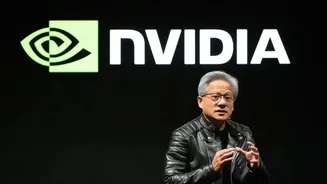


After a year of relentless hype, a sharp market correction has shaken the artificial intelligence sector. The sudden downturn has investors asking tough new questions about whether the sky-high valuations of AI-related companies can be justified.
The Party Stops
The music
stopped abruptly for the AI-fueled market rally last week. On Thursday, November 5, Wall Street witnessed a brutal sell-off that wiped trillions from global stock markets. The tech-heavy Nasdaq Composite plunged 5.5%, officially entering a 'correction' by falling more than 10% from its recent high. The rout was led by the very companies that had been the darlings of the AI boom. Chipmakers and other firms essential to building AI infrastructure were hit hardest. Nvidia, the poster child for AI hardware, saw its shares sink over 9%, erasing its gains for the year after a multi-year surge. The Philadelphia Semiconductor Index suffered its worst day in over six years. The shockwaves were global, with markets from Canada to South Korea tumbling in response. The sell-off was a stark reversal from the optimism that had defined the sector, forcing a sudden and uncomfortable reality check.
A Crisis of Confidence
The immediate trigger for the market's panic appeared to be the US midterm election results. Stronger than expected showings for Democratic candidates, some of whom campaigned on slowing the construction of massive, power-hungry data centers, sparked fears of a regulatory crackdown. Investors grew concerned that permitting for new data centers in key states could face delays, directly threatening the AI infrastructure buildout. However, these political fears simply accelerated a reckoning that many analysts felt was already overdue. For months, concerns had been quietly mounting about the immense cost of the AI boom, rising interest rates, and whether the massive spending would generate profits anytime soon. As one analyst noted, the market was looking for a 'spark to start the sell-off', and the election results provided it.
Are They Worth It?
The core of the issue is valuation. Before the correction, AI-related companies were trading at astronomical multiples, with investors pricing in flawless execution and decades of future growth. Private valuations for startups like Anthropic, which was reportedly seeking a valuation as high as $1.5 trillion for its IPO, highlighted the heady expectations. The recent market turbulence has thrown such plans into doubt, with investors now pushing back and demanding lower prices. Analysts are now scrutinizing the fundamentals. They are asking how long tech giants can sustain record levels of capital expenditure—expected to reach a combined $781 billion this year—while facing uncertain returns. With some AI software firms' tools seen as underperforming and customer budgets facing scrutiny, the path from investment to profit looks less certain than it did just weeks ago.
A Reset,
Not an End
Despite the sharp selloff,
few are predicting the end of the AI era.
Many analysts view the correction as a 'valuation and sentiment reset,' not a fundamental change in the long term outlook.
The underlying demand for AI and the computing power it requires is not disappearing.
As UBS CEO Sergio Ermotti commented,
investors had been pricing the sector for 'perfection', and the correction is a natural reaction to that excess.
The argument is that while investors were fully accounting for the immense costs of the AI buildout,
they were giving companies only partial credit for the future revenue this spending is meant to generate.
This downturn is forcing a necessary shift in focus,
from unrestrained hype to the tangible metrics of revenue,
cash flow,
and profitability.
While the journey may be more volatile,
the belief in AI's transformative potential remains,
albeit now tempered with a healthy dose of financial reality.