





From a Point of Light to a Place in Space
Looking at Saturn in isolation is amazing, but understanding its position on the vast map of the night sky adds a profound layer of context. When you can point to the planet and also name the constellation it's visiting, you're no longer just observing
an object; you're navigating the cosmos. Learning the star patterns nearby turns Saturn from a beautiful, lonely dot into a landmark on a celestial journey. It provides a sense of scale and connection, appreciating that the planet is moving against a backdrop of stars that are light-years farther away. This October, Saturn is putting on a show in a fascinating part of the sky, offering a perfect opportunity to level up your stargazing skills.
Your Simple Stargazing Toolkit
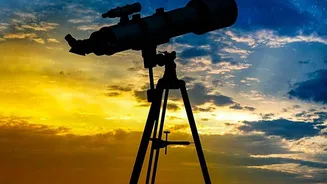
You don't need a professional observatory to enjoy this experience. A modest beginner's telescope is more than enough to reveal Saturn’s famous rings. Even a magnification of 50x will clearly separate the rings from the planet's body, a truly unforgettable sight. To navigate the stars, a smartphone app is your best friend. Apps like Stellarium, SkyView, or Star Walk can show you exactly what’s in the sky from your location in real-time. Just point your phone at the sky, and the app will identify planets, stars, and constellations. Finally, the most important tool is a clear, dark night, away from the glare of city lights if possible. A little patience is all it takes to let your eyes adjust and begin the hunt.
Finding Saturn in October 2026
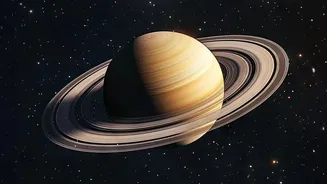
During October 2026, Saturn will be perfectly placed for evening viewing. Look towards the eastern sky after sunset, and you’ll see it climbing higher as the night progresses. Unlike stars that twinkle, Saturn will shine with a steady, yellowish glow. This is the key difference between spotting a planet and a distant star. This month, Saturn resides in the constellation Aquarius, the Water Bearer. While you'll spot the bright planet first, knowing its home constellation is the first step to exploring the entire neighbourhood.
Start with the Great Square of Pegasus
The easiest way to get your bearings is to find a large, obvious pattern. High in the eastern sky, you'll find the 'Great Square of Pegasus', a giant box-like asterism that forms the body of the mythical winged horse. It’s so big that it might take up the entire view in your binoculars. This square is one of the most reliable signposts in the autumn sky. Once you've located it, you can use it to star-hop. Imagine drawing a line from the two stars on the western (right-hand) side of the square downwards, and you will point your way towards the brightest star in that patch of sky.
Meet Fomalhaut and the Southern Fish
That bright star your imaginary line points to is Fomalhaut, often called 'the Lonely Star' because it shines so brightly in a relatively empty part of the sky. Fomalhaut is the alpha star of Piscis Austrinus, the Southern Fish. Since Saturn in Aquarius is nearby, finding this brilliant guidepost confirms you are looking in the right direction. Seeing this solitary beacon, you can appreciate why ancient stargazers gave it such a special name. You are now officially oriented in Saturn's cosmic vicinity.
Exploring Aquarius and Capricornus
Now, shift your gaze back toward Saturn itself. The planet is camping out in Aquarius, a sprawling but faint constellation. Don't expect bright, obvious lines; its stars form a meandering pattern that supposedly represents a figure pouring water from a jar. The fun here is in the challenge of tracing its subtle shape around the brilliant beacon of Saturn. Just to the west of Aquarius is Capricornus, the Sea-Goat, another faint zodiac constellation. Its shape is often seen as a dim, triangular arrowhead. Identifying these fainter constellations is incredibly rewarding. You're not just finding the easy targets; you're learning to read the subtle language of the night sky.