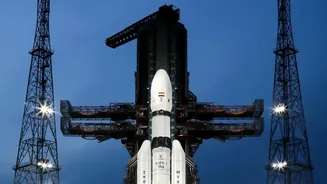



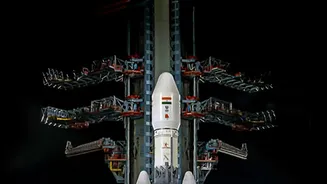
A Policy-Powered Launch
For decades, a career in space in India meant one thing: securing a coveted scientist or engineer position at the Indian Space Research Organisation (ISRO). While ISRO remains the proud anchor of the nation's space ambitions, the universe of opportunity
has expanded dramatically. The pivotal moment came in June 2020, when the government opened the space sector to private enterprise. This wasn't just a minor adjustment; it was a fundamental reshaping of the industry. The establishment of the Indian National Space Promotion and Authorisation Centre (IN-SPACe) created a single-window agency to promote, authorise, and supervise the activities of private companies. This landmark reform was designed to unlock the country’s vast potential in technical expertise and entrepreneurship, transforming the sector from a government-led programme into a dynamic commercial ecosystem. IN-SPACe acts as a facilitator, giving private players access to ISRO's world-class facilities and technologies, thereby lowering the barrier to entry for ambitious new ventures.
The Rise of the Startup Constellation
The policy shift lit the fuse for a startup explosion. From just a handful of companies, India is now home to over 400 space-tech startups as of mid-2026. This rapid growth is backed by serious capital. Driven by the sector's immense potential, private investment has surged, with startups raising hundreds of millions of dollars in recent years. Companies like Hyderabad-based Skyroot Aerospace have already made history with the launch of Vikram-1, India's first privately developed orbital rocket. Others, like Agnikul Cosmos, are gaining global attention for their innovative 3D-printed rocket engines, while firms such as Pixxel are building constellations of hyperspectral imaging satellites. This new generation of private companies is not just supporting ISRO; they are building their own end-to-end capabilities in launch vehicles, satellite manufacturing, and space-based services, creating a vibrant and competitive domestic market.
Beyond Rocket Science and Astronauts
The most significant change is the diversification of job roles. The popular image of a space career is no longer limited to the flight suit of an astronaut or the lab coat of a rocket scientist. The modern space economy is hungry for a much wider range of talent. One of the fastest-growing areas is satellite data analytics. Companies are leveraging satellite imagery for applications in agriculture, urban planning, disaster management, and environmental monitoring. This has created a demand for geospatial analysts, GIS experts, and remote sensing specialists who can turn raw satellite data into actionable business intelligence. Furthermore, as space becomes more commercialised, there is a growing need for professionals in space law and policy to navigate complex issues of licensing, spectrum allocation, and international treaties. The industry is also aggressively hiring aerospace software engineers, mission operations specialists, and robotics engineers to build the digital backbone of these new space ventures.
A New Talent Pipeline
This diversification of roles means the talent pipeline is also changing. While aerospace engineering remains a core discipline, space-tech companies are now actively recruiting from a broader academic pool. Graduates with degrees in computer science, data science, electronics, and even business management and law are finding exciting opportunities in the sector. India's strength in software and data processing is becoming a key advantage in the global space economy. Startups are offering competitive salaries, often comparable to those in the mainstream IT industry, along with the significant upside of working in a frontier technology sector. This has made space an attractive career path for a new generation that may not have a traditional aerospace background but possesses the critical digital skills needed to power the industry's next phase of growth. The field is no longer an exclusive club for a few specialists; it's an expanding industry actively seeking diverse talent.