






Our Rainy Day Waste Problem
Every year, countless cheap umbrellas and single-use raincoats are purchased in a panic and discarded just as quickly. These items are the fast fashion of weather protection—designed for temporary convenience, not longevity. A gust of wind snaps a weak
metal rib, a seam tears, and another piece of difficult-to-recycle waste heads to the landfill. This cycle is driven by products made from a complex mix of low-grade plastics, metals, and coated textiles that are nearly impossible to separate and process. An estimated 1.1 billion umbrellas are thrown away globally each year, contributing to a significant stream of plastic and metal waste. This throwaway culture creates a massive environmental burden, turning a solution for a rainy day into a long-term problem for the planet.
What 'Smart' Rain Gear Really Means
When we talk about 'smart' rain gear, it’s not necessarily about jackets with built-in weather sensors or GPS. Instead, 'smart' refers to an intelligent approach to design and materials that prioritizes durability, sustainability, and a circular lifecycle. It's about moving away from the 'take-make-waste' model and creating products that are built to last, can be repaired, and are designed with their end-of-life in mind. The smartness lies in three key areas: the use of sustainable and innovative materials, construction that is designed for durability, and a plan for what happens when the gear is no longer usable. This approach aims to create a closed-loop system where resources are kept in use for as long as possible.
Smarter, Greener Fabrics
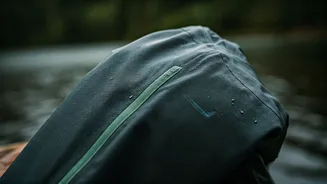
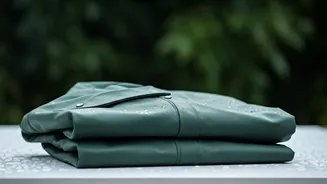
The foundation of smart rain gear lies in its materials. One of the biggest shifts is the move away from perfluorinated compounds (PFCs) in the durable water repellent (DWR) coatings that make fabric waterproof. PFCs are effective but are considered 'forever chemicals' that harm the environment. Today, leading brands are using PFC-free DWR treatments made from silicone or wax-based alternatives. Many are also using fabrics made from recycled materials, such as polyester derived from plastic bottles. Another key innovation is mono-material design. This means making the entire garment—from the shell fabric to the zippers and threads—from a single type of polymer, like polyester. This simplifies the recycling process immensely, as the entire jacket can be shredded and repurposed into new high-quality textiles without the need for complex disassembly.
Designed for Durability and Repair
Smart rain gear is an investment designed to counter the throwaway culture. These garments are built to withstand years of use, not just a single storm. This means higher-quality zippers, reinforced seams, and more robust fabrics that resist tearing and abrasion. Crucially, many sustainable brands are also embracing repairability. Instead of forcing you to buy a new jacket when a zipper fails or a small tear appears, they offer repair services or guides to help you fix it yourself. This extends the useful life of the garment, which is one of the most effective ways to reduce its environmental footprint. Keeping a product in use for as long as possible drastically cuts down on the waste and the resources needed to create a replacement.
The Future is Circular
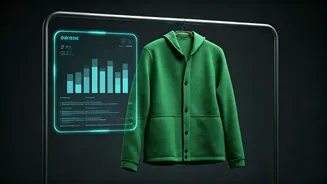
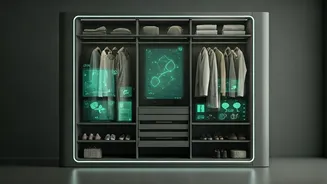
The ultimate goal for smart apparel is creating a circular system where nothing goes to waste. Emerging technologies like Digital Product Passports (DPPs) are making this possible. Soon, your jacket could come with a QR code on its label. Scanning it would reveal the garment's entire story: its material composition, manufacturing journey, and, most importantly, how to recycle it. This passport enables everything from easier resale and repair to ensuring that when the jacket reaches the end of its life, it can be efficiently routed to a facility that can turn it back into raw material for new clothes. This 'textile-to-textile' recycling is the key to closing the loop and building a truly sustainable fashion industry.