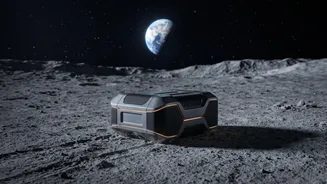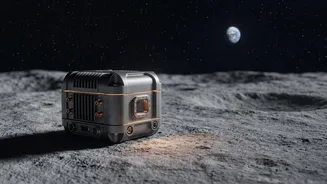






The Unforgiving Lunar Night
Imagine a night that lasts for 14 Earth days. Now, imagine that night without an atmosphere to hold in any warmth. That’s the reality on the Moon. Once the Sun dips below the horizon, surface temperatures plummet from a scorching 120° Celsius in the day to a bone-chilling
-173° Celsius or even lower. In some permanently shadowed craters near the poles, it can get as cold as -250° Celsius. This intense cold is lethal for the sensitive electronics, batteries, and mechanical joints that a rover depends on. The thermal stress can cause components to contract and crack, and batteries can be permanently damaged, rendering the rover a frozen monument on the lunar surface. This deep freeze is the single biggest challenge to long-term robotic exploration on the Moon.
A Nuclear 'Hand Warmer'
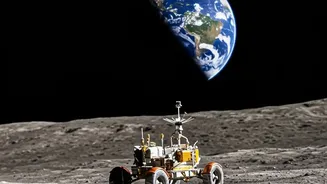
So how do you keep a multi-million-dollar robot warm? The most reliable solution is surprisingly simple: a self-heating system that requires no electricity. Many long-duration rovers, like China's successful Yutu series, carry Radioisotope Heater Units, or RHUs. These are small, robust devices, often about the size of a C-cell battery, that contain a tiny pellet of plutonium-238. As this radioactive isotope naturally decays, it steadily releases heat. Each RHU provides about one watt of thermal energy, acting like a constant, tiny hand warmer placed next to critical components like the rover's computer and electronics boards. This gentle, continuous heat prevents the hardware from dropping below its survival temperature, ensuring it can function again when the Sun returns two weeks later. It's a passive, elegant solution that doesn’t drain the rover's precious batteries.
The All-Or-Nothing Gamble
Not all rovers are equipped with RHUs. India’s historic Chandrayaan-3 mission, for example, landed the Pragyan rover near the South Pole without these nuclear heaters. The strategy for these solar-powered explorers is a high-stakes gamble. Before the long night begins, mission controllers park the rover, fully charge its batteries, and carefully angle its solar panels to catch the first rays of the next sunrise. The rover is then put into a deep sleep mode, and all its systems are powered down to conserve energy. The hope is that the onboard insulation is enough to protect the electronics from the worst of the cold. However, surviving such a deep, prolonged freeze without an active heat source is incredibly difficult. After its planned mission, ISRO hoped Pragyan would reawaken, but contact was not re-established, highlighting the immense challenge and the critical role of heating systems.
Heat Is Not the Same as Power
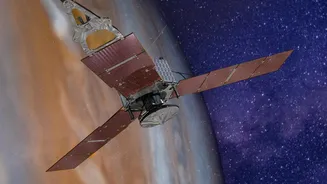
It’s important to understand that RHUs only provide heat; they do not generate electricity. This is why even rovers with RHUs must enter a dormant state during the lunar night. Their solar panels are useless in the dark, so they power down to wait for sunrise. To both survive and operate through the darkness, a rover would need a more powerful system called a Radioisotope Thermoelectric Generator (RTG). An RTG is a much larger device that uses the intense heat from decaying plutonium to generate a constant supply of electricity. This technology has been the workhorse for NASA’s deep space probes and Mars rovers like Curiosity and Perseverance, which operate far from the Sun. Future advanced lunar rovers, especially those designed to explore permanently shadowed craters for water ice, will likely rely on RTGs for constant power and warmth.