






More Than Just a Pose
Virabhadrasana II, named after a fierce mythological warrior, is a foundational standing posture in many yoga practices. It's a pose that embodies strength, stability, and focus. The story behind it is one of a warrior sighting his target, a narrative
that mirrors the single-pointed concentration the pose demands. While physically it strengthens the legs, opens the hips, and engages the arms and core, its benefits extend beyond the purely muscular. Holding the posture builds endurance and stamina, both physically and mentally. It teaches practitioners to remain grounded and strong, cultivating a sense of inner resolve that is central to the warrior archetype.
The Mind-Body Connection
So, how does holding a static physical posture translate to sharper mental focus? The answer lies in a few key yogic principles. Firstly, the pose requires a steady, fixed gaze known as a 'drishti'. In Warrior II, the drishti is typically over the front fingertips. This act of fixing the gaze helps to quiet the mind's chatter, reducing mental distractions and encouraging a state of focused attention. Secondly, the pose demands a high degree of body awareness, or proprioception—your sense of where your body is in space. To maintain proper alignment, you must constantly make micro-adjustments, keeping you anchored in the present moment. This intense physical awareness leaves little room for the mind to wander. Finally, the act of holding a challenging pose requires you to consciously manage discomfort, discerning between a physical need to release and a mental desire to quit—a powerful exercise in mental discipline.
A Step-by-Step Guide to Warrior II
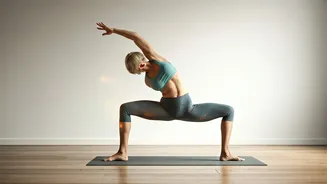
Ready to channel your inner warrior? Here’s how to get into the pose correctly. Start by standing on your mat with your feet about three to four feet apart. Turn your right foot out 90 degrees so it's parallel to the long edge of the mat, and turn your left foot in slightly. Align your front heel with the arch of your back foot. On an exhale, bend your right knee until it is directly over your right ankle, aiming for a 90-degree angle if accessible, ensuring the knee doesn't drift past the ankle. Your torso should remain centered between your legs, not leaning forward. Extend your arms parallel to the floor, reaching actively in both directions. Keep your shoulders relaxed and down, away from your ears. Turn your head to gaze over your right fingertips. Hold for several deep breaths before repeating on the other side.
Refining Your Warrior
Proper alignment is key to reaping the benefits and avoiding injury. A common mistake is allowing the front knee to collapse inward; consciously guide it toward the pinkie-toe side of your foot to keep it aligned. Another is leaning your torso forward. To correct this, keep your shoulders stacked directly over your hips, distributing your weight evenly between both legs. Ensure you're not just focusing on the front leg; press firmly through the outer edge of your back foot to keep the back leg active and engaged. Your arms should be equally energetic, extending from fingertip to fingertip to create a sense of expansion across your chest. Don't forget to breathe. A steady, even breath will help you find ease within the effort and sustain the pose longer.
Bringing Focus Off the Mat
The true power of Warrior II is how its lessons translate into daily life. The concentration cultivated through your drishti helps train your mind to stay on task. The stability you build by grounding through your feet fosters a sense of being centered and calm, even amid chaos. Learning to hold the pose with steady breath in the face of physical challenge builds mental resilience. It teaches you to remain present and powerful, not with aggression, but with a quiet, open confidence. So the next time you feel your focus splintering at work or at home, you can recall the feeling of your Warrior II—grounded, steady, and sharp—and bring that same focused energy to the task at hand.