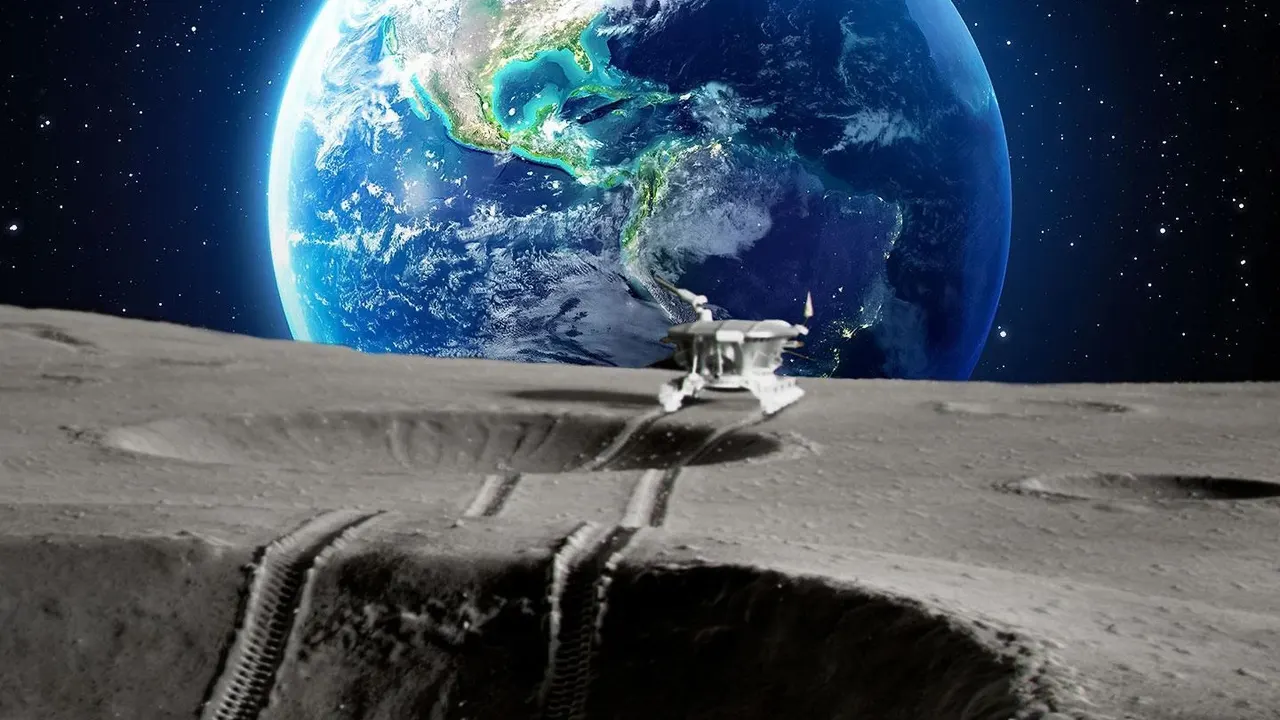





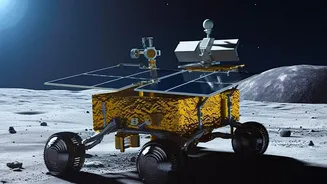

NASA is returning to the Moon, but not just to plant a flag and leave footprints. The agency's revised Artemis plan has a bold, strategic focus: the lunar south pole. This isn't a random change of scenery; it's a calculated shift in our approach.
A New Roadmap for Lunar Ambitions
NASA
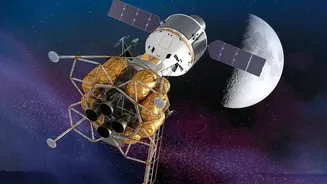
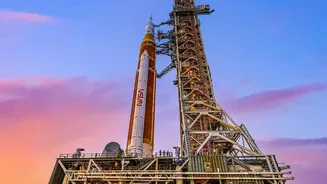
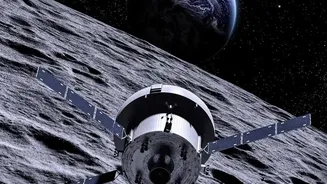
has refined its ambitious Artemis program, which aims to establish a long-term human presence on the Moon. Recent updates confirm a significant strategic pivot. While early plans involved a more direct return to the lunar surface, the timeline has been adjusted. Artemis III, now scheduled for 2027, will be an Earth-orbit mission designed to test the rendezvous and docking systems for the commercial human landing systems being developed by SpaceX and Blue Origin. This revision pushes the first crewed lunar landing to the Artemis IV mission, slated for early 2028. This 'practice run' is designed to reduce risk and ensure all components of the complex landing architecture work together seamlessly before attempting to touch down in one of the most challenging environments in the solar system: the lunar south pole.
The Allure of Ice and Sunlight
So, why the intense focus on the south pole? The answer lies in two critical resources: water and light. For decades, scientists have theorized that permanently shadowed regions (PSRs) at the lunar poles could harbor water ice. These are craters and depressions that haven't seen direct sunlight in billions of years, creating 'cold traps' where ice from comets and asteroids could remain frozen. Missions like NASA's Lunar Reconnaissance Orbiter (LRO) and India's Chandrayaan-1 have provided strong evidence confirming these suspicions. This frozen water isn't just for drinking. It can be broken down into its components, hydrogen and oxygen, to produce breathable air for astronauts and, crucially, rocket propellant. This potential to 'live off the land' could dramatically lower the cost and complexity of future missions, making the Moon a sustainable base and a stepping stone for journeys to Mars. Paradoxically, the south pole also offers near-continuous sunlight along the rims of some craters, ideal for solar-powered equipment and habitats.
A New Kind of Space Race
NASA isn't the only one with its sights set on this valuable lunar real estate. The south pole has become the focal point of a new, multipolar space race. China has a robust lunar exploration program and, in partnership with Russia, is planning an International Lunar Research Station (ILRS) in the same region. China's Chang'e missions have already achieved remarkable feats, and they have robotic missions planned for the south pole in the coming years. India also made history by becoming the fourth country to land on the Moon with its Chandrayaan-3 mission, which successfully touched down near the south pole. This international competition adds a layer of urgency to the Artemis program. Securing a foothold in this resource-rich area is seen as a major strategic advantage for scientific discovery and future economic activity in space.
The Unprecedented Challenges
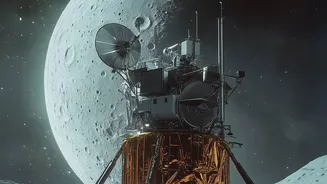
Landing and operating at the lunar south pole is exceptionally difficult. The terrain is rugged, full of deep craters and high mountains. The lighting conditions create a landscape of extreme contrasts, with the low angle sun casting long, dark shadows that can hide hazardous boulders and steep slopes, making landing a navigational nightmare. Furthermore, the temperature swings are immense. Areas exposed to sunlight can get hot, while the permanently shadowed regions are among the coldest places in the solar system, with temperatures plummeting to below -200°C. This environment places enormous strain on landers, rovers, and astronaut spacesuits. Communication is another hurdle, as direct line of sight to Earth can be intermittent depending on the landing site's location within the cratered topography.
Artemis IV and a Future on the Moon
With the groundwork being laid by Artemis III, the Artemis IV mission will be humanity's first crewed landing in this unexplored region. Astronauts will spend about a week on the surface, collecting samples, studying the unique geology of the South Pole Aitken Basin—the oldest impact basin onthe Moon—and, most importantly, prospecting for those vital water ice deposits. The data gathered will be invaluable, not just for understanding the history ofthe Moon and our solar system, but for planning a permanent lunar outpost. NASA's long term vision includes habitats, rovers, and a sustained human presence, transformingthe Moon from a temporary destination into a hub for science and exploration.