
The Frictionless Foe
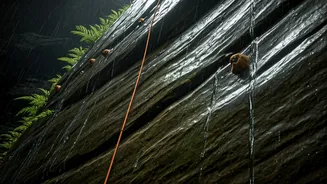
Rock climbing is fundamentally a sport of friction. A climber's success depends on the purchase their fingers and rubber-soled shoes can find on the rock's texture. The monsoon systematically dismantles this principle. Rainwater doesn't just make the surface
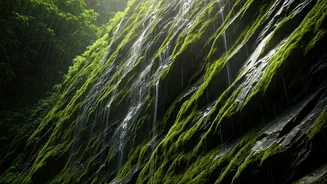
wet; it seeps into porous rock like sandstone, common in Indian climbing hubs like Badami and Hampi. This moisture can remain long after a downpour, creating a perpetually greasy feel. Furthermore, the dampness encourages the growth of lichen and moss, which form a slippery veneer over crucial handholds and footholds. A hold that was a reliable 'jug' in the dry season can become a treacherous sloper, demanding a complete recalibration of technique, balance, and trust in one's gear. Climbers must shift from relying on raw friction to using precise pressure and body tension, turning every move into a calculated risk.
When the Route Changes Mid-Climb
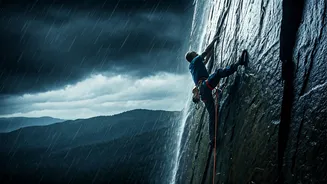
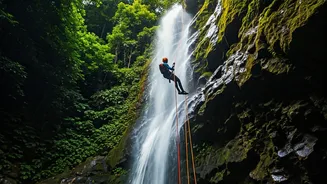
Monsoon weather is notoriously fickle. A climb that starts under cloudy skies can quickly turn into a struggle for survival against a torrential downpour. Waterfalls can appear from nowhere, cascading down established climbing routes and turning them into dangerous watercourses. This isn't just about getting wet; the force of the water can sweep a climber off the wall, and ropes become heavy and difficult to handle. Lightning is another severe hazard, especially on exposed multi-pitch routes in the Western Ghats. A climber, connected to the rock face with metal gear, becomes a potential lightning rod. Consequently, monsoon climbing demands an amateur meteorologist's eye. Climbers must read the clouds, understand wind patterns, and plan their ascents within short, predictable weather windows, always with an escape route in mind.
The Gear Under Duress
The equipment that forms a climber's lifeline behaves differently when saturated. Climbing ropes, which have a degree of dynamic stretch to absorb the impact of a fall, become less elastic and heavier when waterlogged. This increases the 'fall factor'—the severity of a fall's impact on the climber and the gear. Chalk, the climber's best friend for keeping hands dry, becomes a useless, pasty mess in high humidity. Climbers often resort to liquid chalk, which bonds better to the skin, but even its effectiveness is limited. The metal components of their gear—carabiners and protection devices like cams and nuts—can become stiff and harder to operate with cold, wet hands. This is why many seasoned monsoon climbers simplify their rack, knowing that fumbling with complex gear on a slippery wall is a recipe for disaster.
A Mental Game Against the Elements
Beyond the physical and technical difficulties, monsoon climbing is an immense psychological challenge. The constant awareness of slippery holds, the looming threat of a storm, and the knowledge that a fall could have more severe consequences create a high-stakes mental environment. It requires a level of focus and risk management that goes far beyond a typical day at the crag. Every decision is magnified. Is that hold really dry enough? Is there enough time to finish this pitch before the next squall hits? Should we bail now while it's safe? This is not the place for ego or summit fever. The most skilled monsoon climbers are often the most conservative ones, possessing a deep respect for the mountain and the weather. They understand that success isn't just about reaching the top, but about returning safely.