








The New Reality of Fresher Hiring
For decades, a strong academic record was the primary ticket to a promising first job. Today, the landscape has fundamentally shifted. Recruiters and hiring managers across India now prioritise demonstrated skills over theoretical knowledge. This move
to skill-based hiring means that companies want to see tangible proof of your abilities before they invest in an interview. They are looking for candidates who can solve real-world problems from day one. Your portfolio is that proof. It's a curated collection of your work that speaks louder than any grade sheet or resume bullet point. It answers the crucial question in a recruiter’s mind: “Can this person actually do the job?” By showcasing practical projects, you de-risk the hiring decision and show you are a proactive, capable professional ready to contribute.
What Exactly Is a Portfolio?
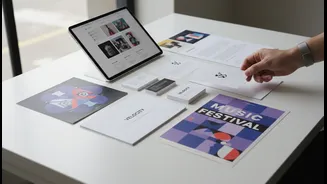
Forget the image of a large, leather-bound folder exclusive to artists and designers. In 2026, a portfolio is a digital collection of your work that validates your skills, regardless of your field. It's your professional story told through evidence. For a tech student, this could be a GitHub profile with personal coding projects. For a marketing aspirant, it might be a mock social media campaign or a detailed analysis of a successful brand. A finance fresher can showcase financial models built for hypothetical scenarios or investment analysis reports on public companies. The medium can vary from a personal website, a dedicated platform like Behance or Fueler, or even a well-organized Google Drive folder with a shareable link. The goal is simple: to provide concrete examples of your skills in action.
How to Build a Portfolio with No Experience
The classic fresher dilemma is needing experience to get a job, but needing a job to get experience. A portfolio is the perfect way to break this cycle. You don't need a client to create compelling work. Start with academic projects; reframe them as professional case studies by detailing the problem, your process, and the solution. Create mock projects. Redesign a local business's confusing website, build a simple app to solve a personal problem, or write a detailed policy brief on a current issue. Volunteer your skills for a non-profit organization. Contribute to an open-source project. These self-initiated projects demonstrate initiative, problem-solving abilities, and a genuine passion for your field—qualities that recruiters find irresistible in a fresher.
Showcasing Your Work Effectively
A great portfolio isn't just about the work itself, but also how you present it. Quality trumps quantity; select three to five of your strongest projects that showcase a range of your skills. For each project, don't just show the final product. Explain the context: What was the problem or objective? What was your process? What tools did you use? What was the outcome, and what did you learn? This narrative demonstrates your thought process, which is often more valuable to an employer than a polished but context-free result. Ensure your portfolio is easy to navigate, mobile-friendly, and free of errors. Include a clear 'About Me' section and make your contact information prominent.
Leveraging Your Portfolio in the Job Hunt
Creating a portfolio is only half the battle; you must actively use it. Include the link prominently on your resume, LinkedIn profile, and in your email signature. When you apply for a job, don't just mention you have a portfolio. In your cover letter, refer to a specific project that is relevant to the role you're targeting. For example, “My experience in developing a logistic-tracking app for a university project, which you can see in my portfolio, has prepared me for the challenges of this software development role.” During the interview, use your projects as examples to answer behavioural questions like “Tell me about a time you solved a difficult problem.” This transforms your answers from hypothetical claims to evidence-backed stories of your competence.