

The Foundation: A Banana Leaf
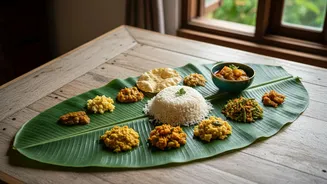
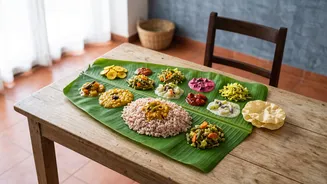
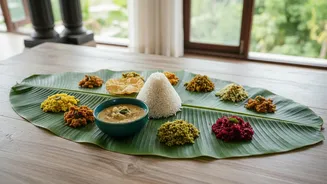
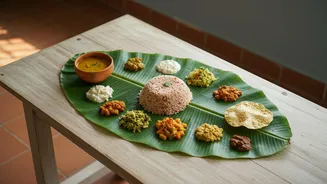
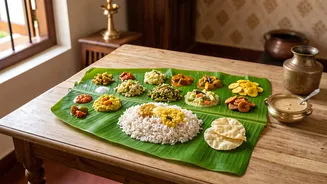
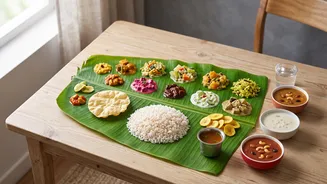
The Sadya is not served on a plate, but on a fresh banana leaf, or 'Thooshanila'. This is more than just tradition; it’s a sustainable practice and is believed to enhance the flavour of the hot food. There is a specific etiquette to its placement: the narrow
tip of the leaf should always point to the diner's left side. This divides the leaf into a top half for accompaniments and a larger bottom half for the rice and main curries.
The Opening Act: Pickles and Chips
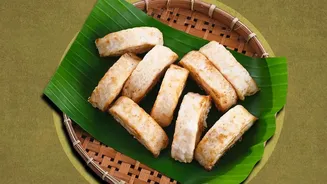
The meal begins with small portions served on the top left of the leaf. A pinch of salt is placed first. This is followed by crunchy snacks like banana chips (Kaaya Varuthathu) and jaggery-coated banana chips (Sarkara Upperi). Next come the pickles, which are essential for balancing the meal. These include the sweet and spicy Inji Puli (also called Puli Inji), a tamarind and ginger chutney, and sharp mango or lemon pickles (Achaar). A small, sweet banana, or Pazham, is also placed on the leaf.
The Side Dishes: A Medley of Vegetables
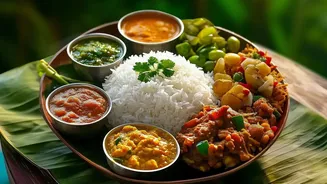
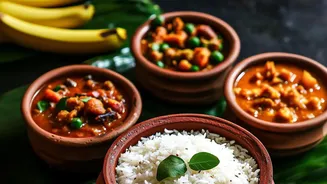
The top right of the leaf is reserved for a colourful array of vegetable dishes. This section includes Thoran, a stir-fry of finely chopped vegetables like beans or cabbage with grated coconut. You will also find Kichadi and Pachadi, which are yogurt-based dishes, often made with cucumber, pineapple, or beetroot, offering a cooling counterpoint. Other staples include Olan, a mild curry of ash gourd and red beans in coconut milk, and Kalan, a thicker, sour curry made with yam or raw banana and yogurt.
The Main Event: Avial and Rice
At the centre of the Sadya is Avial, a signature dish that symbolizes unity and abundance. It is a thick, semi-dry mix of various vegetables like drumsticks, yam, and plantain, cooked in a fragrant coconut and yogurt gravy. Once the side dishes are served, a generous mound of fluffy Kerala red rice (also called Matta rice) is placed on the bottom half of the leaf. The first curry to be poured over the rice is Parippu, a simple but delicious moong dal curry, often served with a spoonful of ghee.
The Pouring Curries: Sambar to Rasam
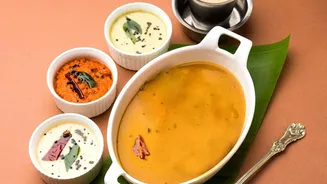
After the Parippu course, it's time for Sambar. This lentil-based vegetable stew, rich with tamarind and spices, is a cornerstone of any South Indian feast. Diners mix the Sambar with the remaining rice and enjoy it with the various side dishes. Following Sambar, a serving of Rasam is poured. This thin, peppery, and tangy soup is known to aid digestion. Finally, a cooling glass of Sambharam, or spiced buttermilk, is often served towards the end of the savoury courses to cleanse the palate.
The Sweet Finale: Payasam
No Sadya is complete without Payasam, the beloved dessert course. There are usually at least two types. A jaggery-based version is typically served first, such as Ada Pradhaman, made with rice flakes, jaggery, and rich coconut milk. This is often followed by a milk-based Payasam like Palada Payasam, which is made with tiny rice flakes and milk. The Payasam is sometimes served directly on the leaf, and many enjoy mixing it with a crushed pappadam and a small banana for a unique blend of sweet and salty flavours.