






Why the Monsoon Buzz?
The monsoon season brings with it a welcome respite from the summer heat, but it also ushers in a period of increased humidity and a higher prevalence of viral and bacterial infections. It's the time of year when sniffles, coughs, and fevers become common
household complaints. In response, there's a collective turn towards preventative wellness and home remedies. The trend of 'immunity tea' fits perfectly into this mindset. It’s more than just a beverage; it’s a comforting ritual, a proactive step towards staying healthy when the weather is gloomy, and a way to feel nourished from the inside out. The trend has been amplified on social media, with wellness influencers and home cooks sharing their personal recipes, making it an accessible and appealing practice for everyone.
What Is Immunity Tea, Really?
While the name 'immunity tea' sounds modern and scientific, its roots are deeply embedded in Indian tradition. What we're calling immunity tea today is essentially a contemporary name for the age-old 'kadha' or 'kashayam'—a herbal decoction that grandmothers have been brewing for generations. A kadha is a simple Ayurvedic preparation made by simmering various herbs and spices in water to extract their beneficial properties. This isn’t a single, fixed recipe but a flexible concept. The ingredients change based on the season, the ailment being addressed, and what’s available in the kitchen spice box. The modern rebranding simply frames this ancient wisdom in a way that resonates with today’s health-conscious consumer, highlighting its role in supporting the body's natural defence mechanisms.
The Powerhouse Ingredients to Include
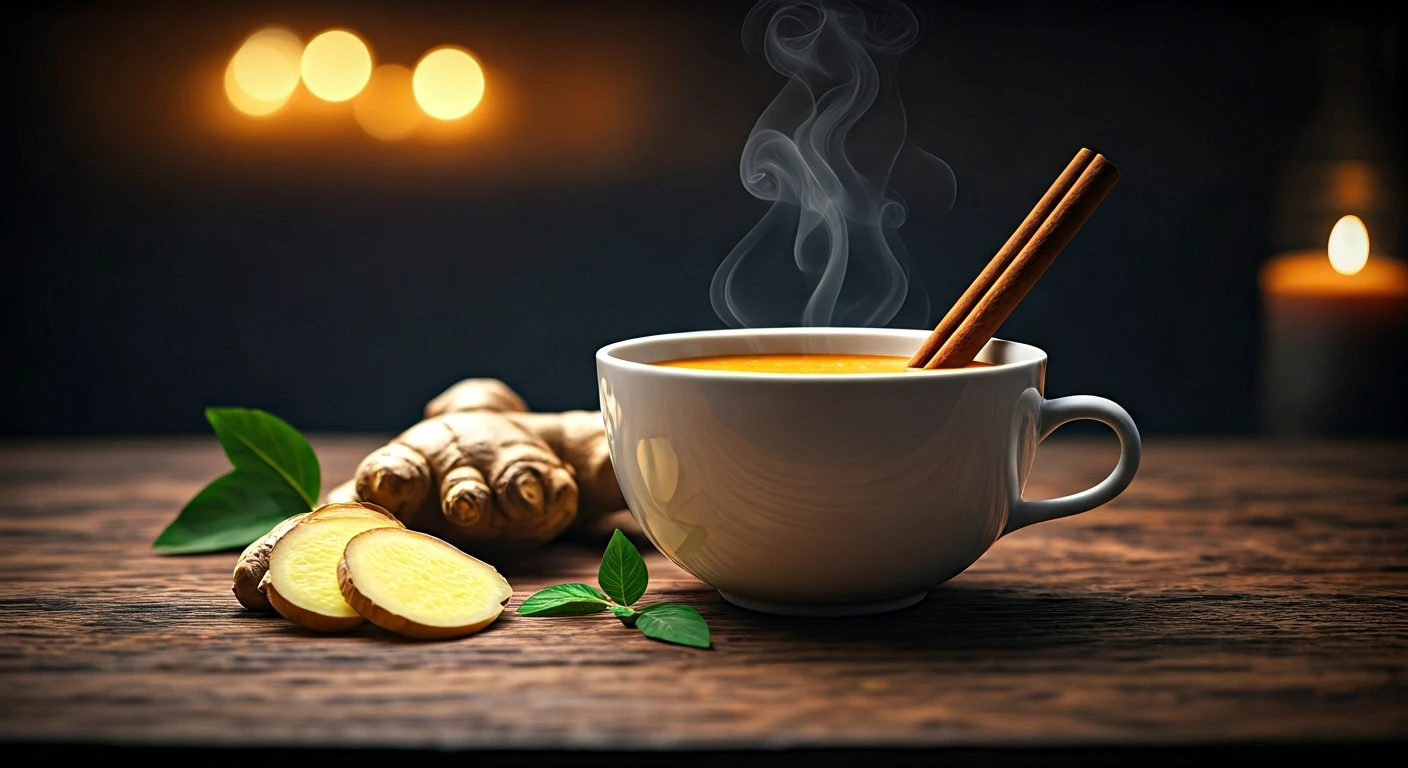
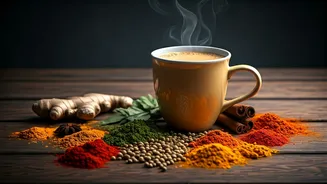
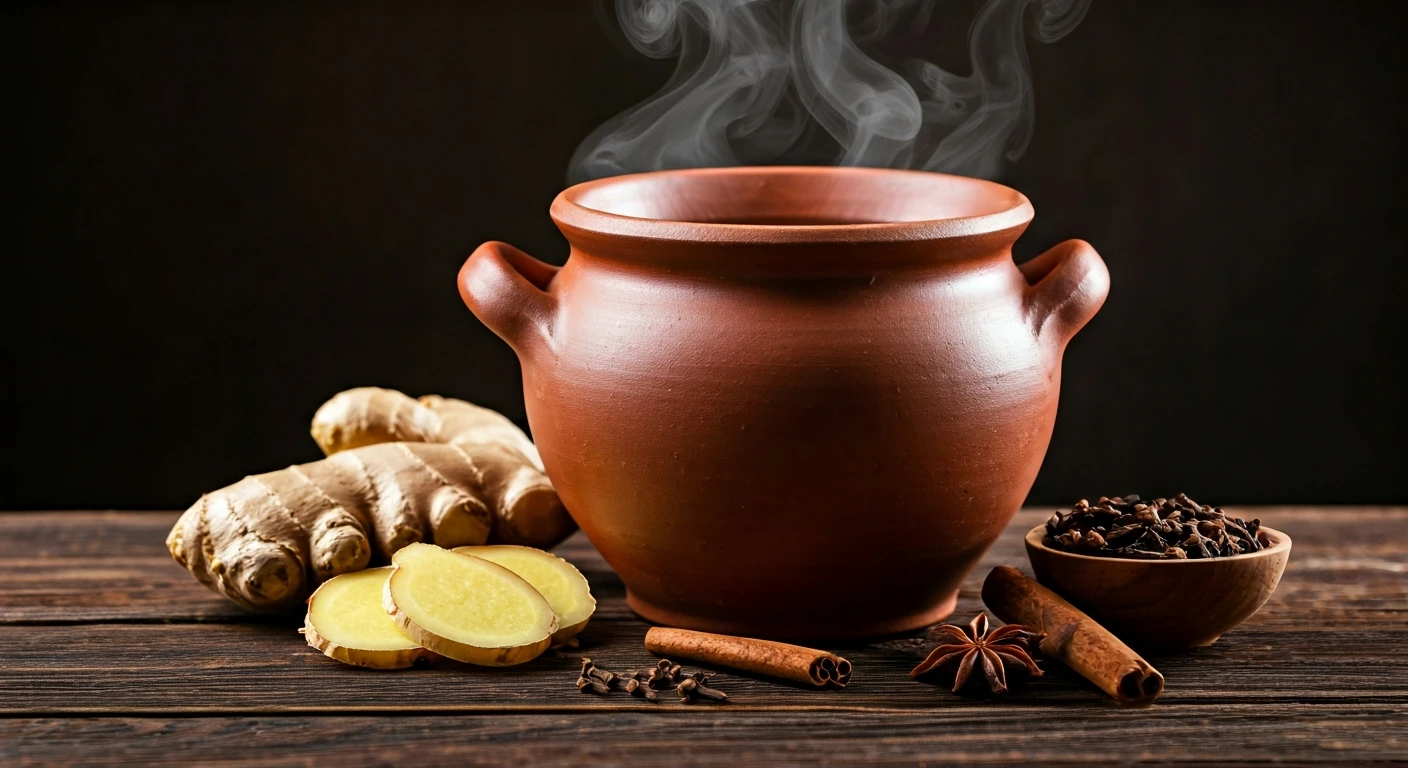
The magic of immunity tea lies in its potent, all-natural ingredients. Each adds a unique flavour profile and a host of wellness benefits. While you can customise your brew, here are some of the most popular and effective components you'll find in a typical monsoon tea: **Ginger (Adrak):** Known for its pungent, warming properties, ginger is a superstar ingredient. It contains gingerol, a compound with powerful anti-inflammatory and antioxidant effects. It's traditionally used to soothe sore throats, aid digestion, and combat nausea. A small piece of fresh, grated ginger gives the tea a spicy kick that instantly warms you up. **Turmeric (Haldi):** This golden spice is famous for its active compound, curcumin, a potent anti-inflammatory agent. Turmeric has been a cornerstone of Ayurvedic medicine for centuries. Adding a pinch to your tea can help support your body's response to inflammation. For better absorption, it's often paired with a dash of black pepper. **Tulsi (Holy Basil):** Revered in India as the 'Queen of Herbs', tulsi is an adaptogen, which means it helps the body adapt to stress and supports mental balance. It's rich in antioxidants and traditionally used to relieve coughs, colds, and respiratory issues, making it an essential addition during the monsoon. **Black Pepper & Cloves (Kali Mirch & Laung):** This pair adds more than just spice. Black pepper contains piperine, which not only enhances the absorption of curcumin from turmeric but also has its own antioxidant properties. Cloves are packed with antioxidants and are traditionally used for their antiseptic qualities, often recommended for dental pain and throat irritation.
Your Simple Monsoon Immunity Tea Recipe
Ready to brew your own cup of wellness? This basic recipe is a great starting point. Feel free to adjust the ingredients and quantities to your liking. **Ingredients:** * 2 cups of water * 1-inch piece of fresh ginger, grated * 1/2-inch piece of raw turmeric, grated (or 1/4 teaspoon turmeric powder) * 4-5 fresh tulsi leaves * 2-3 whole cloves * 3-4 whole black peppercorns, lightly crushed * 1 teaspoon of honey or jaggery (optional, for sweetness) * A squeeze of fresh lemon juice (optional, for a vitamin C boost) **Instructions:** 1. In a small saucepan, add the water, grated ginger, turmeric, tulsi leaves, cloves, and crushed peppercorns. 2. Bring the mixture to a boil over medium heat. 3. Once it boils, reduce the heat to low and let it simmer for 10-15 minutes. This allows the flavours and beneficial compounds to infuse into the water. The liquid will reduce slightly. 4. Turn off the heat and strain the tea into a mug. 5. If using, stir in honey or jaggery until dissolved. Add a squeeze of lemon juice just before serving. 6. Sip slowly and enjoy the warmth.