




The Martian Air Problem
Sustaining human life on Mars presents a monumental logistical challenge. The single greatest barrier is the atmosphere itself. Composed of roughly 96% carbon dioxide, it's unbreathable for humans and useless for traditional combustion. The cost and complexity
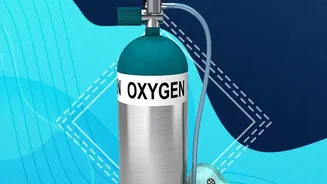
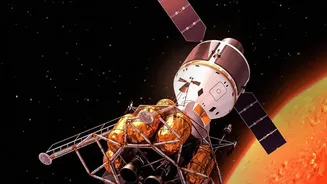
of launching heavy tanks of oxygen from Earth for breathing and, crucially, for rocket propellant for the return journey, are astronomical. A crew of astronauts would require about one metric ton of oxygen for a year, but a Mars ascent vehicle would need about 30 metric tons of liquid oxygen to launch from the surface. Shipping this much mass across millions of miles is simply not a sustainable strategy for long-term habitation or exploration. The solution lies not in bringing our environment with us, but in creating it from what's already there.
A Real-Life Science Fiction Solution
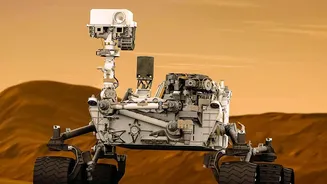
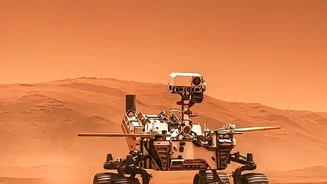
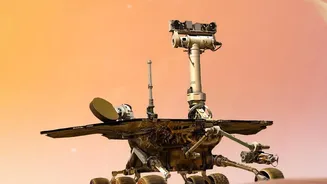
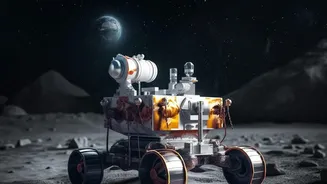
The answer lies in a process called solid oxide electrolysis. While the name is a mouthful, the concept is beautifully simple: splitting carbon dioxide (CO2) molecules into pure oxygen (O2) and carbon monoxide (CO). This isn't just a theory; it has been proven to work on Mars. NASA's Perseverance rover carried a small, microwave-sized experiment called MOXIE (Mars Oxygen In-Situ Resource Utilization Experiment). Between 2021 and 2023, MOXIE successfully and repeatedly pulled in the Martian atmosphere and, using high temperatures and electrochemistry, generated pure oxygen. By the end of its mission, MOXIE had produced 122 grams of oxygen, proving that the fundamental technology is viable in the harsh Martian environment. It was the first time a natural resource had been extracted from another planet for potential human use.
The Immense Challenge of Scaling Up
While MOXIE was a historic success, it produced only enough oxygen to keep a small dog alive for about 10 hours. This is where "scaling" becomes the critical next step. Engineers must now design a system that is hundreds of times larger and more powerful than MOXIE. A full-scale system would need to run continuously for over a year to produce the roughly 30 tons of oxygen required for a single rocket launch off Mars. This involves creating larger and more numerous electrolysis stacks, the core of the system, and ensuring they can withstand the extreme temperature swings and dust of Mars for prolonged periods without failing. Furthermore, such a system would require a significant and constant power source, likely in the range of 20-30 kilowatts, which would necessitate large solar arrays or a small nuclear reactor.
More Than Just Breathable Air
The value of CO2 electrolysis extends far beyond just providing breathable air. The oxygen it produces is half of the equation for rocket propellant; the other half is fuel. The carbon monoxide (CO) that is a byproduct of the electrolysis process can also be put to use. It can be combined with hydrogen—which could be extracted from water ice found on Mars—to create methane (CH4) via the Sabatier reaction. Methane is an excellent rocket fuel. This means a single system, rooted in CO2 electrolysis, could generate both the fuel and the oxidizer needed for a Mars Ascent Vehicle. This concept, known as In-Situ Resource Utilization (ISRU), is a game-changer, transforming the Martian atmosphere from a liability into a vital local resource.