


Udayagiri & Khandagiri Caves: A Jain Legacy in Stone
Just on the outskirts of Bhubaneswar, the twin hills of Udayagiri and Khandagiri house a complex of rock-cut caves that date back to the 2nd century BCE. These are not mere caverns but were once residential blocks for Jain monks, commissioned during the reign
of King Kharavela. Udayagiri, meaning 'Sunrise Hill', has 18 caves, while Khandagiri, or 'Broken Hill', has 15. The most impressive is the Rani Gumpha (Queen's Cave) in Udayagiri, a two-storied monastery with ornate carvings depicting royal processions and mythological events. The Hathigumpha (Elephant Cave) contains a famous inscription detailing King Kharavela's reign. A visit here is a walk through one of India's earliest monastic settlements, offering a tangible connection to its ancient Jain heritage.
Dhauli Giri: Where War Gave Way to Peace
Located about 8 km from Bhubaneswar on the banks of the Daya River, Dhauli Giri is a place of immense historical importance. It is believed to be the site of the bloody Kalinga War in 261 BCE, a conflict so brutal that it transformed the victorious Mauryan Emperor Ashoka from a ruthless conqueror into a devout Buddhist. Legend holds that the river ran red with blood, and the sight moved Ashoka to renounce violence forever. To commemorate this transformation, the Dhauli Shanti Stupa, or Peace Pagoda, was built in 1972 by the Japan Buddha Sangha and Kalinga Nippon Buddha Sangha. The serene white dome is adorned with stone panels depicting the life of Buddha and Ashoka laying down his sword. The site also features some of Ashoka's rock edicts, where he declared his new principles of peace and welfare.
Raghurajpur Heritage Village: A Canvas of Living Art
A short drive towards Puri lies Raghurajpur, a village unlike any other. Recognized as Odisha's first heritage crafts village, every home here is an artist's studio and a gallery. Raghurajpur is the heart of Pattachitra, a traditional form of scroll painting on cloth that dates back centuries. Visitors can walk through the two main streets, where houses are adorned with colourful murals, and watch master artists at work. The craftspeople create intricate paintings on treated cloth, palm leaves, Tussar silk, and even coconut shells, depicting mythological tales and folklore. Besides Pattachitra, the village is also home to artisans skilled in stone carving, wood carving, and creating papier-mâché toys. It’s also the birthplace of the legendary Odissi dancer Guru Kelucharan Mohapatra, and a hub for the Gotipua dance tradition, the precursor to Odissi. A visit allows you to buy art directly from the creators, supporting a priceless cultural legacy.
Pipili: The Town of Appliqué
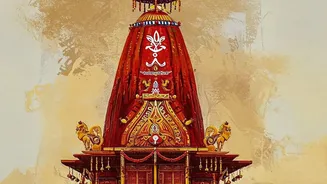
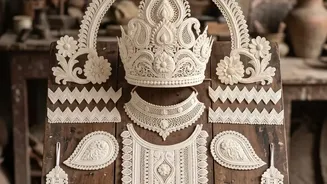
Situated on the main road between Bhubaneswar and Puri, Pipili is a vibrant splash of colour and creativity. This town is world-famous for its appliqué work, known locally as 'Chandua'. The craft involves stitching brightly coloured pieces of cloth onto a base fabric to create intricate and decorative patterns of animals, birds, flowers, and deities. This art form has its roots in the rituals of the Jagannath Temple in Puri, where large appliqué canopies, umbrellas, and banners are used to decorate the chariots for the annual Rath Yatra. Today, the main street of Pipili is lined with shops selling a dazzling array of products, from giant ceremonial umbrellas to modern items like lampshades, handbags, and wall hangings. Stopping here offers a chance to witness a traditional craft that has adapted beautifully to contemporary tastes.
Konark Sun Temple: The Chariot of the Sun God
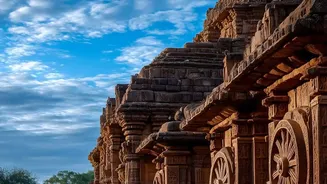
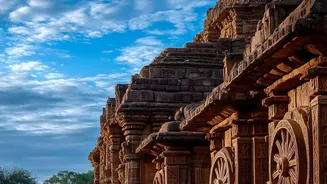
Though a slightly longer day trip at about 65 km from Bhubaneswar, no heritage tour of Odisha is complete without visiting the Konark Sun Temple. This 13th-century architectural marvel, now a UNESCO World Heritage Site, was designed as a colossal chariot for the Sun God, Surya. It features 24 intricately carved stone wheels, representing the hours of the day, being pulled by seven horses. Though much of the temple is now in ruins, the sheer scale and detail of the surviving structures are breathtaking. Every surface is covered with exquisite carvings depicting everything from divine figures and celestial musicians to scenes of daily life and military processions. A visit to Konark, especially when combined with the nearby Chandrabhaga Beach, offers a profound sense of wonder at the ambition and artistry of the Eastern Ganga dynasty.