
The Thali: A Universe on a Platter
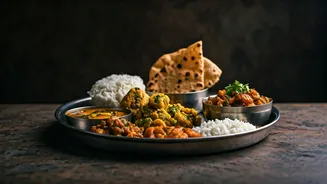
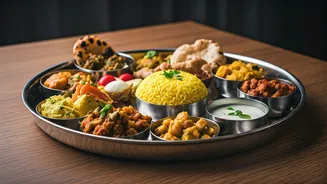
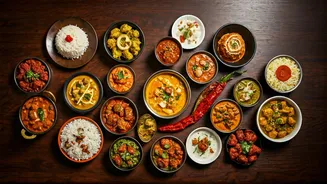
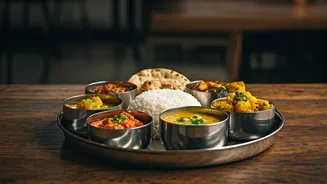
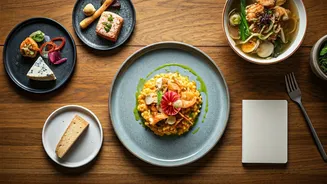
The Hindi word 'thali' simply means 'plate'. But in a culinary context, it signifies so much more. [2, 6] A thali is a complete meal served on a single platter, comprising a selection of various dishes arranged in small bowls called 'katori'. [2, 4] It
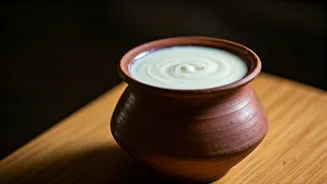
is not just an assortment of food; it's a philosophy. The idea is to present a balanced meal that incorporates six essential flavours: sweet, salt, bitter, sour, astringent, and spicy. [2] This concept is rooted in ancient Ayurvedic principles of holistic nutrition, where a proper meal is a perfect harmony of tastes, textures, and nutrients. [3, 6] A typical thali begins with staples like rice or flatbreads (roti, chapati) at the center, surrounded by bowls of dal (lentils), vegetable curries, yogurt (dahi), pickles, and a sweet dish. [2, 4] It’s a microcosm of a region's agriculture, culture, and culinary traditions, all artfully presented on one plate.
A Journey Through Regional Masterpieces
The true beauty of the thali lies in its regional variations, each telling a distinct story. A Rajasthani thali is a robust, ghee-laden affair featuring delights like Dal Baati Churma, Gatte ki Sabzi, and Bajre ki Roti, reflecting the arid landscape and warrior history of the state. [11] Travel south, and you might encounter the Kerala Sadya, a lavish vegetarian feast served on a banana leaf with dozens of items, each with its own place and purpose. [4, 11] In the west, the Gujarati thali is renowned for its delicate balance of sweet and savory notes, with staples like Dhokla, Khandvi, and a sweet dal. [11, 14] Meanwhile, a Punjabi thali is hearty and rich, loaded with butter and featuring dishes like Dal Makhani, Sarson ka Saag, and Amritsari Kulcha. [11] From the royal Kashmiri Wazwan with its rich, aromatic meat dishes to the coastal Goan thali celebrating fresh seafood, each platter is a proud declaration of local identity. [11, 14]
Beyond the Thali: Unifying National Dishes
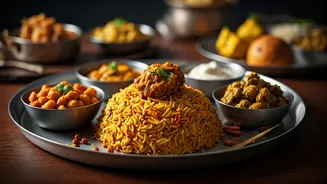
While the thali showcases diversity, other dishes create a sense of unity by being loved and adapted across the country. Biryani is a prime example. Believed to have journeyed from Persia and been perfected in Mughal royal kitchens, it has since been adopted and transformed by every region. [9, 12] The fiery Hyderabadi biryani, cooked with marinated meat in the 'dum' style, is a world apart from the milder, potato-and-egg-laden Kolkata biryani or the fragrant Lucknowi version. [5, 8] Similarly, Khichdi, a humble one-pot dish of rice and lentils, is a pan-Indian comfort food. [17] Its history dates back thousands of years, mentioned in ancient texts and a favourite of Mughal emperors. [18] From a simple meal for someone feeling unwell to a festive dish prepared during Makar Sankranti, Khichdi is consumed by rich and poor alike, embodying simplicity and unity. [13, 19] Each state has its own version, proving how a simple concept can be endlessly reinterpreted. [17, 20]
More Than a Meal: Food as Shared Identity
In India, food is rarely just for sustenance; it is a central part of culture and connection. [21, 23] Communal meals, whether a grand wedding feast or a simple langar at a Gurdwara, reinforce bonds of community and equality. [21] Festivals are defined by their specific foods — sweets like gujiya for Holi or laddoos for Diwali are not just treats but symbols of joy and the triumph of good over evil. [21] The act of offering food to a guest is a fundamental expression of hospitality. [22] These shared culinary traditions, from the intricate rules of a thali to the widespread love for biryani, create a common language. They tell the story of India’s history of trade, invasions, and cultural exchange, where recipes travelled, evolved, and became a part of a new identity. A single plate, therefore, doesn't just carry food; it carries history, tradition, and the soul of a multitude of kitchens.