




An Ambitious 'Double Catch' Mission
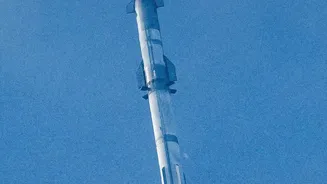
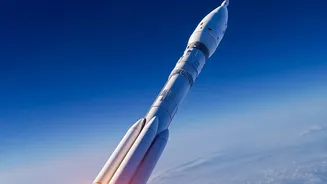
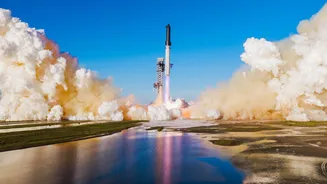
The fifteenth test flight of SpaceX's Starship system, which launched on November 13, 2026, had the most ambitious goal to date: a full recovery of both the Super Heavy booster and the Starship upper stage. The plan was to launch, have the booster return
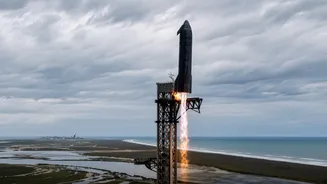
to the launch site, and be caught by the giant mechanical arms of the launch tower, nicknamed 'Mechazilla' or 'chopsticks'. The Starship spacecraft would then continue into orbit, deploy a payload of 26 Starlink satellites, circle the Earth for over 22 hours, and then return for its own, much more difficult, catch at the same tower. Achieving this 'double catch' would be a historic first, proving the core concept of a fully and rapidly reusable rocket system, a long-held goal of CEO Elon Musk.
The Super Heavy Booster Setback
While the initial launch from Starbase, Texas, was successful, the first part of the recovery plan did not go as hoped. After separating from the Starship upper stage, the massive Super Heavy booster began its flight back to the launch pad. However, an issue—reportedly a low-fuel alarm—caused the onboard computers to abort the catch attempt. Instead of steering toward the waiting Mechazilla arms, the booster automatically diverted its course for a safer splashdown in the Gulf of Mexico. While it performed a controlled descent and hover over the water, its flight was ultimately terminated and the vehicle exploded. This meant the 'double catch' was off the table, marking a significant setback for the mission's primary objective.
A Historic First: The Starship Catch
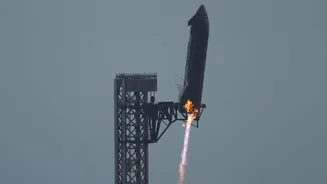
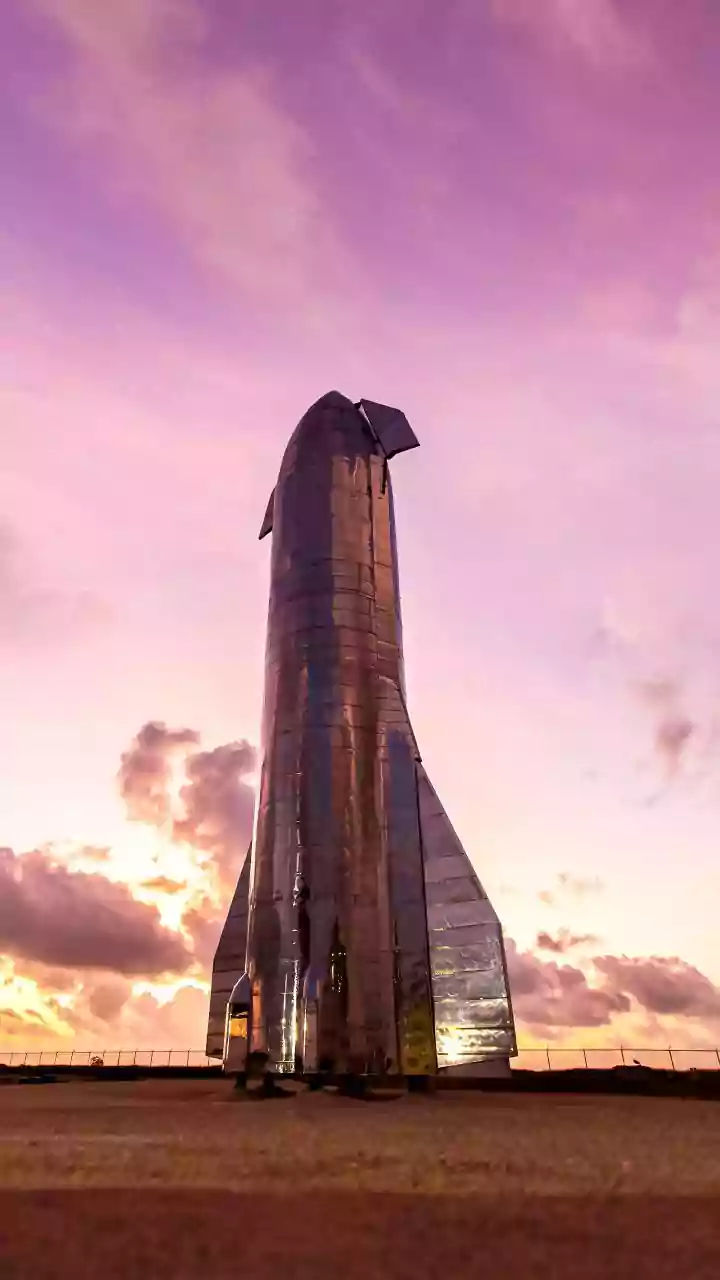
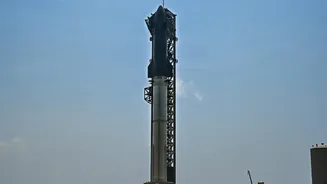
Despite the loss of the booster, the Starship upper stage, known as Ship 42, continued its mission flawlessly. It successfully reached orbit, a major milestone in itself, and deployed its payload of 26 Starlink satellites. After completing 14 orbits over 22.5 hours, the real test began. On November 14, the spacecraft executed its deorbit burn, blazed through the atmosphere, and descended toward Starbase. In a maneuver never before successfully attempted, the 171-foot-tall vehicle used its engines to slow down and position itself precisely between the tower's chopstick arms, which then closed to secure it in a historic catch. It was the first time an orbital-class upper stage had ever been recovered this way, a moment one SpaceX commentator called the 'holy grail of spaceflight'.
Why Partial Success Is a Major Win
In the world of iterative rocket development, a 'partial success' is often a huge leap forward. While losing the Super Heavy booster was a disappointment, the data gathered from its failed landing attempt is invaluable for future flights. The primary victory, however, was the successful flight, orbital operations, and recovery of the Starship spacecraft itself. This proves that the most complex and expensive part of the launch system can survive a round trip to space, which is the fundamental requirement for making Starship economically viable. Recovering the vehicle intact allows engineers to inspect its heat shield and systems, preparing it for potential re-flight and bringing SpaceX one giant step closer to its goal of an aircraft-like turnaround for orbital rockets.