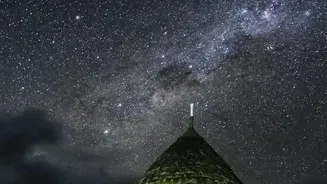









A Starry Investment
The remote tribal village of Udmal in Nashik's Surgana taluka is at the centre of a celestial initiative. The district administration has sanctioned ₹42.14 lakh to help it become Maharashtra's first certified 'Dark Sky Community'. This significant investment,
approved under the District Annual Tribal Sub-Plan for 2026-27, is designed to protect the area's pristine night skies from light pollution, paving the way for a unique brand of tourism and scientific curiosity. The move follows a resolution by the Udmal Gram Sabha to actively conserve its dark skies, showing a community-led commitment to this stellar cause.
The Problem with Light
For most of human history, the night was truly dark. Today, the relentless glow from cities, streetlights, and buildings has created 'light pollution', a pervasive environmental issue. This artificial brightness does more than just block our view of the Milky Way; it has severe consequences. Excessive light disrupts the migratory patterns of birds, interferes with the breeding cycles of amphibians, and affects the behaviour of nocturnal animals and insects. For humans, it can disrupt sleep patterns and has been linked to health issues. By turning vast areas of night into a perpetual twilight, we are erasing a fundamental part of our natural world.
Building a Dark Sky Sanctuary
The funds allocated to Udmal are not for switching everything off, but for adopting smarter, more responsible lighting. A key part of the project involves assessing the current night-sky quality and replacing harsh, inefficient lights with environment-friendly fixtures. These new lights will be shielded and directed downwards, illuminating only what is necessary and preventing stray light from polluting the sky above. The initiative, implemented with the NGO Astronera, also includes public awareness campaigns and providing technical training to local youth, empowering them to become custodians of their sky. The ultimate goal is to get certified by DarkSky International, a global authority on light pollution, which would put Udmal on the world map.
The Rise of Astro-Tourism
This project is about more than just conservation; it's a strategic move towards a sustainable economic future. By preserving its dark skies, Udmal is positioning itself as a prime destination for astro-tourism—a growing sector that attracts travellers eager to experience the cosmos away from city glare. This can create new livelihood opportunities for the local tribal community through guided stargazing sessions, night-sky photography workshops, and eco-friendly homestays. The Udmal initiative is part of a broader push by the Maharashtra government, which has identified 11 potential astro-tourism sites across the state, including locations in the Pench and Tadoba-Andhari Tiger Reserves. This aligns with the state's 'Vikasit Maharashtra 2047' vision for tourism development.
A Blueprint for India
While India already has a certified Dark Sky Reserve in Hanle, Ladakh, the effort in Udmal represents a different but equally important model—a community-driven initiative in a more accessible region. The Hanle reserve, located at a high altitude in a remote wildlife sanctuary, is a haven for scientific research. Udmal's project shows how local communities, with government support, can take the lead in protecting their natural heritage while creating economic value. It offers a blueprint for other villages and towns across the country that are blessed with dark skies but threatened by creeping urbanisation. As more people seek authentic and meaningful travel experiences, the darkest places might just have the brightest futures.