



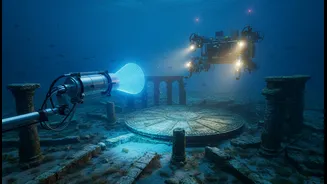


A Glimpse Beneath the Waves
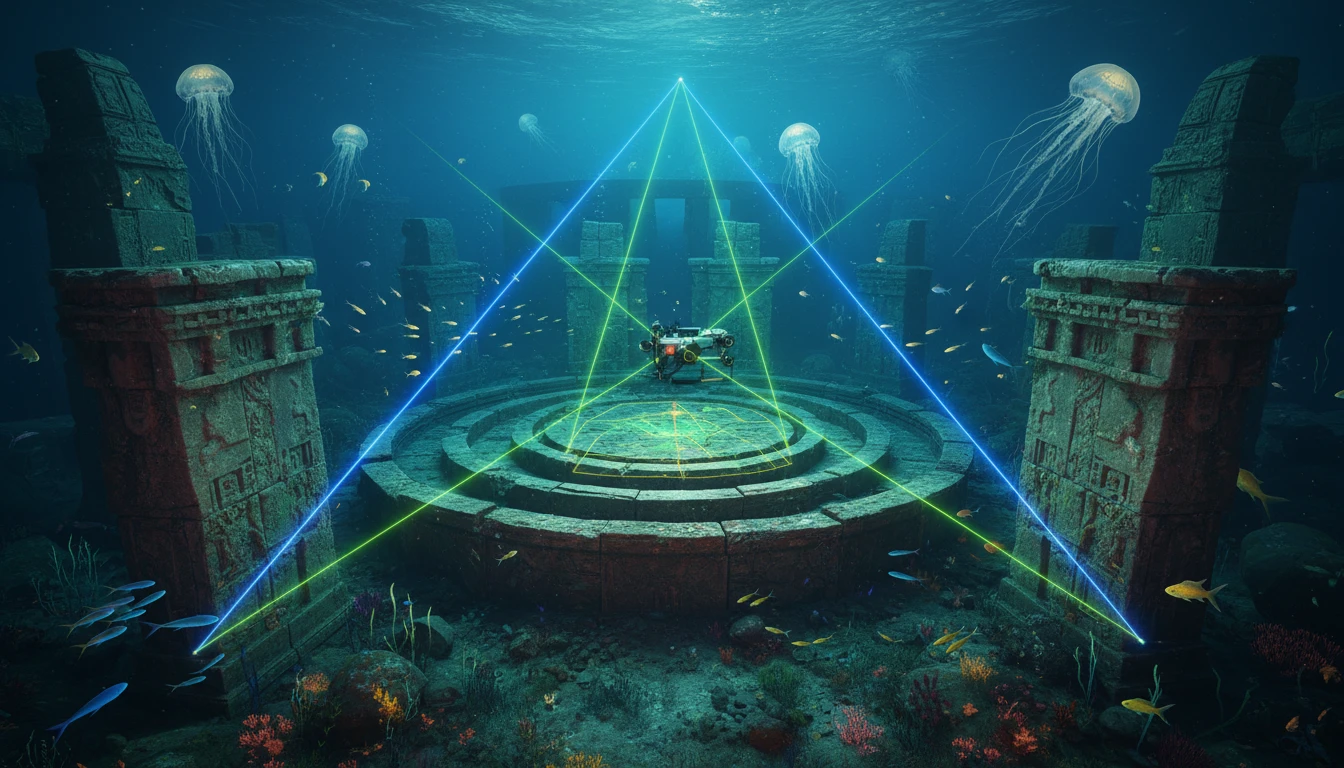
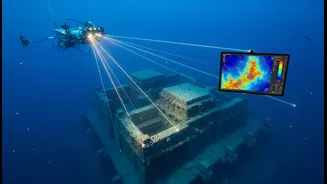
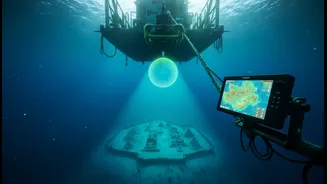
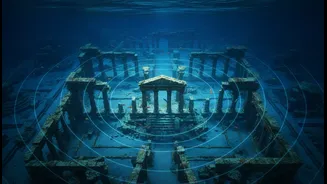
Recent marine surveys have identified intriguing formations deep beneath the sea. Using side-scan sonar, which creates detailed images of the seabed, researchers from institutions like the National Institute of Ocean Technology (NIOT) have mapped what
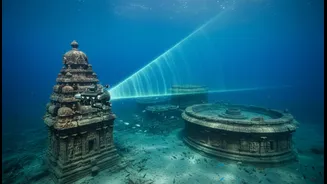
appear to be geometric patterns and structural remains. These are not isolated incidents; explorations have been ongoing for years, particularly off the coast of historically significant sites like Poompuhar and Mamallapuram. In some cases, sonar has detected features resembling walls, foundations, and other arrangements that suggest human construction. The 2004 tsunami briefly exposed some of these secrets, as receding waters revealed large stone blocks before the sea rushed back, corroborating local legends of submerged temples.
The Technology Piercing the Depths
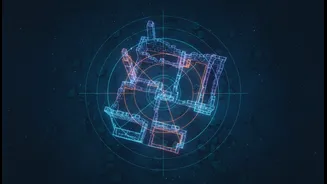
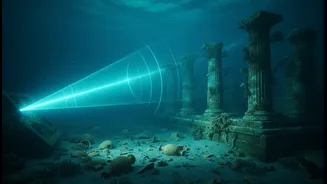
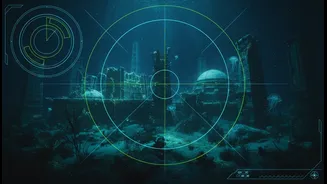
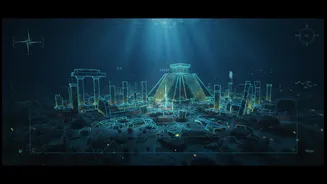
The key to these discoveries is advanced sonar technology. Unlike a simple depth sounder, multi-beam and side-scan sonar systems paint a detailed topographical picture of the ocean floor. These systems send out sound waves and measure the echoes that bounce back, creating what are known as sonar projections. By analyzing the shape, size, and arrangement of objects on the seabed, scientists can identify anomalies that stand out from the natural landscape. Features with straight lines, right angles, or deliberate placements are flagged for further investigation. This non-invasive method allows researchers to survey vast areas and pinpoint specific locations of interest for follow-up explorations with divers or remotely operated vehicles.
Echoes of the Mythical Kumari Kandam
Any discovery of submerged structures off the Tamil coast inevitably brings up the legend of Kumari Kandam. Ancient Tamil literature, including the Silappathikaram, speaks of a vast, prosperous landmass ruled by the Pandiyan kings that was lost to the sea in a great deluge thousands of years ago. This story has been a cornerstone of Tamil identity and culture for centuries. While there is no scientific evidence to support the existence of a continent-sized landmass as described in some interpretations, the discovery of smaller, submerged human settlements lends a new dimension to these ancient flood myths. Archaeologists are careful to distinguish between myth and fact, but the sonar findings have reignited debate about whether the legends of Kumari Kandam could be rooted in the collective memory of real, smaller-scale land loss due to rising sea levels at the end of the last Ice Age.
What the Experts Are Saying
The scientific community remains cautiously optimistic. Researchers acknowledge that sonar images can sometimes be misleading and that natural rock formations can mimic man-made structures. The process of verification is slow and painstaking. After identifying a promising site with sonar, the next step is physical exploration. Divers have, in past explorations near Mamallapuram, found structures like a 10-meter-long wall and stone blocks at a depth of around 27 feet, estimated to be between 1,100 and 1,500 years old. More recent efforts have focused on areas like Poompuhar, the ancient port city, with the Tamil Nadu State Department of Archaeology (TNSDA) and the Archaeological Survey of India (ASI) undertaking new surveys. Each new piece of evidence, from recovered pottery to structural debris, must be carefully dated and analyzed to build a clear picture of when these sites were inhabited and why they were submerged.
A New Chapter in an Ancient Story
These underwater explorations are part of a broader effort to piece together the rich history of ancient Tamil civilization. On-land excavations at sites like Keeladi have already pushed back the timeline of urbanism in the region to as early as the 6th century BCE, revealing a sophisticated society with advanced industries and trade networks. The work being done offshore complements this by investigating the civilization's extensive maritime history. Discoveries of submerged ports or settlements would provide direct evidence of the coastal communities and trade hubs that were central to the region's prosperity. As sea levels continue to rise today, studying these submerged landscapes also offers valuable lessons on how past societies adapted to dramatic environmental change.