


A Match Made in Dessert Heaven
On paper, it shouldn’t work. On one side, you have the gulab jamun: a beloved, syrupy, milk-solid sphere that’s the undisputed king of Indian mithai. It’s warm, intensely sweet, and steeped in tradition. On the other, the cheesecake: a Western dessert
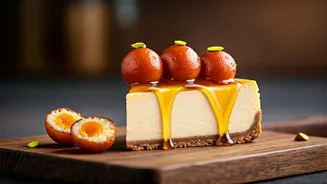
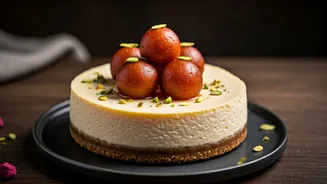
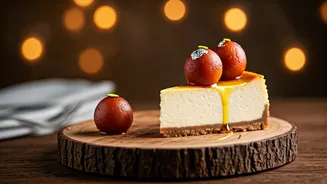
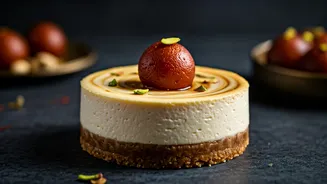
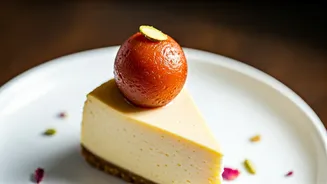
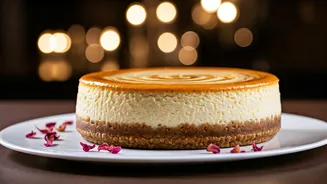
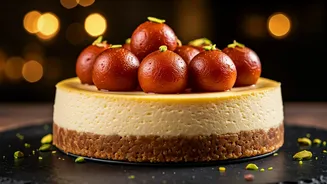
icon known for its cool, creamy, and slightly tangy profile, built on a crumbly biscuit base. Combining them seems like an act of culinary rebellion. Yet, when you slice into a Gulab Jamun Cheesecake, you find soft, rose-scented jamuns suspended in a rich, velvety cream cheese filling. It’s a visual surprise that immediately signals this is no ordinary dessert. The first bite confirms it—this isn't a clash of cultures, but a harmonious partnership that respects both its origins while creating something entirely new and exciting.
The Art of Perfect Balance
The secret to its enduring appeal lies in a masterful balancing act of flavour and texture. A traditional cheesecake, for all its glory, can sometimes feel overwhelmingly rich. A plate of gulab jamuns can be intensely sweet. But together, they moderate each other. The subtle tang of the cream cheese cuts through the sugary syrup of the jamun, preventing either from becoming cloying. The dense, smooth texture of the cheesecake provides a perfect foil for the spongy, yielding bite of the jamun. Many successful versions incorporate Indian flavours into the cheesecake itself—a hint of cardamom, a touch of saffron, or a sprinkle of pistachios on top—further bridging the gap between the two worlds. It’s a dessert that engages the entire palate, offering a complex experience that is simultaneously familiar and novel.
Nostalgia with a Modern Twist
For many Indians, the gulab jamun isn't just a sweet; it’s a feeling. It’s the taste of festivals, family gatherings, and childhood celebrations. By embedding this nostalgic icon within the sophisticated, modern frame of a cheesecake, chefs created a dessert that speaks to multiple generations at once. It satisfies the craving for traditional flavours while appealing to a younger, more globalised palate that sees cheesecake as a celebratory dessert in its own right. This fusion allows diners to feel both adventurous and comforted. It’s a safe culinary experiment—the familiar warmth of home wrapped in an exciting, contemporary package. This emotional resonance is a key reason why it has outlasted more gimmicky food trends.
The Flag-Bearer of Indian Fusion
The Gulab Jamun Cheesecake didn't just appear in a vacuum. It rose to fame as the poster child of a larger movement in modern Indian cuisine: the 'mithai-fusion' trend. As chefs and home bakers grew more confident, they began deconstructing and reimagining classic Indian sweets. Soon, menus featured Rasmalai Tiramisu, Motichoor Ladoo Parfaits, and Jalebi with Rabri Panna Cotta. While some of these creations were fleeting, the Gulab Jamun Cheesecake became the standard-bearer for the movement. It proved that Indian fusion could be more than just a novelty; it could be genuinely delicious and commercially successful. It opened the door for more creative interpretations of Indian desserts, encouraging a playful approach to a culinary category often seen as rigid and unchangeable.
More Than Just an Instagram Fad
Of course, its photogenic nature helped. With its glistening jamuns peeking out of a pristine white cake, it was an instant star on social media. But unlike many Instagram-famous foods that are more style than substance, this dessert delivered on its visual promise. People came for the photo, but they stayed—and came back—for the taste. Its popularity isn't just sustained by likes and shares but by genuine word-of-mouth praise. Restaurants across the country, from high-end establishments to quirky cafes, continue to keep it on their menus because it sells. It has successfully transitioned from a surprising trend to a reliable favourite, a testament to its well-conceived flavour profile and widespread appeal.